59 mins ago
Two Indian Stocks Target Growth From Steel Output Boom
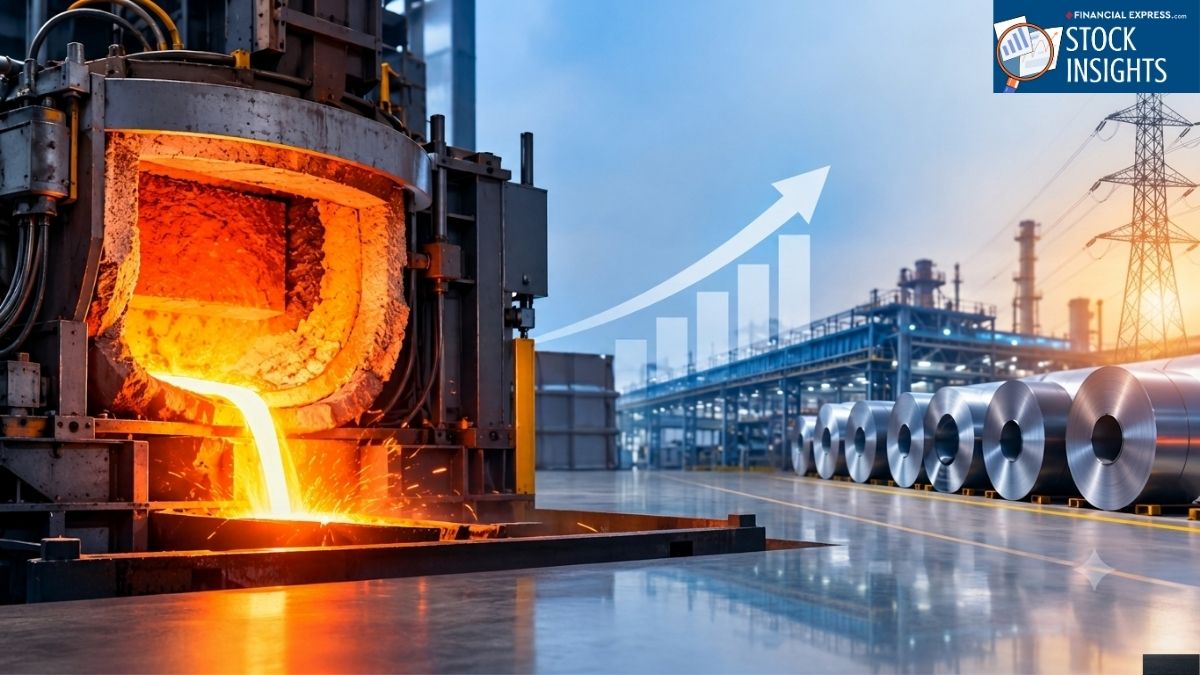
India wants to make much more steel in the coming years.
Furnaces that melt steel use special lining material, which wears down and must be replaced.
That means companies making this material may benefit when furnaces produce more steel, even if steel prices do not rise.
The article looks at Raghav Productivity Enhancers and Monolithisch India.
Raghav is expanding its production capacity and has partnered with a Nippon Steel subsidiary on a plant in Odisha.
Monolithisch is selling more of a premium product and expects lower costs from sourcing some materials itself.
Both companies have reported strong recent growth, but their shares are valued highly.
Their future results depend on carrying out their plans and sustaining growth.

India produced 168 million tonnes of crude steel in FY26, up 10.5% year over year, and aims for 500 million tonnes by 2047.
Raghav Productivity Enhancers’ FY26 capacity reached 414,000 tonnes; it plans to expand to about 534,000 tonnes and has a joint venture for a new Odisha plant.
Raghav reported Q1FY27 revenue growth of 48.7% and net profit growth of 67.6% year over year.
Monolithisch India reported Q1FY27 revenue growth of 63.3% and net profit growth of 134.9%, while increasing the share of its premium SGB product.
The article says both stocks trade at high valuations and highlights execution, liquidity and continued earnings growth as considerations—not investment recommendations.
- Who
- Raghav Productivity Enhancers and Monolithisch India, suppliers of ramming mass used in induction furnaces.
- What
- The article examines how the two companies could benefit from rising steel production and describes their growth, expansion plans and valuations.
- Where
- India, including Raghav’s planned joint-venture plant in Odisha and Monolithisch’s mineral block in Nawada, Bihar.
- When
- The figures cover FY16–FY26 and Q1FY27; India’s steel-production target is for 2047.
- Why
- Higher furnace output increases wear on furnace linings and demand for replacement ramming mass, while both companies are also pursuing capacity, premium-product or cost advantages.
Growth opportunity
Risks and constraints
Demand outlook
Growth opportunity
Rising steel output and furnace utilisation could increase demand for ramming mass, whose use is tied more to tonnes melted than finished-steel prices.
Risks and constraints
The opportunity depends on steel production and furnace activity continuing to expand; the article does not establish that future growth is assured.
Company growth plans
Growth opportunity
Raghav is adding capacity and pursuing a strategic joint venture; Monolithisch is promoting premium products and expects savings from captive sourcing.
Risks and constraints
The article says investors must watch whether the companies can execute, sustain premium realisations and turn capacity expansion into earnings.
Valuation and access
Growth opportunity
Raghav’s move to the mainboard may improve accessibility and broaden its potential investor base.
Risks and constraints
Both stocks trade at high P/E multiples; Monolithisch remains on the NSE SME platform, where a 250-share minimum lot can make entry harder and limit liquidity.
Key facts
- India crude steel production
- 168 million tonnes in FY26, up 10.5% year over year, according to the article.
- India production target
- 500 million tonnes by 2047.
- Raghav FY26 capacity
- 414,000 tonnes, with expansion to about 534,000 tonnes planned.
- Raghav Q1FY27 results
- Revenue rose 48.7% to ₹86.9 crore; net profit rose 67.6% to ₹19.6 crore year over year.
- Raghav joint venture
- An 80:20 venture with TRL Krosaki to build a 350,000 MTPA ramming-mass plant in Odisha, with estimated investment of around ₹100 crore.
- Monolithisch Q1FY27 results
- Revenue rose 63.3% to ₹47.2 crore; net profit rose 134.9% to ₹10.1 crore year over year.
- Reported P/E multiples
- Raghav: 133x; Monolithisch: 92.8x, as stated in the article.
Sources
Related news

Raghav Productivity Targets Odisha Plant, Aims to Double Market Share

India Outpaces China in Steel Growth as Three Stocks Rise
Steel Exchange India Sets September Re-Bar Production Record
Motilal Oswal backs Tata Steel, JSW Steel as prices rise

India’s Nuclear Build-Out Puts Three Equipment Stocks In Focus

Three Railway-Linked SMEs Show Growth and Execution Risks