1 day ago
How Saffron’s Meaning Changed Across Bengal’s Cultural Landscape
The article explains that colors can have different meanings at different times.
In Bengal, red once represented communist politics, while blue and white later became associated with a new political period.
Saffron traditionally suggested spiritual life, sacrifice, education, and service.
The Ramakrishna Mission is presented as an important example of this meaning.
The writer remembers wearing a saffron gown at a Jadavpur University graduation.
At that time, the color did not necessarily feel political or threatening.
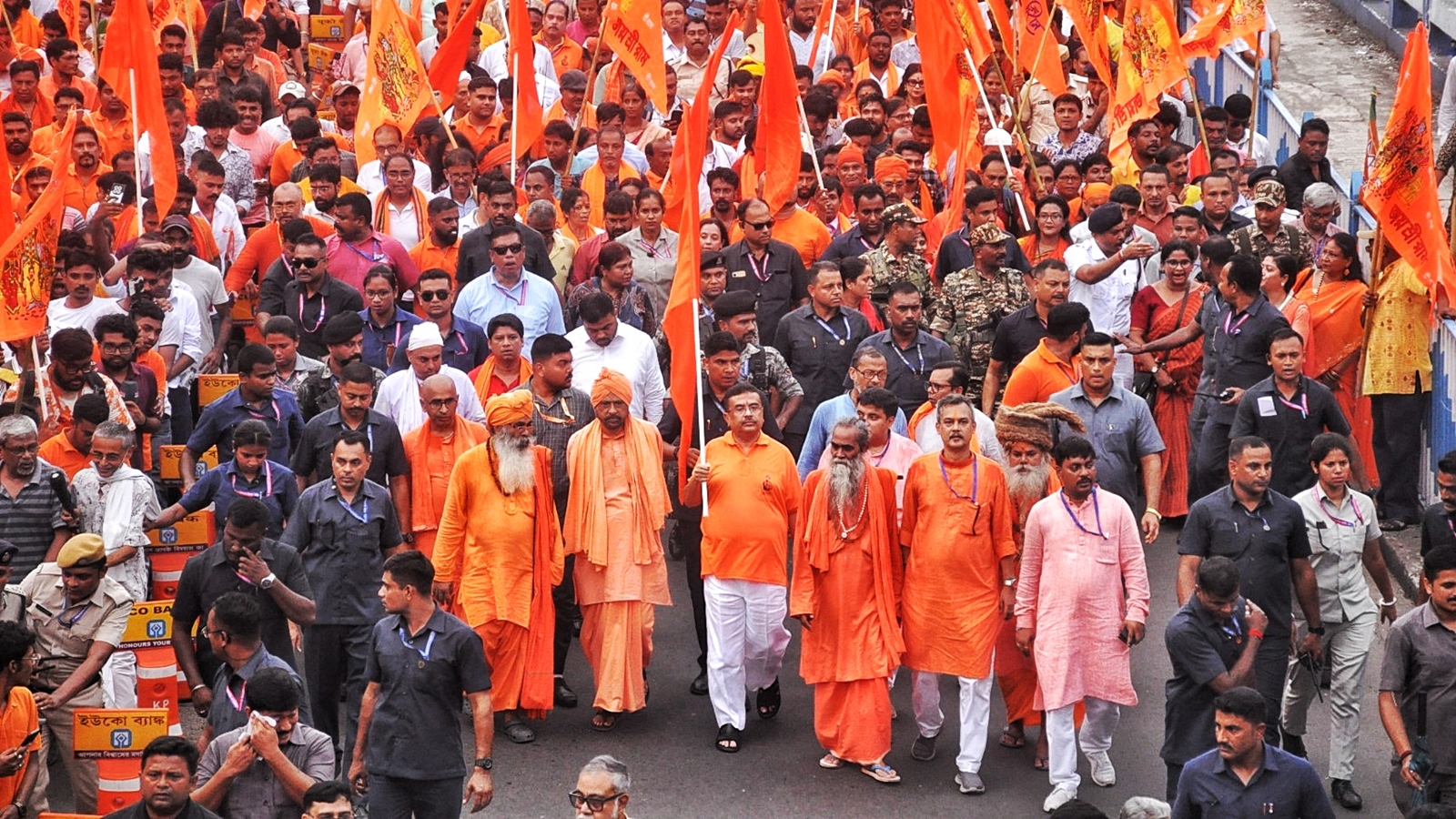
The article says some right-wing groups now give saffron a more aggressive political meaning.
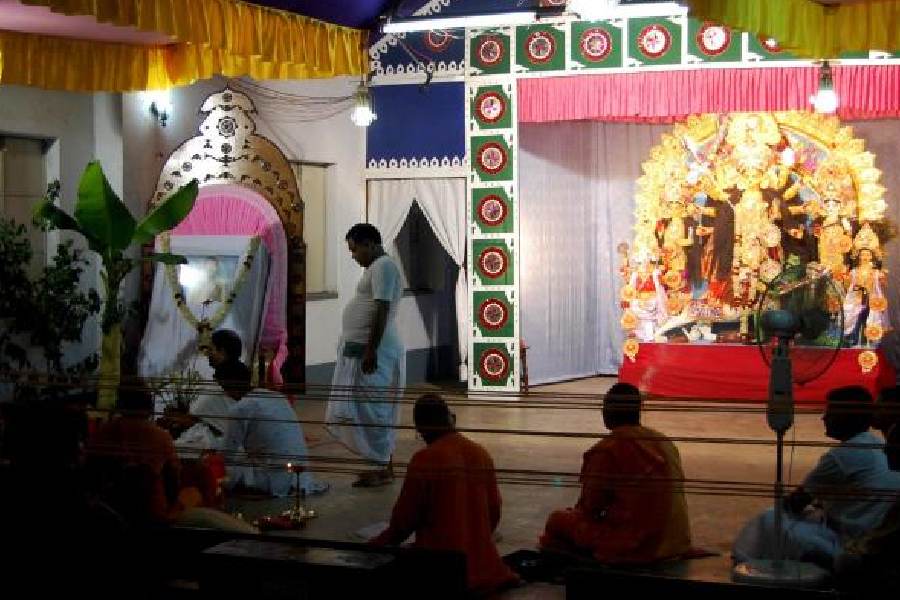
It also asks whether this newer meaning could change how Bengalis understand Durga Puja.

Jadavpur University’s saffron convocation gowns prompt reflections on the color’s changing meaning in Bengal.
The article contrasts Bengal’s earlier communist red and later blue-and-white political imagery.
Saffron is associated with renunciation, social service, education, and the Ramakrishna Mission tradition.
The author argues that this Bengali understanding of saffron differs from its use by Hindutva and right-wing groups elsewhere.
The article questions whether a narrower religious interpretation of saffron could reshape Bengal’s Durga Puja traditions.
- Who
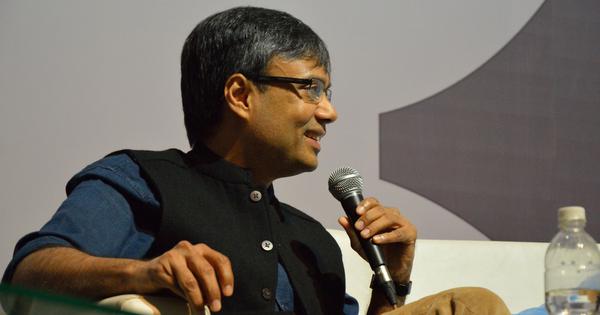
- Saikat Majumdar reflects on Bengali society, Jadavpur University, the Ramakrishna Mission, and the political groups associated with saffron.
- What
- The article examines how saffron has shifted from a spiritual and educational symbol to a color increasingly linked with right-wing politics.
- Where
- The focus is Bengal, especially Kolkata, Jadavpur University, Belur, and other institutions associated with the Ramakrishna Mission.
- When
- The discussion spans the late 20th century, Bengal’s political changes in the 21st century, and recent events mentioned by the author.
- Why
- The author is prompted by a social-media post about Jadavpur University and concerns over the political and administrative targeting of the institution.
Pluralist and Spiritual Saffron
Political and Exclusive Saffron
Meaning of the color
Pluralist and Spiritual Saffron
Saffron represents renunciation, service, educational excellence, spiritual discipline, and responsible citizenship.
Political and Exclusive Saffron
Saffron is increasingly associated with Hindutva politics and the aggressive conduct of some right-wing groups.
Place in academic life
Pluralist and Spiritual Saffron
A saffron gown at an academic ceremony can express a long-standing Bengali association between learning, spirituality, and social responsibility.
Political and Exclusive Saffron
The color can become troubling in a left-leaning intellectual environment when it is connected to political pressure or religious exclusion.
Bengali religious culture
Pluralist and Spiritual Saffron
Bengal’s Durga Puja is portrayed as earthy, seasonal, and associated with the mustard-yellow shade called Basanti.
Political and Exclusive Saffron
A neo-sanatani approach could replace this nuanced festival identity with a narrower and more austere religious interpretation.
Key facts
- University
- Jadavpur University uses saffron-colored convocation gowns.
- Earlier political color
- Red represented Bengal’s communist political era for decades.
- Later political color
- Blue and white came to mark the political period that followed.
- Spiritual meaning
- Saffron is described as the color of renunciation and sacrifice.
- Educational association
- The color is linked to the Ramakrishna Mission’s schools, colleges, hospitals, and cultural institutions.
- Religious symbolism
- In the monastic tradition described, white represents brahmacharya and saffron represents sannyas.
- Cultural question
- The article asks whether a narrower sanatani interpretation of saffron could influence Bengal’s Durga Puja traditions.
Sources
Related news

Suvendu Adhikari's Saffron Samman Yatra Targets Bengal's Nationalist Debate

Jadavpur University Whitewashes Graffiti After Suvendu Adhikari Criticism
Suvendu Adhikari vows to uproot ‘Free Kashmir’ slogans at Jadavpur

Chief Minister’s Jadavpur March Sparks Debate Over Saffron Power

Bengal Chief Minister Demands Apology for Saffron Hooliganism Headline

Saikat Majumdar on Education, Intelligence, and AI’s Human Future

AI and the Decline of Original Writing

Open Intelligence: AI and the Future of Creative Arts