1 month ago
Open Intelligence: AI and the Future of Creative Arts
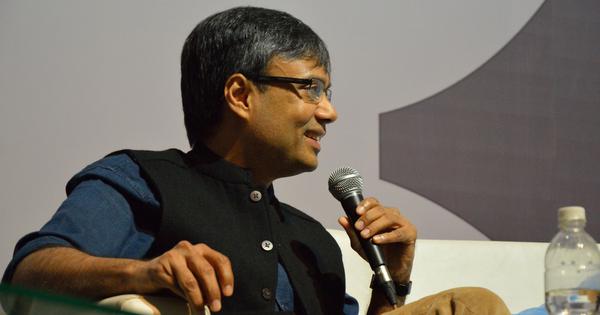
Saikat Majumdar's book 'Open Intelligence' discusses how art and artificial intelligence (AI) influence each other.
He argues that while AI can learn and replicate the scientific aspects of art, human artists have a unique ability to capture personal and subjective moments.
Majumdar highlights that human creativity lies in its subjective consciousness, which is something AI currently cannot replicate.
He also points out that the publishing industry might favor AI-generated art for commercial reasons, but human artists can survive by creating experimental and unique art that resonates deeply with audiences.
Majumdar remains hopeful that humans can thrive in an AI-driven world by emphasizing their unique narratives and idiosyncratic humanity.

Saikat Majumdar's book 'Open Intelligence' explores the relationship between art and AI.
AI can learn and replicate the scientific patterns in art, but lacks the subjective consciousness of human artists.
Human artists capture unique, momentary occurrences that are personal and subjective.
The publishing industry may favor AI-generated art for commercial success.
Human artists can survive by creating experimental and unique art that resonates deeply with audiences.
Majumdar emphasizes the importance of heightening idiosyncratic humanity to thrive in an AI-driven world.
- Who
- Saikat Majumdar, author of 'Open Intelligence: Education Between Art and Artificial'
- What
- The future of creative arts in the age of AI
- Where
- Global context, particularly in the publishing industry
- When
- Present and future implications
- Why
- To explore the interplay between human creativity and AI's capabilities in art.
Human Creativity
AI Creativity
Unique Singularity
Human Creativity
Human artists capture unique, momentary occurrences that are inherently subjective and personal.
AI Creativity
AI can replicate patterns and structures but lacks the ability to experience or convey true singularity.
Audience Reception
Human Creativity
Human art, especially experimental, can evoke deeper emotional and intellectual responses.
AI Creativity
AI-generated art may be more commercially successful due to its ability to quickly produce marketable content.
Key facts
- Author
- Saikat Majumdar
- Book Title
- Open Intelligence: Education Between Art and Artificial
- Publisher
- Penguin Random House India
- Key Argument
- Art and artifice shape each other and are inseparable.
- Unique Human Trait
- Subjective consciousness and the ability to capture unique moments.
- AI Advantage
- Efficiency in learning and replicating scientific patterns in art.
- Future Risk
- Machine-crafted personal consciousness.
- Survival Strategy
- Heightening idiosyncratic humanity and shaping unique narratives.
Quotes

Saikat Majumdar
Author of Open Intelligence: Education Between Art and Artificial
““all art has a dimension that is more like science…art forms with more visible scientific patterns have more teachable components…It has been easy for AI to pick up the scientific, learnable patterns and technical foundations of all art forms.””
 scroll.in
““The economies of cost and return are far likelier to work out in the favour of AI-generated art, if only because the vast majority of people can’t distinguish between high-level human and artificial performance.””
scroll.in
Sources
Related news
Seven AI Courses Offer Paths From Free Lessons to Credentials

Deloitte unveils framework to quantify sustainability's business value
IIT Roorkee Launches Online AI Programme for Working Professionals
IIT Bombay Launches E-PG Diploma In Computer Science And AI
Pentagon Launches AI Portal Without Anthropic’s Claude Model

Saikat Majumdar on Education, Intelligence, and AI’s Human Future

AI and the Decline of Original Writing