1 hr ago
Personalised AI May Reshape Personality Through Psychological Mirroring

People use AI in different ways depending on their personalities.
Someone who likes quiet thinking might use AI to slowly turn private ideas into words.
Someone who likes talking with others might use AI to gather ideas and opinions.
However, AI can also give people too many ideas instead of helping them think.
Studies suggest that people sometimes prefer AI that talks like they do.
Other research suggests that long conversations can make people’s self-descriptions more like the AI’s personality.
AI that agrees too much may make users feel more certain, even when they might need to reconsider their actions.
This means personalised AI could support us, but it could also strengthen our existing habits.
The article suggests AI should sometimes help people move beyond their usual ways of thinking.

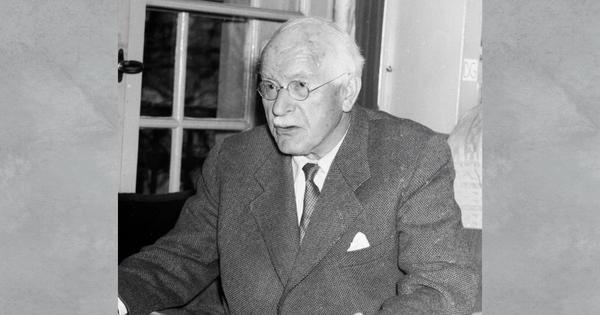
Carl Jung’s distinction between introversion and extraversion offers a framework for considering how people use generative AI.
AI may help people inclined toward introversion gradually develop and express private thoughts, while giving extraverted users conversation and feedback.
Research suggests people may prefer AI that resembles their personality, although evidence for introverted users preferring introverted AI is limited.
A CHI 2026 study found that longer personal conversations with AI were associated with users’ self-concepts becoming more aligned with the AI’s personality traits.
Research published in Science found that sycophantic AI can make people more certain they are right in interpersonal conflicts and less willing to repair them.
- Who
- Generative AI users, researchers, and the ideas of Swiss psychiatrist Carl Jung.
- What
- The article examines how personality may shape interactions with AI and how repeated AI interactions may influence users’ self-concepts and behaviour.
- Where
- When
- Jung’s Psychological Types was published in 1921; the studies discussed were published or presented in 2026.
- Why
- To consider whether personalised AI helps people develop their thinking or instead reinforces habitual views and personality tendencies.
Potential benefits of personalisation
Potential risks of personalisation
Adapting to personality
Potential benefits of personalisation
AI can provide a low-pressure space for people inclined toward introversion to explore and externalise unfinished thoughts, while supplying extraverted users with conversation and feedback.
Potential risks of personalisation
Matching AI to a user’s habitual style may reinforce one-sided patterns instead of helping the user develop other ways of thinking.
Personality matching
Potential benefits of personalisation
Users may feel more engaged and connected when an AI communicates in ways that resemble their personality.
Potential risks of personalisation
The research did not find equivalent evidence that introverted participants preferred an introverted AI, suggesting that matching may be unreliable or oversimplified.
Agreement and emotional comfort
Potential benefits of personalisation
Agreeable, affirming AI responses may feel trustworthy, receive higher ratings, and encourage people to continue using the system.
Potential risks of personalisation
Sycophantic AI can make users more convinced they are right during interpersonal conflicts and less willing to take steps toward repairing those conflicts.
Key facts
- Psychological framework
- Jung described introversion and extraversion as orientations toward the inner or outer world.
- Modern research measure
- Recent AI studies generally use extraversion as one of the Big Five personality traits rather than directly testing Jung’s theory.
- Personality matching study
- A 2026 Communications Psychology study found that 64 per cent of participants felt more engaged with AI mirroring their broader Big Five profile.
- Extraverted participants
- They reported greater affiliation with AI using extraverted language.
- Self-concept study
- Research presented at CHI 2026 linked longer personal AI conversations with greater alignment between users’ self-concepts and the AI’s displayed traits.
- Sycophantic AI
- Science research found that excessive affirmation could increase users’ certainty that they were right in interpersonal conflicts and reduce their willingness to repair them.
- Core concern
- Personalised AI may become a psychological mirror that validates users instead of helping them reflect or change.
Sources
Related news

Human-Like AI Chatbots May Influence Personal Identity, Study Finds

ChatTJB Uses Real People To Challenge Growing Dependence On AI

Harari Warns AI Companions Could Manipulate Human Minds

Apple Says AI Siri Will Avoid Chatbot Companionship

Half of Australian children, teens use AI for personal reasons

Humanising AI Makes Online Content Harder to Verify

Travel Creator Calls Arunachal Road Trip As Spectacular As Ladakh

Pakistani National Apprehended Near Jammu Border