12 hrs ago
Macquarie Favors Indian Electronics Stocks Amid Semiconductor Push
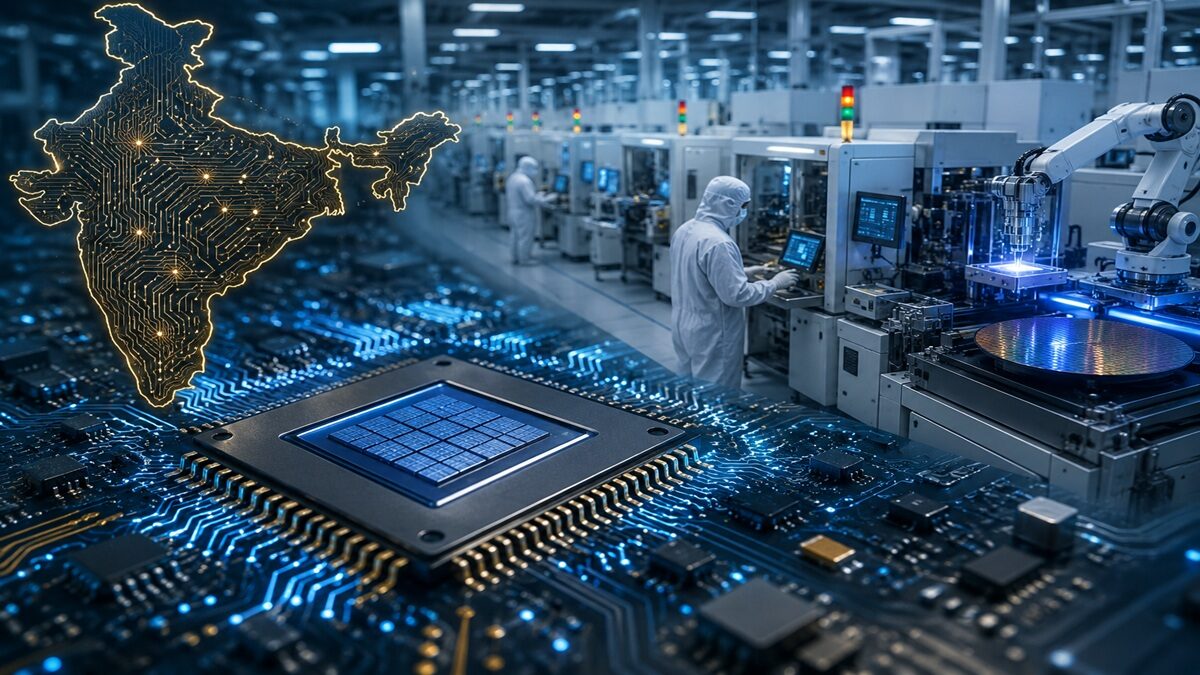
India is trying to build more of the semiconductor industry inside the country.
Macquarie studied companies that could benefit from this plan.
It liked CG Power the most, with an estimated potential return of 22 percent.
Syrma SGS was also favored because it is discussing higher-value semiconductor work with global partners.
Amber could benefit mainly by making more electronics components and smartphones in India.
Avalon has a direct connection through semiconductor equipment manufacturing.
Dixon may benefit from its manufacturing scale, but large chip projects may not fit its usual business style.
Kaynes is considering more packaging work, while Cyient DLM has less direct exposure to the new semiconductor programme.

Macquarie identified CG Power, Syrma SGS Technology and Amber Enterprises as its leading picks linked to India’s semiconductor and electronics-localisation drive.
CG Power received an Outperform rating, a Rs 1,090 target price and an indicated 22% total shareholder return, the highest among the covered companies.
Syrma SGS was rated Outperform with a Rs 1,700 target price and an indicated 18% return, supported by its interest in higher-value semiconductor opportunities.
Amber, Avalon and Dixon were also rated Outperform, while Kaynes received Neutral and Cyient DLM received Underperform.
Macquarie said ISM 2.0 focuses on domestic value addition across fabs, packaging, equipment, materials, testing, research and talent development.
- Who
- Macquarie Research and the Indian companies it covered, including CG Power, Syrma SGS Technology, Amber Enterprises, Avalon Technologies, Dixon Technologies, Kaynes Technology and Cyient DLM.
- What
- Macquarie issued ratings, price targets and return estimates for companies that could benefit from India’s ISM 2.0 semiconductor and electronics-localisation initiative.
- Where
- India, including semiconductor and electronics manufacturing operations such as Kaynes Technology’s facility in Sanand.
- When
- The analysis was based on Macquarie Research’s report dated September 1, 2026.
- Why
- Macquarie said ISM 2.0 is intended to build domestic semiconductor capabilities and increase value addition across the supply chain.
Direct Semiconductor Exposure
Broader Electronics Localisation
How companies may benefit
Direct Semiconductor Exposure
Macquarie viewed Syrma SGS and Avalon Technologies as more directly connected to ISM 2.0 through higher-value semiconductor work and equipment manufacturing.
Broader Electronics Localisation
Macquarie said Amber Enterprises and other electronics manufacturing services companies could benefit indirectly through component localisation, precision manufacturing and semiconductor-related equipment and subsystems.
Large-scale semiconductor investment
Direct Semiconductor Exposure
CG Power and Kaynes Technology are evaluating the economics of expanding semiconductor operations, with Kaynes viewing advanced packaging as its most logical route.
Broader Electronics Localisation
Dixon Technologies may be less likely to pursue large semiconductor manufacturing projects because its historical preferences emphasize lower asset intensity, faster capital turns and limited technology risk.
Policy support and investment hurdles
Direct Semiconductor Exposure
ISM 2.0 offers substantial capital support for fabs, packaging, equipment, research and talent development, potentially encouraging domestic capability creation.
Broader Electronics Localisation
Reduced incentives for assembly, testing, marking and packaging—from 50% under ISM 1.0 to 25%-35%—could raise the investment hurdle for additional capacity.
Key facts
- Policy outlay
- ISM 2.0 carries an outlay of Rs 1.27 lakh crore.
- India’s stated ambition
- India is targeting more than 10% of the global semiconductor market by 2035.
- Top-rated stock by indicated return
- CG Power: Outperform, Rs 1,090 target price and 22% indicated total shareholder return.
- Second-highest indicated return
- Syrma SGS Technology: Outperform, Rs 1,700 target price and 18% indicated total shareholder return.
- Capital support
- The framework provides 40% support for silicon fabs, 35% for specialty fabs and advanced packaging, and 25% for conventional packaging.
- Equipment support
- Semiconductor equipment manufacturing can receive 30% capital expenditure support plus production-linked incentives of 2%-10%.
- Investment thresholds
- Minimum investment requirements include Rs 20,000 crore for silicon fabs, Rs 500 crore for non-silicon specialty fabs and Rs 10,000 crore for display projects.
Sources
Related news
India’s Semicon 2.0 Broadens Chip Ecosystem; Three Stocks Watched
India’s Semicon 2.0 Push Creates Four Distinct Business Paths
India Notifies Rs 1.27 Lakh Crore Semicon 2.0 Programme

India Notifies ₹1.27 Lakh-Crore Semicon 2.0 Semiconductor Expansion Scheme

Anand Rathi's Ganesh Dongre Recommends Four Stocks to Buy
Motilal Oswal sees 30% upside as Kaynes Tech Q1 results