1 week ago
Trump Administration Proposes $103,265 H-1B Fee After Setback
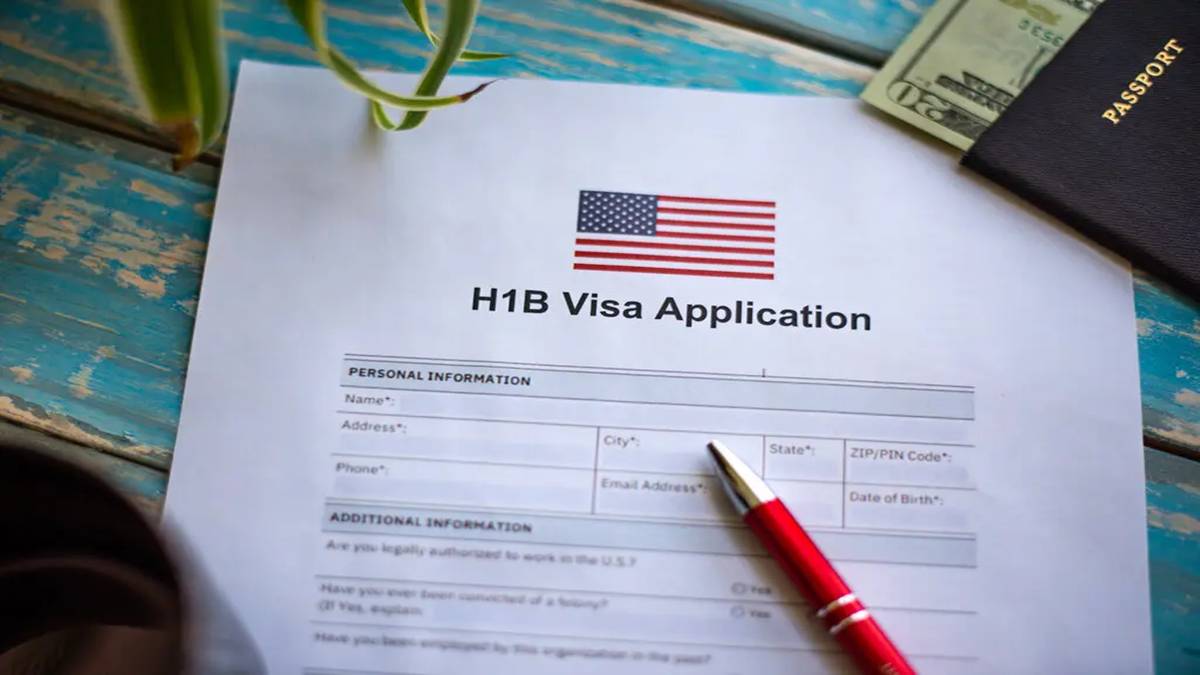
The government wants employers to pay an extra $103,265 when applying for certain H-1B workers.
H-1B visas help American employers hire foreign professionals for specialized jobs.
The fee would apply to the program’s 85,000 annual cap-subject petitions.
Officials say the money would help pay for immigration services, security checks, courts and enforcement.
Critics say the government would be charging much more than it costs to process one application.
A judge previously blocked a separate $100,000 H-1B payment, and the government appealed.
The new proposal is not final and will receive public comments for 30 days.
Some universities and research institutions would be exempt, but smaller organizations could face significant costs.

The Department of Homeland Security proposed an additional $103,265 fee for every cap-subject H-1B petition.
The fee would apply on top of existing charges, including petitions under the advanced-degree exemption.
DHS estimates the proposal could generate about $8.8 billion annually from 85,000 petitions.
Officials say the revenue would support immigration processing, screening, courts, technology and enforcement.
Critics call the measure an unlawful tax on businesses, while a separate $100,000 H-1B payment remains under appeal.
- Who
- The Trump administration and Department of Homeland Security proposed the fee; employers filing cap-subject H-1B petitions would pay it.
- What
- An additional $103,265 charge for each cap-subject H-1B petition.
- Where
- The proposal concerns the United States H-1B visa program.
- When
- The proposal is scheduled for Federal Register publication on Tuesday, followed by a 30-day public comment period.
- Why
- DHS says the fee would recover federal costs for immigration adjudication, screening, courts, consular processing and enforcement.
Critics
Administration
Legal authority
Critics
Critics argue that the government cannot charge employers substantially more than the cost of adjudicating an individual H-1B petition.
Administration
DHS argues that federal immigration law allows fees to recover broader costs associated with immigration adjudication and naturalisation services.
Economic effect
Critics
FWD.us President Todd Schulte called the proposal a massive tax on American businesses, while Doug Rand warned it could harm America’s global talent pipeline.
Administration
DHS says employers filing cap-subject petitions are generally better positioned to bear federal immigration-program costs than individual applicants.
Relationship to earlier fee
Critics
Opponents view the proposal as another attempt to impose a steep H-1B charge after a federal judge acted against the separate $100,000 payment.
Administration
The administration is pursuing a new fee proposal while appealing the ruling involving the earlier $100,000 payment.
Key facts
- Proposed fee
- $103,265 per cap-subject H-1B petition, in addition to existing charges
- Estimated annual revenue
- About $8.8 billion from a projected 85,000 petitions
- Annual visa allocation
- 85,000 visas: 65,000 regular-cap places and 20,000 advanced-degree places
- Public comment period
- 30 days after publication in the Federal Register
- Small entities affected
- DHS identified 14,541 small entities among 28,649 organizations filing cap-subject petitions in fiscal 2025
- Estimated significant impact
- 11,051 small entities, or 76%, would face a significant financial impact
- Exemptions
- Certain higher-education, nonprofit research and government research institutions would be excluded
Quotes
Todd Schulte
President of FWD.us
“The proposed H-1B fee is intended to recover the costs incurred across the federal government to adjudicate, vet, and support lawful immigration programs that otherwise must be funded by taxpayers.”
 thestatesman.com
“This proposed tax clearly violates the law by charging far more than is allowed, which should be the cost to adjudicate an H-1B petition.”
thestatesman.com
Sources

Related news
Trump Administration Proposes Permanent $103,265 H-1B Visa Fee

Trump Administration Proposes Permanent $103,265 H-1B Visa Fee
DHS Proposes $103,265 Additional Fee for Cap-Subject H-1B Visas
US Proposes $103,265 H-1B Fee, Threatening Indian Hiring
Trump Administration Proposes $103,265 H-1B Fee, Indians Face Impact
JD Vance backs proposed $103,265 H-1B fee hike

H-1B Visa Holder Leaves US To Rejoin Family
US H-1B Wage Proposal Could Reshape Opportunities For Indian Professionals

H-1B Grace Period Could End After US Layoffs

UPSC International Relations Quiz Covers Geography Visas Energy
Trump White House Clears Plan Ending H-1B Grace Period