

17 hrs ago
Audit Finds Green India Mission Missed Forest Targets by Wide Margins
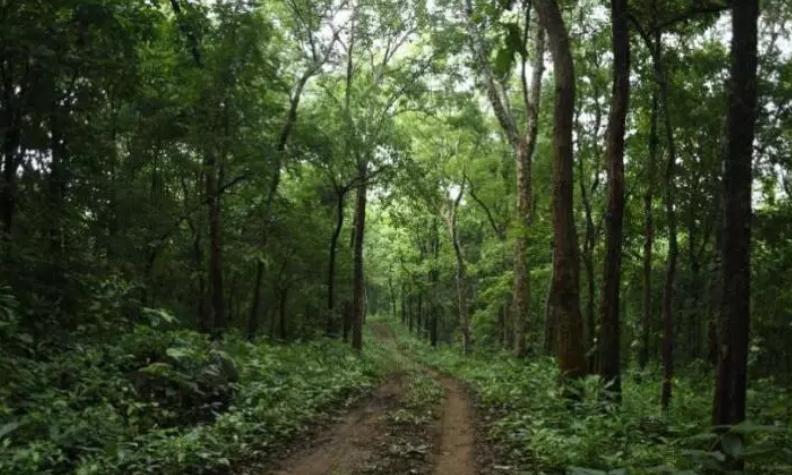
India created the Green India Mission to protect forests and increase green cover.
An audit reported that the mission fell far short of its forest-cover and forest-quality goals.
It said states did not use all the money available and that monitoring and coordination were weak.
The article also says large areas of forest have been approved for other uses, such as mining and construction.
It gives examples of projects that could affect forests and wildlife habitats.
Forests help store water, protect soil and provide homes for many living things.
They also support people who depend on forests for food and livelihoods.
The article argues that development and protecting forests both matter, and that mature forests should not be treated as replaceable.

A Comptroller and Auditor General audit tabled in Parliament in August 2026 found a 97.57% shortfall in the Green India Mission’s forest-cover target.
The audit also found a nearly 92% shortfall in improving forest quality; the article says states used only half the available funds.
Government data cited in the article shows 71,023.30 hectares of forest land were approved for non-forestry use between April 2023 and March 2026.
Mining and quarrying accounted for 16,463 hectares of approved diversion, followed by hydroelectric and irrigation projects and roads.
The article cites forest impacts linked to projects in Hasdeo-Arand, the Ken-Betwa river-linking project, Uttarakhand’s Char Dham highway work and Great Nicobar.
- Who
- The Comptroller and Auditor General of India assessed the Green India Mission; the article discusses government agencies and projects affecting forests.
- What
- An audit reported major shortfalls in the mission’s forest-cover and forest-quality targets, while forest land has also been approved for diversion.
- Where
- India, including examples in Chhattisgarh, Madhya Pradesh, Uttarakhand and Great Nicobar.
- When
- The audit was tabled in August 2026; the cited forest-diversion approvals cover April 2023 to March 2026.
- Why
- The article examines the gap between India’s forest-protection goals and mission performance and approvals for development-related forest diversion.
Forest Protection
Development Needs
Forest diversion for projects
Forest Protection
The article argues that mature forests support climate resilience, biodiversity and forest-dependent communities, and should not be treated as interchangeable land.
Development Needs
The article identifies mining, energy, irrigation, road and other infrastructure projects as reasons forest land has been approved for non-forestry use; it does not present detailed arguments from project proponents.
Balancing development and conservation
Forest Protection
The author says development should not come at the cost of treating natural forests as expendable.
Development Needs
The author acknowledges that both development and environmental protection are necessary, while questioning whether current policy balances them coherently.
Key facts
- Forest-cover target period
- 1.4 million hectares targeted for increase between 2015–16 and 2024–25.
- Reported forest-cover increase
- About 0.03 million hectares; the article gives a 97.57% shortfall.
- Forest-quality shortfall
- Nearly 92%, according to the audit as described in the article.
- Forest land approved for diversion
- 71,023.30 hectares between April 2023 and March 2026.
- Largest diversion category
- Mining and stone quarrying, accounting for 16,463 hectares.
- Green India Mission
- Launched as part of the National Action Plan on Climate Change, formulated in 2008.
- Mission targets
- Increase forest and tree cover on 5 million hectares, improve forest quality on another 5 million hectares, and support livelihoods of about 3 million forest-dwelling households.
Sources
Related news
CAG Finds Maharashtra’s Green India Mission Failed Across Key Measures

Audit Finds India’s Green Mission Falling Far Short

India Highlights Forest Restoration Achievements at FAO Forestry Conference

India Urged to Modernize Environmental Data and Conservation Monitoring

UN Warns Forest Restoration Window Is Narrowing Amid Climate Threats

India Aligns Development Agenda With Renewable Energy And Green Policy
Congress Questions Madhya Pradesh Debt During Amit Shah Visit
NITI Aayog Workshop Advances Sustainable Development Goals Budgeting
BJP, BJD Clash Over Mining Donations and Amended Law