1 week ago
Nearly Four Million Enslavement Records Open Colonial Family Histories
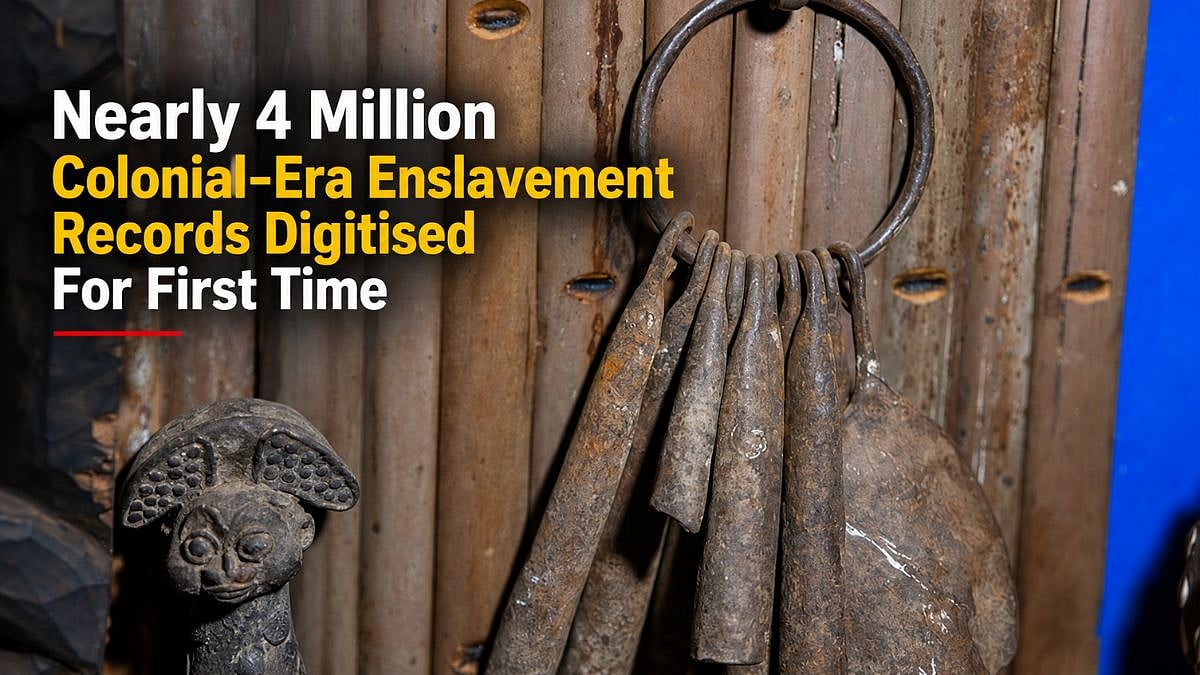
A large collection of old records about enslaved people has been put online.
The records cover 20 places that were once British colonies.
They include names, ages, families, births, deaths and movements between owners.
This can help descendants learn more about their ancestors.
Before digitisation, people often had to visit the National Archives in London to study the records.
Now, anyone with an Ancestry account can search them online for free.
Researchers have already followed some Jamaican families through six generations.
The records may also help connect families across the African diaspora.
Historians hope the collection will show more about the lives, survival and resistance of enslaved people.

Nearly four million records from 20 former British colonies are now searchable online.
Ancestry digitised the records with the Centre for the Study of the Legacies of British Slavery at University College London.
The collection contains about 300,000 pages covering enslaved populations between 1813 and 1840.
Records include names, ages, physical descriptions, family relationships, births, deaths and ownership transfers.
Researchers in Jamaica have used the records to trace some families across six generations.
- Who
- Ancestry and the Centre for the Study of the Legacies of British Slavery at University College London digitised the records for descendants and researchers.
- What
- Nearly four million records documenting enslaved people and their families were digitised, indexed and made searchable online.
- Where
- The records cover 20 former British colonies, including Jamaica, Barbados, the Bahamas, Mauritius, Trinidad and the Cape of Good Hope.
- When
- The collection covers records from 1813 to 1840 and was announced on September 22, 2026.
- Why
- The archive was created to monitor enslaved populations after the 1807 abolition of the transatlantic slave trade; it is now being used to research ancestry and the experiences of enslaved people.
Key facts
- Collection
- Former British Colonies Enslavement Registers, also known as T71
- Records
- Nearly four million individual records
- Extent
- About 300,000 pages
- Coverage
- 20 former British colonies
- Time period
- 1813–1840
- Search access
- Free online searching is available to anyone who creates an Ancestry account
- Research result
- Some Jamaican families have been traced across six generations
Quotes
Nicka Sewell-Smith
Professional genealogist and senior story producer at Ancestry
““When I use these records to unearth my enslaved ancestors, I’m using them for a purpose that was different than what it was initially intended for. Our product is restoring the humanity of a person.””
 freepressjournal.in
““The biggest piece of the story of British slavery, and it’s also the most misunderstood piece, is the experience of the enslaved,””
freepressjournal.in
Sources
Related news

Study Finds Dutch Royal House Deeply Involved in Colonial Exploitation
Caribbean Nations Consider Legal Action Over UK Slavery Reparations

Janice Pariat Finds Living History Across Britain’s Archives
King Charles to Address Slavery Legacy During Caribbean Tour
Oxford Museum to Return 39 Colonial-Era Remains to Naga People