9 months ago
Voyager 2's Uranus radiation data flawed by timing
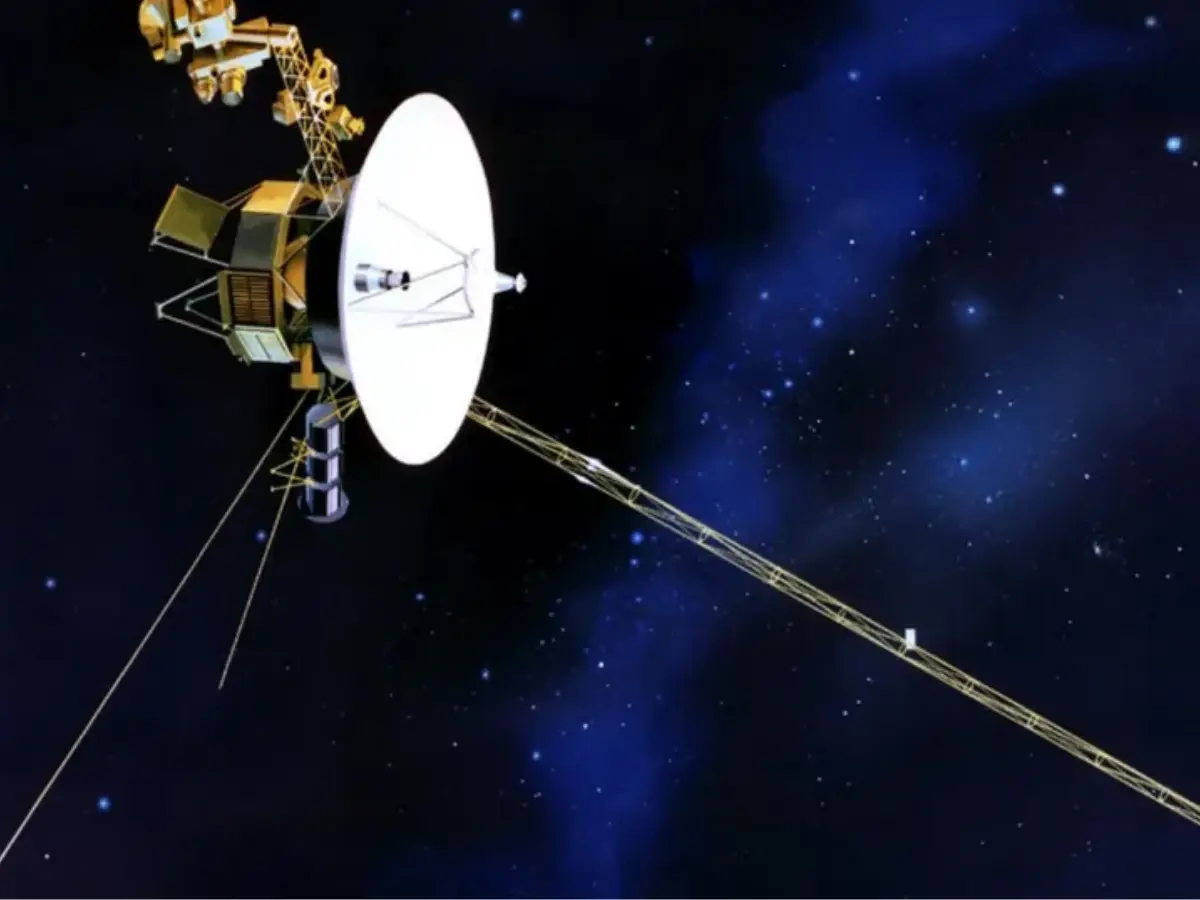
Voyager 2, a spacecraft from NASA, flew by the planet Uranus in 1986.
It measured a lot of electron radiation, which surprised scientists.
They thought Uranus had a very strong electron radiation belt.
But recently, scientists from the Southwest Research Institute looked at the data again.
They found out that Voyager 2 happened to be there at the wrong time.
A special event in the solar wind, called a co-rotating interaction region, was passing by Uranus.
This event caused the unusual radiation measurements.
So, the initial belief about Uranus's radiation was not correct.
It was just a matter of bad timing!

Voyager 2's 1986 flyby of Uranus detected unexpectedly high-energy electron radiation, puzzling scientists for decades.
A recent study by the Southwest Research Institute (SwRI) found that the unusual radiation was due to a transient solar wind event, not Uranus's normal environment.
The event, called a 'co-rotating interaction region,' was passing through the Uranian system during Voyager 2's flyby.
The study was led by Dr. Robert C. Allen and published in Geophysical Research Letters.
Voyager 2 recorded the most powerful high-frequency waves at this point during its entire mission.
- Who
- NASA's Voyager 2 probe and scientists at the Southwest Research Institute (SwRI)
- What
- Misinterpretation of Uranus's radiation environment due to timing
- Where
- Uranus and its surrounding system
- When
- Voyager 2 flew by Uranus in 1986; study published in 2024
- Why
- A transient solar wind event (co-rotating interaction region) was passing through the system during the flyby, causing unusual radiation measurements
Key facts
- Spacecraft
- Voyager 2
- Planet
- Uranus
- Year of Flyby
- 1986
- Research Institute
- Southwest Research Institute (SwRI)
- Lead Scientist
- Dr. Robert C. Allen
- Journal
- Geophysical Research Letters
- Anomaly Cause
- Co-rotating interaction region (solar wind structure)