

11 months ago
Iran's Taftan Volcano Shows Signs of Activity After 700,000 Years
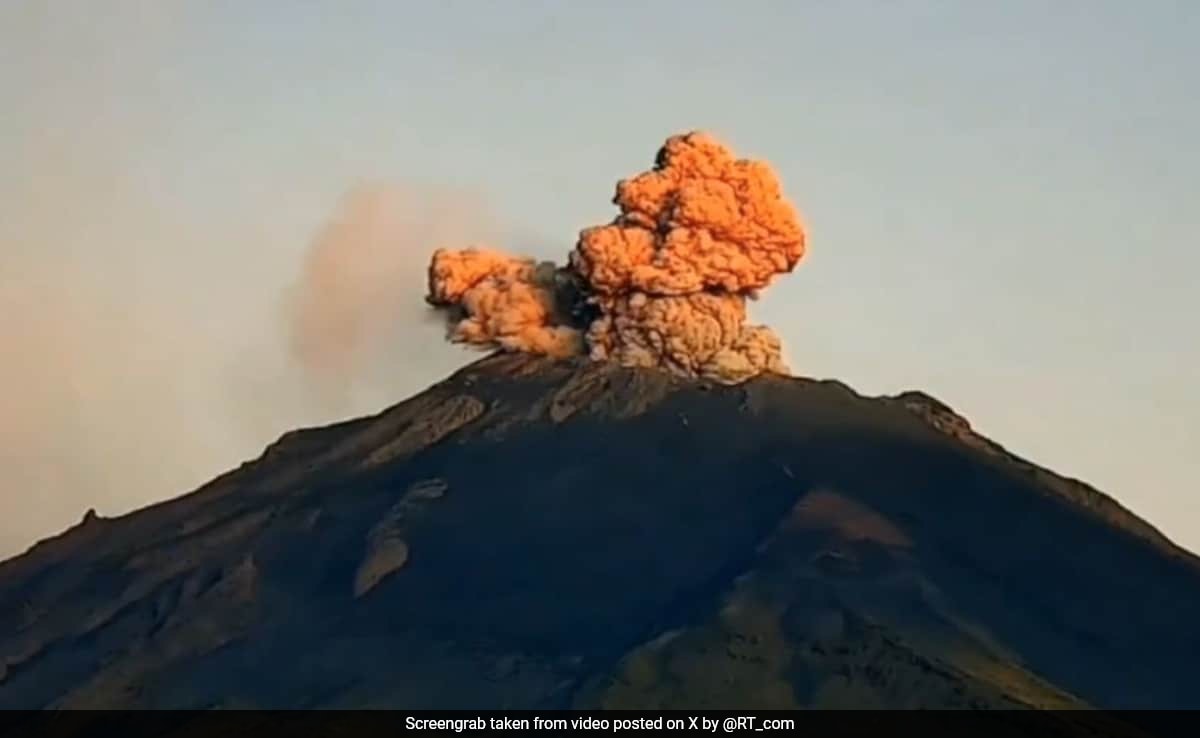
Imagine a really big mountain that's like a sleeping giant, called Taftan volcano in Iran.
Scientists thought it was so deeply asleep, like for 700,000 years, that it would never wake up!
But recently, they noticed the ground around the very top of the mountain has been slowly getting higher, like it's puffing itself up.
This happened over about 10 months.
This makes scientists think the giant isn't totally asleep anymore and might be stirring.
It doesn't mean it will erupt tomorrow, but it's a sign that it could become active again in the future.
They want the people in charge to pay attention and set up ways to watch the volcano closely, just in case.
They also want to check the gases coming from it.
It's like a gentle nudge to make sure everyone is ready and knows what to do if the mountain starts to rumble.

The Taftan volcano in southeastern Iran, previously believed dormant for 700,000 years, shows new signs of activity.
Researchers observed ground at the summit rising by 3.5 inches (9 cm) over a 10-month period from July 2023 to May 2024.
This geological activity suggests the volcano should now be classified as dormant rather than extinct.
The findings, published in Geophysical Research Letters, indicate potential future volcanic release and highlight the need for monitoring.
Scientists are calling for authorities to establish monitoring networks and update hazard maps due to the potential risk to nearby populations.
- Who
- Researchers led by Pablo Gonzalez and doctoral student Mohammadhossein Mohammadnia
- What
- Discovered signs of renewed activity in the Taftan volcano, including ground uplift, suggesting it is no longer considered extinct but dormant.
- Where
- Taftan volcano, southeastern Iran, near the Iran-Pakistan border.
- When
- Ground uplift observed between July 2023 and May 2024; research published on October 7.
- Why
- The uplift and instability suggest the volcano may release pressure in the future, posing a potential risk that requires monitoring and hazard assessment.
Key facts
- Volcano Name
- Taftan
- Location
- Southeastern Iran, near Iran-Pakistan border
- Height
- 12,927 feet (3,940 meters)
- Dormancy Period (Believed)
- Approximately 700,000 years
- Ground Uplift
- 3.5 inches (9 cm) over 10 months (July 2023 - May 2024)
- Research Publication
- Geophysical Research Letters, October 7
- Lead Researcher
- Pablo Gonzalez (IPNA-CSIC, Spain)
Quotes
Pablo Gonzalez
volcanologist at the Institute of Natural Products and Agrobiology (IPNA-CSIC) in Spain
“It has to release somehow in the future, either violently or more quietly”
 NDTV
NDTV
“This study doesn't aim to produce panic in the people. It's a wake-up call to the authorities in the region in Iran to designate some resources to look at this”
NDTV
authors
authors of the study published in Geophysical Research Letters
“Our findings reveal that Taftan is more active than previously recognised. This highlights the urgent need for a revision of the current volcano risk of the Makran subduction volcanic arc, that is, establishing volcano monitoring networks, creating and/or updating geological hazard maps and other measures aiming to reduce volcanic risks”
NDTV