1 day ago
NSE IPO Draws Strong Institutional Demand Despite Valuation Concerns
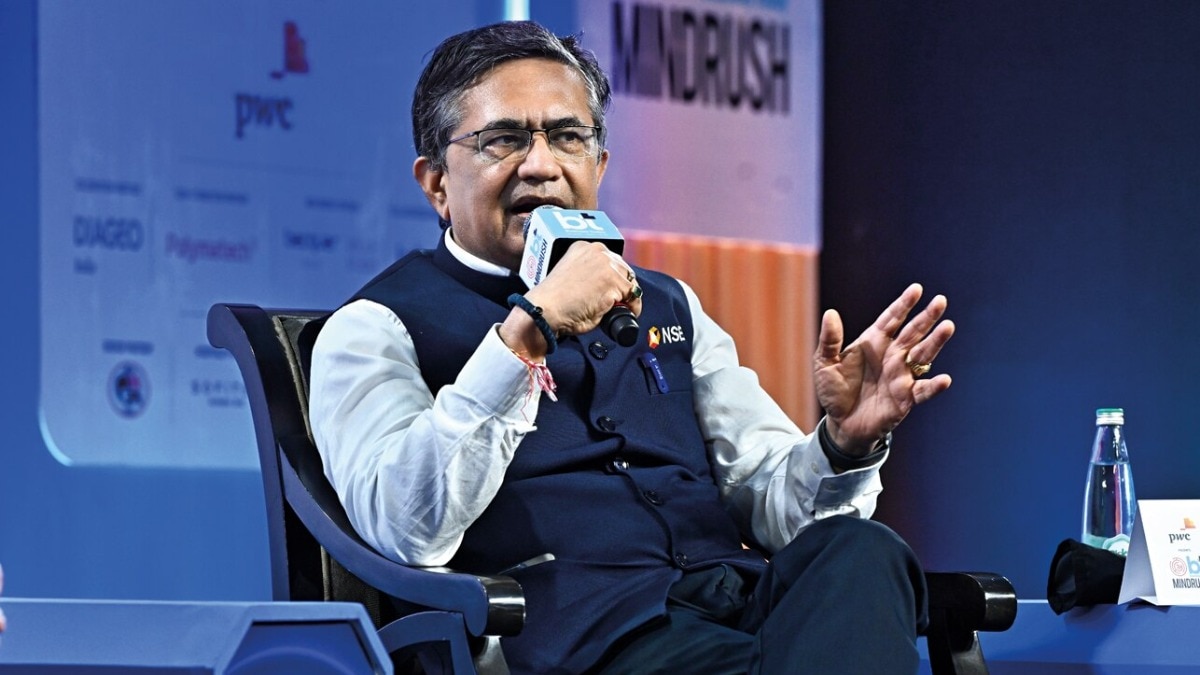
The National Stock Exchange is preparing to sell shares to the public.
The shares will come from current owners, so the exchange itself will not get new money from the IPO.
Ashishkumar Chauhan said many foreign and Indian institutions want to buy the shares.
The number of shares reserved for early investors was reduced, but demand was still described as very strong.
Chauhan said NSE makes large profits and pays much of its spare cash to shareholders.
He also said the exchange does not currently need extra money for expansion or debt repayment.
Some existing shareholders are reluctant to sell because they believe the proposed price is lower than they expect.
The IPO price band is Rs 1,700 to Rs 1,785 per share.

Ashishkumar Chauhan said demand for the NSE IPO anchor book was unexpectedly strong among foreign and domestic institutions.
The anchor allocation was reduced to about Rs 6,250 crore from the earlier Rs 9,000 crore, without dampening investor interest.
The IPO is structured as an offer for sale, meaning existing shareholders will sell shares and NSE will receive no proceeds.
Chauhan described NSE as highly profitable, with substantial free cash flow distributed as dividends and no stated need for fresh capital.
NSE set its IPO price band at Rs 1,700-Rs 1,785 per equity share, while some shareholders consider the proposed valuation below their expectations.
- Who
- The National Stock Exchange and its existing shareholders are involved, with Ashishkumar Chauhan discussing the IPO and institutional demand.
- What
- NSE is preparing an offer-for-sale IPO featuring shares sold by existing shareholders.
- Where
- The offering concerns the National Stock Exchange and its investors; the article does not specify a physical location.
- When
- The final anchor-book allocation was due to be announced on Wednesday, September 16; market comparisons cited fiscal 2026 and the three months ended June 30, 2026.
- Why
- Existing shareholders are offering shares, while NSE is described as profitable and not requiring fresh capital.
Strong IPO Demand
Valuation Caution
Institutional interest
Strong IPO Demand
Chauhan said the anchor book had unexpectedly large demand from foreign and domestic institutions, with many investors seeking substantial allocations.
Valuation Caution
The available share allocation is limited, and strong demand does not resolve whether the proposed valuation meets existing shareholders' expectations.
Offer pricing
Strong IPO Demand
NSE is presented as a highly profitable exchange that generates substantial free cash flow and pays significant dividends, supporting investor interest.
Valuation Caution
Some existing shareholders are reluctant to sell at the proposed valuation, which Chauhan said was below the pricing they expected.
Use of IPO proceeds
Strong IPO Demand
Because NSE does not need fresh capital for expansion, debt repayment or capacity building, an offer for sale allows shareholders to monetize their holdings without raising money for the exchange.
Valuation Caution
Since the IPO proceeds go to selling shareholders rather than NSE, investors are buying existing shares rather than funding new growth at the exchange.
Key facts
- IPO structure
- Offer for sale by existing shareholders; NSE will not receive the IPO proceeds.
- Price band
- Rs 1,700 to Rs 1,785 per equity share.
- Anchor allocation
- Reduced to around Rs 6,250 crore from the earlier Rs 9,000 crore.
- Investor demand
- Described as unexpectedly large, with strong interest from foreign and domestic institutions.
- Profitability
- Chauhan said NSE is highly profitable and distributes most of its free cash flow as dividends.
- Cash-equity trade share
- 11.38% globally in fiscal 2026 and 10.68% in the three months ended June 30, 2026, according to the World Federation of Exchanges figures cited by Chauhan.
- Equity-derivatives contract share
- 51.18% globally in fiscal 2026 and 50.22% in the three months ended June 30, 2026, according to the cited figures.
Quotes

Ashishkumar Chauhan
Ashishkumar Chauhan, the NSE chief executive commenting on the exchange’s IPO structure and finances
“Reasonably, NSE is highly profitable. It ends up giving a huge amount of profits and gives most of that free cash flow as dividends. And that's why it doesn't require money.”
 businesstoday.in
“There is a large number of investors seeking a large number of shares”
businesstoday.in
Sources
Related news
NSE IPO Draws Unexpectedly Strong Demand Before September Launch

NSE Shareholders Cut Stake Sales After IPO Prices Lower

Strong Institutional Demand Builds Ahead of NSE’s Mega IPO

NSE IPO Lock-In Debate: Chauhan Downplays Post-Listing Selling Concerns

NSE IPO Opens September 17 With No Shareholder Quota
NSE IPO Stake Sales Shrink Despite Strong Listing Expectations

NSE IPO Sees 43% Subscription, Grey Market Signals 8% Pop
NSE IPO Gives Soach Global Nearly 25 Times Investment Return

NSE IPO Opens as Grey Market Premium Falls Sharply
Economy Quiz Covers Semicon 2.0, UPI, Demat and Trade

Indian Markets Mixed Amid NSE IPO and Tata Governance Dispute