1 day ago
AI Helps India Protect Tigers From Pugmarks to Alerts

Long ago, forest guards mainly looked for tiger footprints and other signs to understand where tigers were.
They wrote their observations in paper registers.
New tools now help them record patrols with GPS and mobile phones.
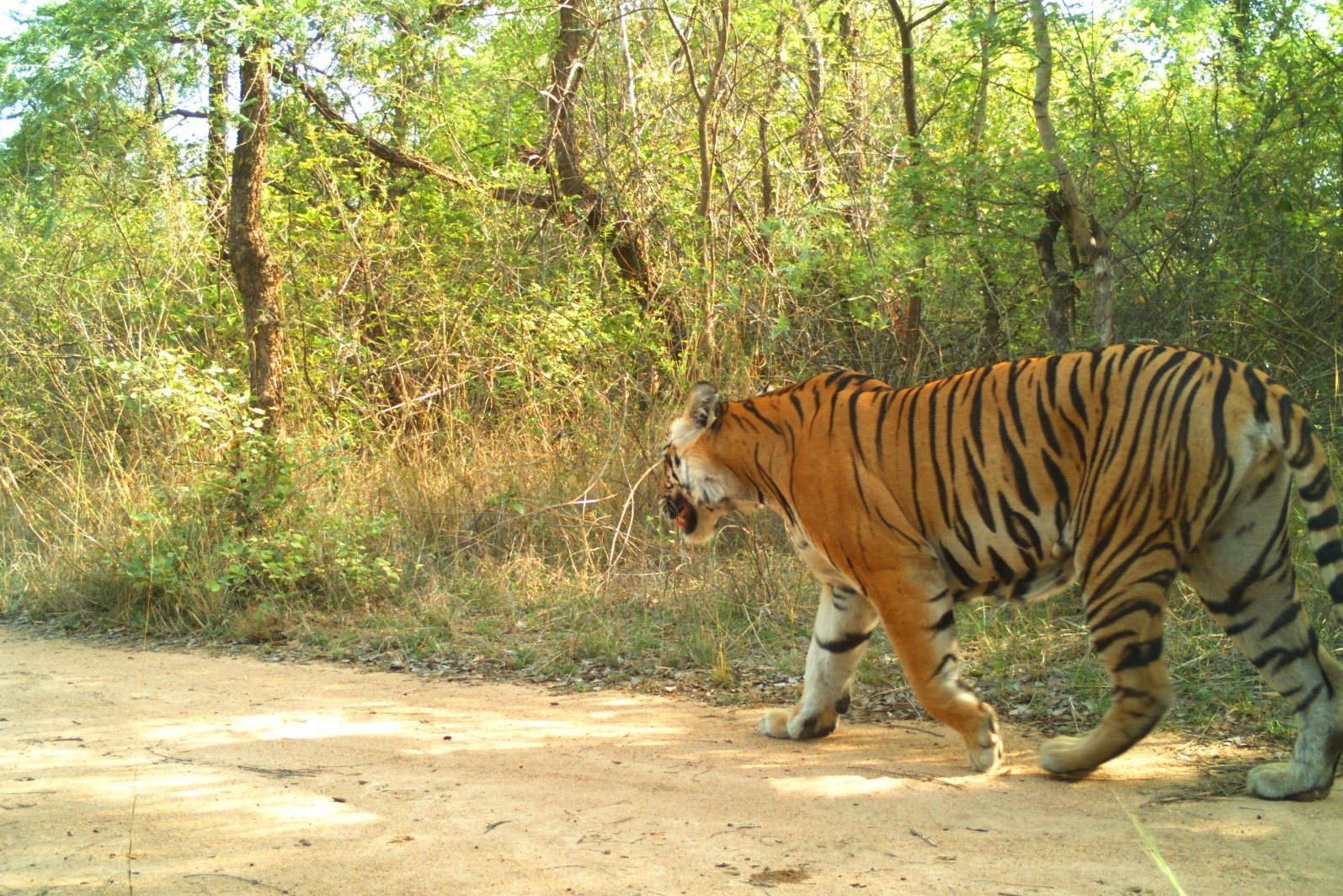
Camera traps take pictures of animals without people being nearby.
Scientists can recognize individual tigers by their stripe patterns.
New AI cameras can study images and send alerts to rangers quickly.
At Pench, another system listens for alarm calls from deer that may signal a big cat.
These tools do not replace forest guards; they help guards notice problems and respond faster.

Tiger monitoring once relied mainly on pugmarks, tracks, scat and handwritten records.
M-STrIPES introduced GPS, mobile applications and digital databases for patrol and wildlife data.
Camera traps let researchers identify individual tigers through their unique stripe patterns.
India’s 2018 tiger assessment used 26,838 camera-trap locations and produced more than 34 million photographs.
AI cameras and bioacoustic systems can send near-real-time alerts about wildlife, people or possible threats.
- Who
- Indian forest guards, wildlife managers, researchers and nearby communities are using or testing these technologies to protect tigers.
- What
- Technology has evolved from manual pugmark tracking to GPS patrol systems, camera traps, AI cameras and bioacoustic monitoring.
- Where
- The technologies are being used or tested in Indian tiger landscapes, including Pench and Nagarahole.
- When
- The shift spans earlier manual monitoring to current AI trials; India’s cited tiger assessment took place in 2018, while the listed sources were published on June 14 and June 16, 2026.
- Why
- The tools are intended to improve tiger monitoring, strengthen protection, manage wildlife conflict and help officials respond more quickly.
Key facts
- Earlier monitoring
- Forest staff relied on pugmarks, tracks, scat, field experience and handwritten records.
- Digital patrol system
- M-STrIPES uses GPS, mobile applications and digital databases to record patrol routes, observations and crime scenes.
- 2018 assessment
- India’s assessment used 26,838 camera-trap locations.
- Photographs collected
- The 2018 assessment generated more than 34 million wildlife photographs.
- Tiger identification
- Camera traps can identify individual tigers through their unique stripe patterns.
- AI alert timing
- In trials in tiger landscapes, detected tiger images reached smartphones in roughly 30 seconds.
- Bioacoustic testing
- At Pench, an AI-driven system is being tested to analyse alarm or distress calls from prey animals such as deer.
Sources
Related news

TTD Evaluates Robotic Dog for Wildlife Monitoring Around Tirumala

AI System 'Gajraj' Alerts Train Drivers to Elephants on Tracks

Odisha Forest Officer Uses AI to Transform Forest Protection

Male Tiger Camera-Trapped in Assam’s Dihing Patkai National Park

Maharashtra's Sindhudurg Becomes India's First AI-Powered District