

4 days ago
US Declares Hormuz Mine-Cleared, But Shipping Safety Remains Uncertain
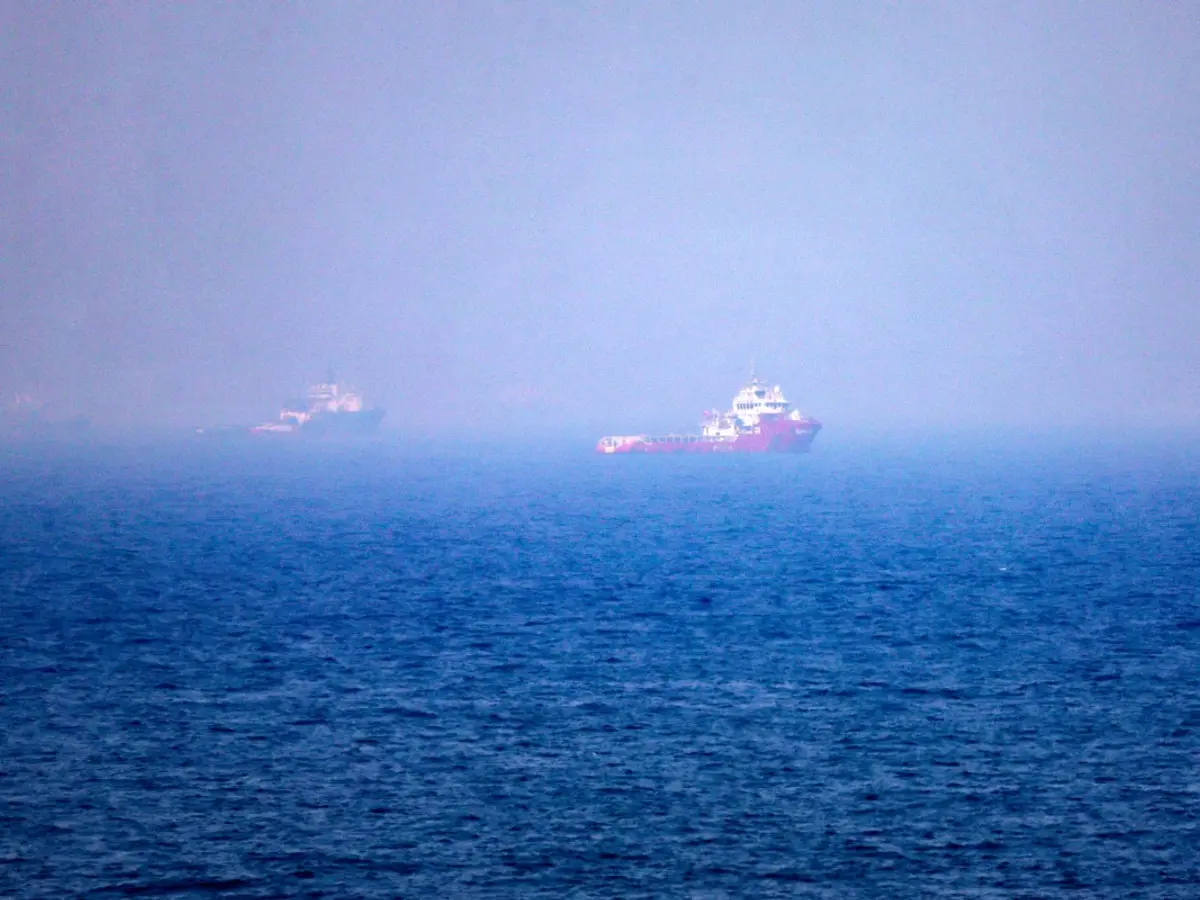
The United States says it removed mines from important ship routes in the Strait of Hormuz.
The mines were linked to Iran’s Islamic Revolutionary Guard Corps.
More than 200 objects were taken away, but US officials said only 11 were really mines.
President Donald Trump said the waterway was open again.
The US says many oil tankers are now crossing each night.
However, experts say shipping is still only about half as busy as before the war.
Iran says American military control does not guarantee safety.
Iran’s parliament speaker says the strait would be safer without US troops.

US Central Command says its forces cleared Iranian sea mines from internationally recognized shipping lanes in the Strait of Hormuz.
More than 200 mine-like objects were removed, but US officials told Axios that only 11 were actually mines.
President Donald Trump said the strait was open and described Iran’s response as mild.
The US says 20 to 30 tankers cross the southern channel each night, carrying 9 to 10 million barrels of oil.
Oil experts and tanker trackers question whether traffic has recovered fully, while Iran says lasting security requires US troops to leave.
- Who
- US forces, Iran’s Islamic Revolutionary Guard Corps, commercial shipping operators, President Donald Trump, and Iranian parliament speaker Mohammad Bagher Ghalibaf.
- What
- The US says it cleared Iranian sea mines from international shipping lanes, while experts and Iran dispute whether the strait is genuinely secure.
- Where
- The Strait of Hormuz, particularly its internationally recognized shipping lanes and southern channel.
- When
- The US announcement was made on Thursday, August 27; the article does not specify the year.
- Why
- The operation was intended to reopen a major route for commercial ships and oil tankers after mines had disrupted or threatened shipping.
US and Trump’s assessment
Iranian and industry skepticism
Whether the strait is open
US and Trump’s assessment
US Central Command says American forces cleared mines from international shipping lanes, and Donald Trump said the strait was open.
Iranian and industry skepticism
Iran rejects the idea that US military control guarantees lasting security, while shipping experts question whether traffic has recovered as strongly as officials claim.
Scale of the mine threat
US and Trump’s assessment
The Pentagon presents the removal of more than 200 mine-like objects as a major operational breakthrough.
Iranian and industry skepticism
US officials cited by Axios said only 11 objects were actually mines, with just a few properly deployed, suggesting the threat may have been less extensive than portrayed.
Conditions for security
US and Trump’s assessment
The US points to the resumption of tanker crossings as evidence that the waterway is functioning again.
Iranian and industry skepticism
Ghalibaf argues that the strait’s security depends on the absence of US troops and warns that if Iran cannot sell oil in the region, others will not either.
Key facts
- Objects removed
- More than 200 mine-like objects were removed from the main shipping lane.
- Mines identified
- US officials cited by Axios said 11 of the objects were actually mines.
- Current tanker traffic
- The US says 20 to 30 tankers cross the southern channel each night.
- Oil shipments
- Those tankers are said to carry about 9 to 10 million barrels of oil.
- Recovery level
- The reported traffic remains about half of the pre-war volume.
- Iranian position
- Mohammad Bagher Ghalibaf said Hormuz security depends on the absence of US troops.
Quotes
Adm. Brad Cooper
Commander of US Central Command
“We have successfully cleared sea mines in the strait’s international shipping lanes that were laid months ago by Iran’s Islamic Revolutionary Guard Corps”
 wionews.com
“That sucker is open. The Iranian response is very mild. They don’t want us to go back at them. That’s the whole ball game. The rest doesn’t matter”
wionews.com

Mohammad Bagher Ghalibaf
Speaker of Iran’s Parliament
“In a region where we don’t sell oil, no one else will sell oil either.”
wionews.com
Sources
Related news
US Says Iranian Mines Cleared, But Hormuz Traffic Remains Restricted
Trump Declares Strait of Hormuz Open as Tanker Traffic Resumes
Trump Says Strait of Hormuz Demined, Warns Iran
White House Says US Controls Strait of Hormuz
Vance: 'Some Progress' in Iran Talks; No Hormuz Toll Plans
Iran Seizes Fuel-Smuggling Vessel in Gulf, Arrests 11 Crew
Trump Floats Renaming Strait of Hormuz as “Trump Strait”

Chevron Plans $7 Billion Venezuela Expansion Amid U.S. Oil Push
Saudi Tanker Hit in Hormuz, Killing Two Filipino Sailors

Indian Stocks Extend Three-Day Losing Streak as Oil Rises
