

2 days ago
AI Boom Brings Rising Demands for Power, Water and Land

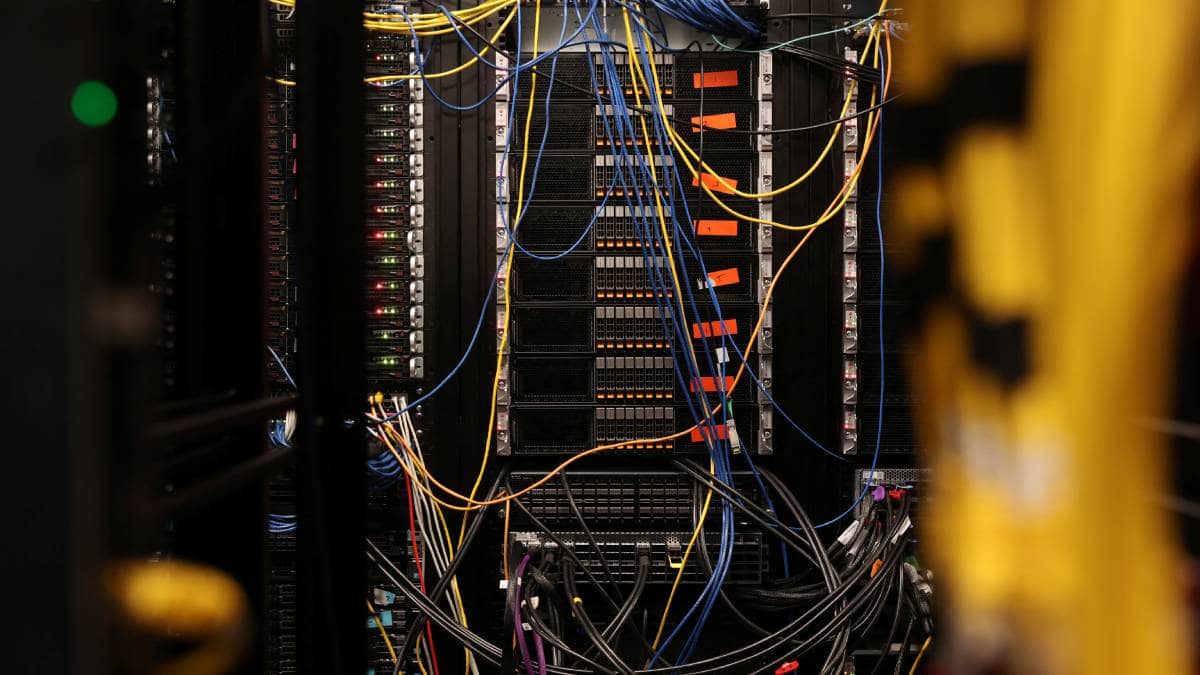
AI works in large buildings called data centres.
These buildings use electricity to run powerful computers.
The computers also produce heat, so they need cooling systems that can use water.
Building more data centres can require large areas of land, roads, power lines and substations.
This expansion is increasingly affecting rural communities.
Using renewable or nuclear power can reduce emissions compared with relying heavily on fossil fuels.
Better chips and cooling systems can also use fewer resources for each task.
However, people may use AI much more often, which could increase total demand.
AI might also help reduce emissions by improving power grids and transportation, but its overall environmental effect remains uncertain.

Global data-centre electricity demand rose 17% in 2025, while AI-focused facilities’ consumption increased 50%, according to the International Energy Agency.
The United States has nearly 100 hyperscale data centres, with about 120 under construction and 460 more planned, according to a Washington Post analysis.
Data-centre expansion requires land, fibre connections, substations, transmission lines, roads and cooling infrastructure, increasingly affecting rural communities.
Water use varies by cooling technology and location, prompting proposed European Commission rules requiring data centres to disclose energy and water efficiency information.
Efficiency improvements and clean-energy investments may reduce AI’s environmental impact, but rising adoption and more energy-intensive applications could offset those gains.
- Who
- AI companies, data-centre developers, governments, local communities and electricity and water users are affected.
- What
- The rapid expansion of AI data centres is increasing demand for electricity, water, land and supporting infrastructure.
- Where
- The trend is especially prominent in the United States, while European policymakers are also addressing data-centre impacts.
- When
- The article cites developments and data from 2024 and 2025, with further expansion planned.
- Why
- AI applications require increasing amounts of computing power, and the resulting data centres need electricity, cooling, land and connected infrastructure.
Environmental and infrastructure concerns
Efficiency and potential climate benefits
Electricity and emissions
Environmental and infrastructure concerns
Growing AI adoption and more computationally intensive applications could increase electricity use and greenhouse-gas emissions, especially where grids rely heavily on fossil fuels.
Efficiency and potential climate benefits
More efficient chips, clean-energy procurement and lower-carbon power sources could reduce emissions per computation and limit AI’s climate impact.
Water and land use
Environmental and infrastructure concerns
Cooling systems may consume significant water, while data-centre construction can require land, forest clearing, farmland conversion and new infrastructure, creating conflicts with communities, agriculture and ecosystems.
Efficiency and potential climate benefits
Newer cooling technologies can reduce water use, and careful siting can help manage location-specific pressures on water and land.
Overall effect of AI
Environmental and infrastructure concerns
Efficiency gains may be outweighed if AI becomes dramatically more popular and individual applications require much more computing power.
Efficiency and potential climate benefits
AI could help reduce emissions elsewhere by improving electricity-grid management, renewable-power integration, energy forecasting and transportation efficiency.
Key facts
- Global data-centre electricity growth
- Demand increased 17% in 2025, according to the International Energy Agency.
- AI data-centre electricity growth
- Consumption increased 50% in 2025, according to the International Energy Agency.
- United States expansion
- The United States has nearly 100 hyperscale data centres, about 120 under construction and roughly 460 planned.
- Hyperscale threshold
- The article defines a hyperscale facility as consuming at least 100 megawatts, approximately the demand of 80,000 homes.
- Google clean-energy contracts
- Google said it had contracted more than 8 gigawatts of clean-energy generation.
- Microsoft renewable-energy contracts
- Microsoft said it had contracted 34 gigawatts of new renewable energy across 24 countries.
- Microsoft cooling technology
- Microsoft says newer direct-to-chip cooling can save more than 125 million litres of water per facility annually.
- European policy proposal
- The European Commission proposed requiring European data centres to disclose energy and water efficiency information.
Sources
Related news

India’s AI Expansion Faces Growing Power and Infrastructure Demands

AI Power Demand Drives America’s Electricity Infrastructure Race
AI Data Centre Boom Could Lift US Gas Demand

India’s AI Data-Centre Boom Raises Hidden Water Concerns

US AI Boom Requires $110 Billion for New Power Plants

EU Suspends Sierra Leone Aid Over Fugitive Cocaine Kingpin

India-EU Trade Deal Nears Signing After 17 Years

Google Asks EU Court to Pause Search Data Order

UK Eases Erasmus+ Immigration Rules Ahead of 2027 Return
