

1 hr ago
Italy's West Nile Virus Spread Expands Amid Europe's Warming Climate
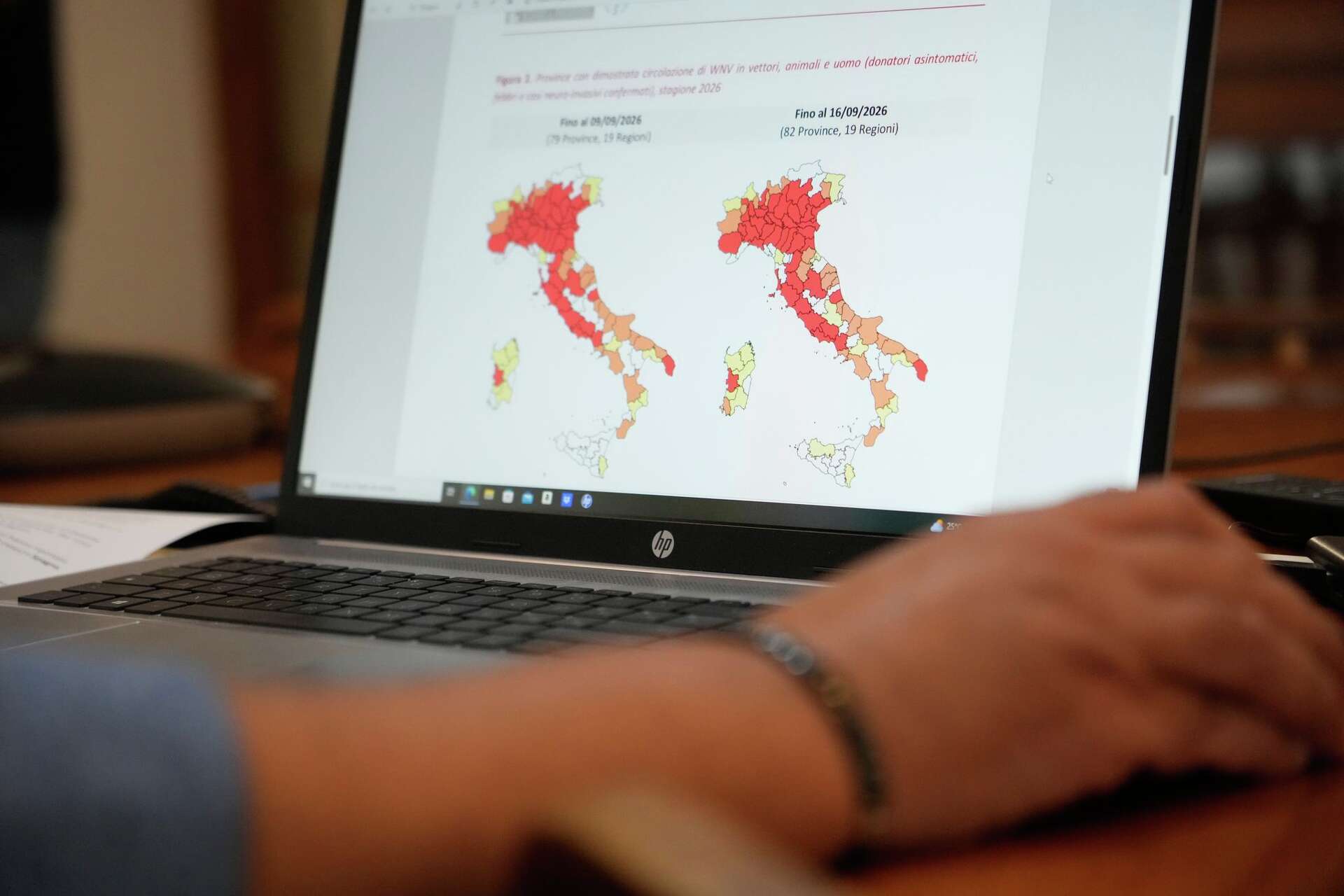
West Nile virus is a disease that mosquitoes can spread to people.
Italy has found more than 650 cases this year.
Scientists say warmer weather gives mosquitoes more time to live, reproduce and spread the virus.
This can make the transmission season last until November in some places.
Most infected people do not feel sick, while others have mild flu-like symptoms.
A small number, especially older people or those with health problems, can become seriously ill.
Italy also finds many cases because it has a large system for watching mosquitoes, birds, blood donors and people.
Countries farther north are watching Italy because warming weather could make mosquito seasons longer there too.
Other changes, including land-use changes and reduced bird diversity, may also affect how much the virus spreads.

Italy has reported more than 650 West Nile virus infections this year, roughly half of Europe’s total cases.
Researchers say warmer temperatures and longer warm seasons help mosquitoes reproduce and extend virus transmission into later months.
West Nile virus has been considered endemic in Italy since 2020, with cases now reported each summer and early fall.
Italy’s extensive monitoring of mosquitoes, birds, blood donors and human infections may contribute to its high case detection.
Northern European countries are also reporting activity, including more than two dozen cases and several deaths in the Netherlands.
- Who
- Italian health authorities, researchers, the World Health Organization’s Europe office and European disease-control experts are monitoring West Nile virus activity.
- What
- West Nile virus infections are spreading across a wider area and for longer periods in Italy, while activity is also being reported in some northern European countries.
- Where
- Italy, with cases also reported in the Netherlands and concern across Europe.
- When
- This year, with transmission generally occurring during summer and early fall; warmer conditions can extend the season as late as November.
- Why
- Warmer temperatures and longer warm seasons support mosquito reproduction and virus survival; land-use changes, reduced biodiversity and improved monitoring may also contribute.
Climate Change As A Major Driver
Multiple Factors And Better Detection
Cause of the longer transmission season
Climate Change As A Major Driver
Researchers and the World Health Organization’s Europe office say warmer temperatures help mosquitoes reproduce, extend their season and allow the virus to survive better.
Multiple Factors And Better Detection
Experts caution that climate change is not the only explanation; land-use changes, reduced biodiversity and other environmental factors may also increase virus activity.
Meaning of Italy’s high case count
Climate Change As A Major Driver
The large number of infections is consistent with concerns that warming conditions are allowing West Nile virus to spread farther and longer.
Multiple Factors And Better Detection
Italy’s extensive monitoring of mosquitoes, birds, blood donors and human infections may help explain why it detects more cases than some other countries.
Key facts
- Italy infections
- More than 650 West Nile virus infections have been reported in Italy this year.
- European share
- Italy’s reported cases account for roughly half of all cases recorded in Europe.
- Endemic status
- West Nile virus has been considered endemic in Italy since 2020.
- Typical symptoms
- About 80% of infected people develop no symptoms; most others have a mild flu-like illness.
- Severe illness
- A small minority develop neurological complications, mainly older adults and people with underlying health conditions.
- Netherlands activity
- The Netherlands has reported more than two dozen cases and several deaths this year, its first reported cases since 2020.
- Mosquito expansion
- Aedes albopictus is now established in 13 European countries and 337 regions, compared with eight countries and 114 regions a decade ago.
Quotes
Marc-Alain Widdowson
Head of the WHO Europe division responsible for pandemic threats and communicable diseases
“You've got to be careful not to say that climate change is all of it, but certainly a warming climate means that we have a longer mosquito season, so that the vectors can survive for longer. Warm temperatures also mean that the virus itself will survive better.”
 deccanchronicle.com
“There's no doubt that warming weather will expand the period of replication for the virus and the vector in more countries.”
deccanchronicle.com
Antonino Bella
Researcher at Italy’s National Institute of Health
“Higher temperatures linked to climate change help mosquitoes reproduce and extend the transmission season, increasing the chances that infected mosquitoes will spread the virus to people.”
deccanchronicle.com
Sources
Related news
Doctors Warn Dengue and Malaria Risks Continue Beyond Monsoon
Austria Reports Record Heat-Related Deaths During Extreme Summer

Europe’s Deadly Summer Heat Linked to Over 30,000 Deaths
Why H1N1 Transmission Could Linger Longer in Bengaluru
France Reports Nearly 7,000 Heatwave Deaths Through July

Why Swine Flu Cases Rise During Monsoon Months

India’s Semiconductor Mission Drives Chip Design and Manufacturing Growth

North Sea Oil Premiums Hit Records as Saudi Sales Shift

Indian Expat Warns Germany Salary May Not Mean Savings

HCLTech Report Finds Integration Is Semiconductor Industry’s Biggest Hurdle
