

17 hrs ago
Ladakh Wildlife Board Rejects Boundary Report, Orders Local Claims Settlement

Ladakh has three protected wildlife areas whose exact boundaries have been disputed.
Local communities say their settlements and traditional lands were wrongly included inside the protected areas.
A government sub-committee prepared a report about the boundaries, but the wildlife board found problems in it.
The board said the report did not properly hear local people or follow the law.
It also said defence needs and international boundaries were not properly considered.
Lieutenant Governor Vinai Kumar Saxena ordered officials to restart public hearings.
They must settle local claims within two months.
The final process is intended to protect both community rights and wildlife.

The Ladakh State Board for Wildlife rejected a sub-committee report on protected-area boundaries, citing discrepancies.
Lieutenant Governor Vinai Kumar Saxena ordered officials to settle local communities’ rights and claims within two months.
The Board said the report relied on a table-top exercise and did not follow the Wildlife (Protection) Act, 1972.
Officials were told to resume public hearings covering land titles, pasture rights, traditional rights and local habitations.
The Board also ratified 23 projects involving power transmission, defence infrastructure and other essential works for further clearance.
- Who
- The Ladakh State Board for Wildlife, Lieutenant Governor Vinai Kumar Saxena, local communities, deputy commissioners and settlement officers.
- What
- The Board rejected a sub-committee report on boundaries for three protected wildlife areas and ordered a new rights-settlement process.
- Where
- Ladakh, including the Hemis, Changthang and Karakoram protected areas, particularly in the newly created districts.
- When
- The decision was reported on September 12; officials were given two months to complete the proceedings.
- Why
- The Board cited inaccurate boundary mapping, failure to follow the Wildlife (Protection) Act, insufficient consideration of defence and international-boundary issues, and the need to address local claims.
Local Rights and Legal Process
Conservation and Strategic Planning
Protected-area boundaries
Local Rights and Legal Process
Local people contend that longstanding settlements and habitations fall outside the wildlife sanctuaries and were wrongly included in the sub-committee report.
Conservation and Strategic Planning
The administration is seeking definitive boundaries to create a clearer framework for wildlife conservation and development activities.
Boundary-setting method
Local Rights and Legal Process
The Board said affected communities must have their rights and claims settled through public hearings under the Wildlife (Protection) Act, 1972.
Conservation and Strategic Planning
The sub-committee attempted to identify and delineate core wildlife areas while excluding Army settlements and essential habitations, but the Board found the exercise inadequate.
Defence and national boundaries
Local Rights and Legal Process
The Board said areas of strategic importance and mandatory defence considerations were not properly factored into the report.
Conservation and Strategic Planning
The Board also said protected-area limits should use international boundaries shown on Survey of India maps as a reference.
Key facts
- Protected areas
- Hemis National Park, High Altitude Cold Desert (Changthang) Wildlife Sanctuary, and Karakoram (Nubra–Shyok) Wildlife Sanctuary.
- Rejected report
- The Board set aside a sub-committee report after identifying discrepancies in its boundary proposals.
- Deadline
- Deputy commissioners and settlement officers must complete public-hearing proceedings within two months.
- Legal issue
- The Board said statutory procedures for settling individual and community rights under the Wildlife (Protection) Act, 1972, had not been undertaken.
- Local claims
- Residents were urged to submit land titles and claims involving settlements, habitations, pasture lands and traditional rights.
- Earlier notification
- The erstwhile Jammu and Kashmir government issued a preliminary boundary notification for the sanctuaries in 1987.
- Other decisions
- The Board ratified 23 projects and forwarded them to the Standing Committee of the National Board of Wildlife for clearance.
Sources
Related news
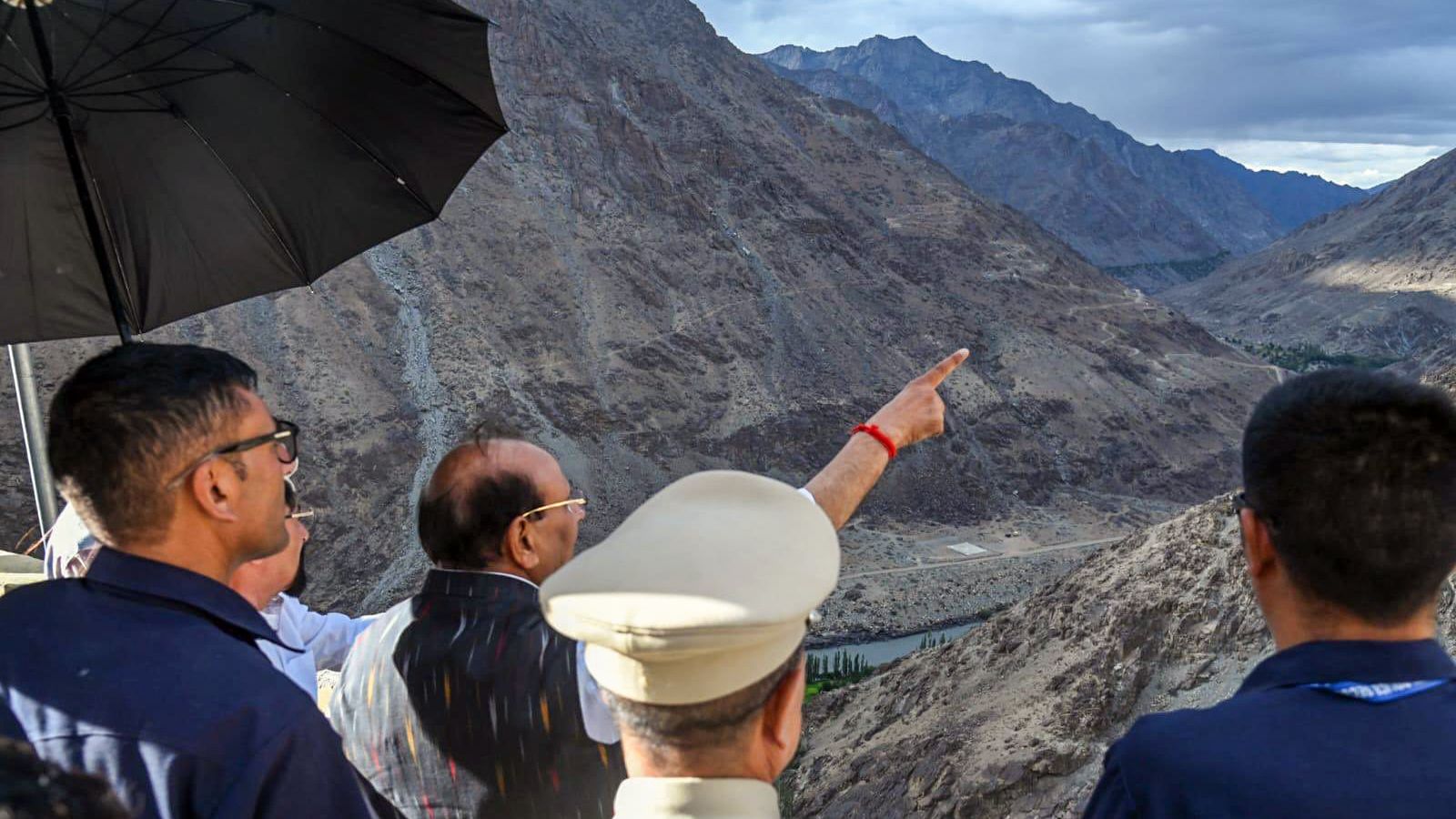
Ladakh Approves Seven Autonomous Councils for Grassroots Governance

Ladakh Groups Plan Padyatra After Talks With Centre Stall

Centre Offers Article 371(K) as Ladakh Powers Remain Unclear
Sonam Wangchuk Warns Fresh Ladakh Agitation After Talks Stall
Ladakh Denied Statehood, Offered Unique Elected Body With Powers
Ladakh Approves Nautor Land Rules, Opening Rights for Thousands

Sonam Wangchuk Threatens Ladakh Protest March Over Statehood Demands

Udit Raj Urges India-China Talks on Border and Trade Issues

Raut Urges Modi to Press Xi on Ladakh, Galwan

Ladakh DGP Inaugurates 72-Foot National Flag in Kargil
