

5 hrs ago
GDP Revision Raises Questions About India’s Growth Statistics
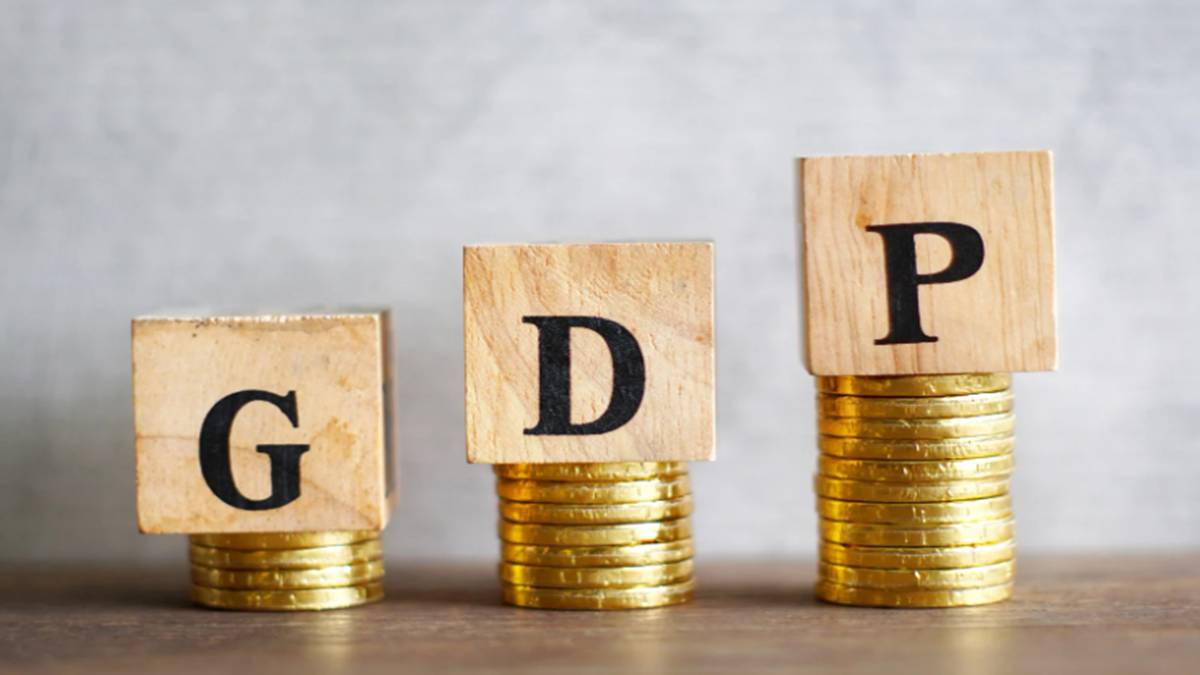
India changed the way it calculates some economic numbers.
This caused the earlier estimate of the economy’s size to become much smaller.
Subhash Garg said this change made the newest growth rate look higher than it might otherwise be.
He calculated growth at 10.3% using the revised base, but 2.6% using the older figure.
Other economists said the two numbers came from different statistical systems and should not be compared directly.
The government has introduced a new GDP series based on 2022-23.
It also began using a new method to measure how much value the economy creates.
The article says the data should be shared more openly so experts can check it.

Subhash Garg questioned a roughly 7% downward revision to nominal GDP for Q1 of the previous year.
He said Q1 FY27 nominal GDP growth was 10.3%, but only 2.6% using the earlier base estimate.
Economists argued that GDP figures from different time-series frameworks should not be directly compared.
India’s statistics ministry introduced a 2022-23 GDP series and adopted the double deflator method.
Higher revenue collection and capital spending in Q1 FY27 suggest support for growth later in the year.
- Who
- Subhash Garg raised concerns; economists and India’s Ministry of Statistics and Programme Implementation responded or were involved in the debate.
- What
- A large downward revision to earlier nominal GDP estimates raised questions about India’s reported growth rate and statistical methods.
- Where
- India.
- When
- The issue emerged with data released on August 31 for the April-June provisional GDP estimate for FY27; Subhash Garg wrote about it on September 2.
- Why
- The revision changed the GDP base used to calculate current growth, while a new 2022-23 GDP time series and double deflator method were introduced.
Critics of the Revision
Defenders of Statistical Comparability
Size of the GDP change
Critics of the Revision
Subhash Garg argued that the roughly 7% reduction in the previous year’s nominal GDP was unusually large and required an explanation or investigation.
Defenders of Statistical Comparability
Economists argued that figures from different GDP time-series frameworks should not be compared directly because component weights and methods change.
Effect on reported growth
Critics of the Revision
Using the earlier nominal GDP base, Garg said Q1 FY27 growth would have been 2.6%, below inflation and negative in constant terms after inflation adjustment.
Defenders of Statistical Comparability
Using the revised base and new time series, the reported nominal growth was 10.3%; supporters of the statistical approach treated cross-series comparison as invalid.
Data transparency
Critics of the Revision
The article argues that anonymised underlying data should have been shared with statisticians before publication to encourage informed review and dissent.
Defenders of Statistical Comparability
The new GDP series and double deflator method were implemented by the statistics ministry as part of a major effort to improve measurement of economic value added.
Key facts
- Revised nominal GDP base
- About Rs 80 trillion, compared with Rs 86.05 trillion in the earlier assessment.
- Reported Q1 FY27 nominal growth
- 10.3%.
- Growth using earlier base
- Subhash Garg calculated that growth would have been 2.6%.
- New GDP series
- The 2022-23 time series replaced the 2011-12 series from Q1 FY27 and was extended backward.
- Revenue collection
- About 36% of the annual target was collected in Q1 FY27, compared with 31% in the same period last year.
- Capital expenditure
- About 37% of the annual budget was spent in Q1 FY27, compared with 31% the previous year.
- Fiscal deficit
- The Q1 FY27 deficit reached 27% of the annual budgeted amount, versus 30% last year.
Sources
Related news

India’s GDP Growth Figure Rekindles Debate Over Data Credibility
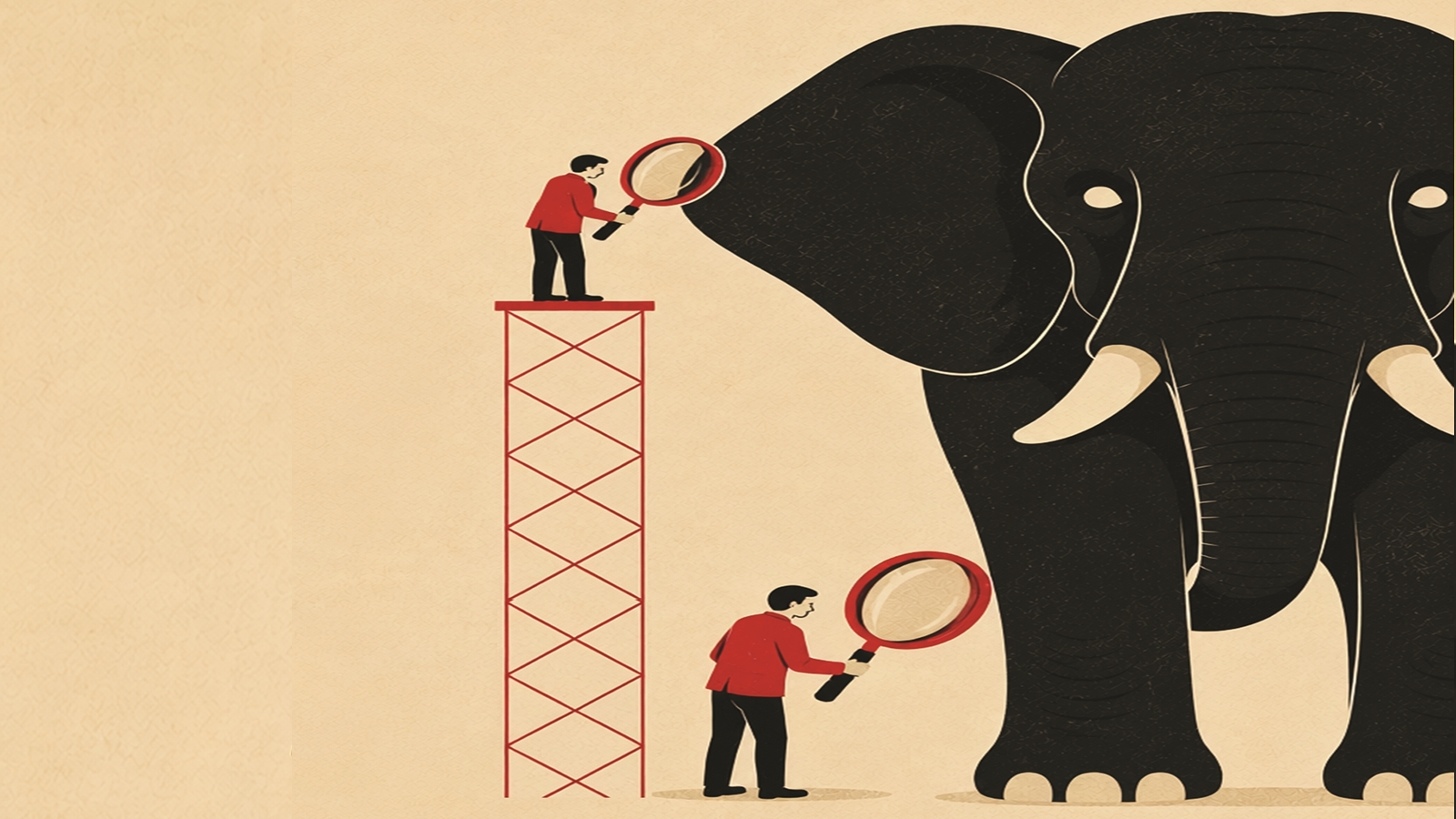
GDP Base Revision Debate Should Not Obscure India’s Growth
MoSPI Defends India’s 7.8% GDP Growth Estimate
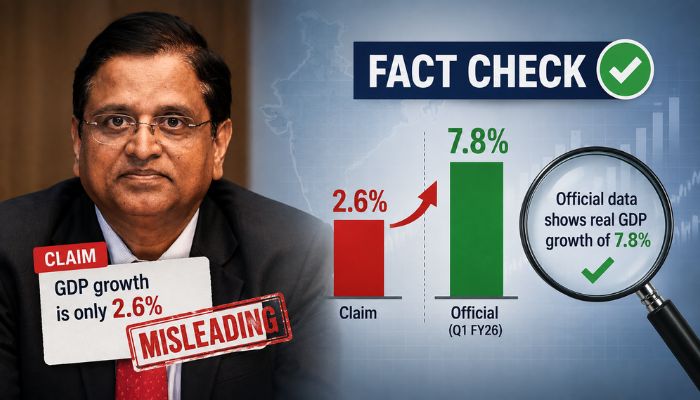
Government Rejects 2.6% Claim, Defends India’s 7.8% GDP Growth

Government Defends India’s 7.8% Q1 GDP Growth Amid Debate

Sanyal Defends India’s 7.8% GDP Growth Amid Opposition Questions
Ganjam Politics Shifts as Rivals Reconcile, Panda Faces Fresh Case

BJP Industry Cell Lights 76 Lamps for Modi’s Birthday

Dhami Lights Lamps for Modi’s Birthday, Highlights Uttarakhand Development
Modi Birthday Yatra Highlights Service, Development and National Change
Rajasthan BJP leaders mark PM Modi’s birthday with service activities