2 hrs ago
Allahabad High Court Bans Hookah Services in Uttar Pradesh Restaurants
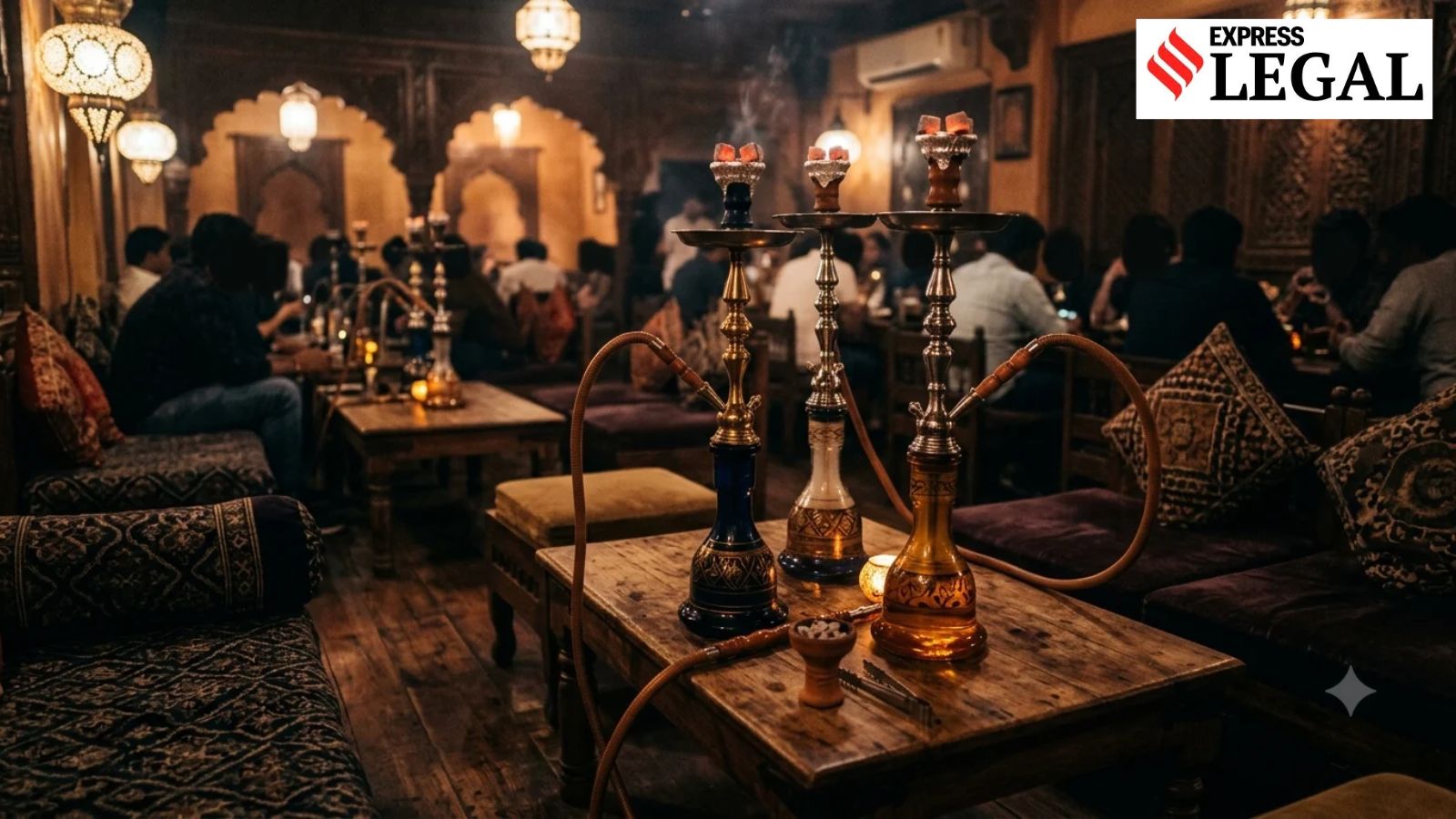
The Allahabad High Court has stopped restaurants in Uttar Pradesh from offering hookahs.
This applies even when restaurants have special areas where smoking is allowed.
The court said people who do not smoke have a right to breathe clean air in public places.
It said business interests cannot take away that right.
The court found that offering a hookah is a service covered by tobacco-control rules.
Restaurant owners argued that customers could prepare the hookah themselves.
The judges rejected this idea because preparing a hookah involves several steps that usually require expertise.
The court said operating hookah bars violates the tobacco-control law.

The Allahabad High Court barred restaurants in Uttar Pradesh from operating hookah bars or offering hookah services.
The court ruled that hookah services remain prohibited even in Designated Smoking Areas under COTPA and amended 2008 rules.
It said non-smokers’ right to breathe clean air cannot be overridden by a business’s commercial interests.
A two-judge bench rejected connected petitions concerning hookah services and hookah bars in restaurants.
The court also rejected a proposed self-service model, saying preparing a hookah intrinsically involves providing a service.
- Who
- The Allahabad High Court, through Justices Shekhar B. Saraf and Abdhesh Kumar Chaudhary, ruled on petitions filed by restaurants or related establishments.
- What
- The court prohibited hookah bars and hookah services in Uttar Pradesh restaurants, including in Designated Smoking Areas.
- Where
- Restaurants and similar establishments in Uttar Pradesh, India.
- When
- Tuesday; the articles do not specify the date.
- Why
- The court held that providing hookah services violates Rule 4(3) of the Prohibition of Smoking in Public Places Rules, 2008, as amended in 2017, read with the Cigarettes and Other Tobacco Products Act.
Petitioners’ Position
Allahabad High Court’s Position
Hookah service model
Petitioners’ Position
Restaurants could use a self-service model by preparing and handing over the hookah, allowing customers to smoke without restaurant staff assistance.
Allahabad High Court’s Position
The court said preparing a hookah involves multiple procedural steps and is intrinsically a service, so the proposed model does not avoid COTPA restrictions.
Smoking areas and business rights
Petitioners’ Position
The petitions sought to permit hookah-related activity in Designated Smoking Areas and relied on the establishment’s ability to conduct business.
Allahabad High Court’s Position
The court held that a Designated Smoking Area permits only the limited exception to the smoking ban; it does not permit restaurants to provide hookah services, and commercial interests cannot override non-smokers’ right to clean air.
Key facts
- Court
- Allahabad High Court
- Jurisdiction
- Uttar Pradesh
- Bench
- Justices Shekhar B. Saraf and Abdhesh Kumar Chaudhary
- Relevant law
- Cigarettes and Other Tobacco Products Act (COTPA)
- Relevant rule
- Rule 4(3) of the Prohibition of Smoking in Public Places Rules, 2008, as amended in 2017
- Decision
- Hookah bars and hookah services are prohibited in restaurants, including Designated Smoking Areas
- Rejected proposal
- A customer self-service model for preparing hookahs
Quotes
Justice Shekhar B. Saraf
Allahabad High Court judge who included a personal warning in a poem about tobacco addiction.
“The self-service model hypothetically synthesised by the petitioners to skirt around the clutches of the COTPA and the amended Rules is not a viable model as procedural operation of hookah intrinsically involves 'service' which needs to be carried out by the one having expertise in it and is not an operation that can be carried out by patrons who are not trained and are novices.”
 livemint.com
“A single session of hookah lasting approximately one hour involves an estimated 200 puffs and is equivalent in harm to smoking 100 cigarettes. It is a myth that hookah is less harmful than cigarettes. Hookah is as addictive as a cigarette, as harmful as a cigarette, and contains the same toxic chemicals as a cigarette.”
 indianexpress.com
Sources

Related news

Bombay High Court Says Duty-Free Shops Must Follow Indian Laws
Baba Ramdev’s Ayurvedic Hookah Claims Draw Health Warnings, Online Mockery
Gujarat Extends Tobacco Gutkha Ban Through September 2027

Delhi High Court Rejects Vimal Elaichi Plea Over FDA Notices

Bombay High Court Forces Pune To Scale Back Festival Alcohol Ban
Future City Bars and Liquor Shops Closed for Ganesh Immersion
India to Mark Lal Bahadur Shastri’s 122nd Birth Anniversary
Supreme Court Quashes Afroz’s NSA Detention, Orders ₹10 Lakh Cost

Mystery Surrounds Death of Premanand Maharaj’s Disciple in Vrindavan
Former IAS Officer Divya Mittal Announces Independent Political Initiative