

1 hr ago
Conflict Concerns Follow Election Chief From Sambhal to Supreme Court
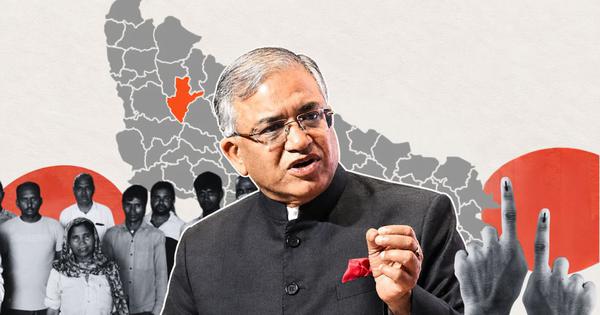
During an election in Sambhal, some voters said police beat them and stopped them from voting.
Videos appeared to show voters being chased away from polling stations.
The local election officer, Manish Bansal, said police were only clearing excessive crowds and organizing queues.
The Election Commission accepted that explanation and called voter-suppression claims false and misleading.
Bansal is married to Gyanesh Kumar’s daughter.
Kumar was an election commissioner at the time and is now the Chief Election Commissioner.
This has led to questions about whether he had a conflict of interest in decisions about Sambhal.
Separate questions have also been raised about a Supreme Court case involving Kumar’s daughter and a judge whose son works for the poll body.

The Indian Express investigation raised concerns about decisions allegedly taken by Chief Election Commissioner Gyanesh Kumar without fellow commissioners’ knowledge or consent.
Questions have also emerged over possible conflicts involving relief granted to Kumar’s daughter, Medha Roopam, by a Supreme Court bench.
During Sambhal polling on May 7, 2024, voters alleged that police assaulted them and prevented them from voting.
The Election Commission rejected claims of voter suppression, relying on returning officer Manish Bansal’s statement that officials were only managing overcrowding and queues.
Bansal is Kumar’s son-in-law, but it remains unclear whether Kumar disclosed the relationship or recused himself from deliberations on Sambhal.
- Who
- Chief Election Commissioner Gyanesh Kumar, returning officer Manish Bansal, voters in Sambhal, the Election Commission of India, and a Supreme Court bench led by Justice Satish Chandra Sharma.
- What
- Conflict-of-interest concerns have been raised over Sambhal polling decisions and separate Supreme Court relief involving Kumar’s daughter.
- Where
- Sambhal district in Uttar Pradesh and the Supreme Court of India.
- When
- The disputed polling occurred on May 7, 2024, during the third phase of the Lok Sabha election; the Supreme Court-related concerns were reported separately.
- Why
- Kumar is related to Sambhal’s returning officer, while the Supreme Court judge’s son serves as standing counsel for the poll body in Madhya Pradesh.
Critics and Voter Accounts
Election Commission and Returning Officer
What happened at polling stations
Critics and Voter Accounts
Voters, videos, and reports cited in the article indicated that police beat or pushed voters away and prevented some people from voting.
Election Commission and Returning Officer
Returning officer Manish Bansal said police were removing excess people from the booth and organizing queues, not denying anyone the right to vote.
How the election authorities responded
Critics and Voter Accounts
Critics argue that the reported violence should have triggered an adjournment under Section 57 of the Representation of the People Act.
Election Commission and Returning Officer
The Election Commission relied on Bansal’s account and stated that the claims of voter suppression were false and misleading.
Possible conflict of interest
Critics and Voter Accounts
The article questions whether Gyanesh Kumar disclosed his relationship with Bansal or recused himself from deliberations about Sambhal.
Election Commission and Returning Officer
The Election Commission and Kumar had not responded to the article’s questions at the time of publication, so no official explanation of any recusal or disclosure was provided.
Key facts
- Polling date
- May 7, 2024
- Election
- Third phase of India’s 2024 Lok Sabha election
- Sambhal contest
- Samajwadi Party’s Zia ur Rahman Barq versus Bharatiya Janata Party’s Parmeshwar Lal Saini
- Returning officer
- Manish Bansal, the district magistrate overseeing the Sambhal polls
- Family relationship
- Manish Bansal is married to Medha Roopam, Gyanesh Kumar’s daughter
- Election Commission response
- It said no voter was denied the right to vote and called claims of suppression false and misleading
- Relevant legal provision
- Section 57 of the Representation of the People Act, 1951, provides for adjourning a poll if an election is obstructed by violence
Quotes
Sakina
A 38-year-old voter from Shahbazpur village who described alleged assaults at the polling station.
“When they started beating up the men, I kept standing there, thinking they wouldn’t possibly do the same to women. But women were beaten up too.”
 scroll.in
“It was a male policeman who beat me. I have voted all my life but never seen anything like this.”
scroll.in

Election Commission of India
India’s constitutional election authority responding to claims of voter suppression in Sambhal.
“No voter was denied their right to cast vote.”
scroll.in
Sources
Related news
Gyanesh Kumar’s Election Commission Tenure Faces Internal Dissent

Opposition Protests Demand Gyanesh Kumar’s Removal
Gyanesh Kumar Faces ECI Rift Over Voter Roll Decisions
Opposition Demands CEC Gyanesh Kumar’s Removal Over SIR Dissent
Election Commission Says SIR Decisions Were Unanimous Despite Objections
Venugopal Demands CEC Gyanesh Kumar’s Arrest Amid ECI Row

Maharashtra Congress Alleges ECI-Net Misuse, Demands Action Against CEC

Manoj Muntashir Brings Faith, Identity And Politics To Republic Summit
Kharge Demands CEC Removal, Modi Resignation Over Electoral Rolls
India Debate: Do Voters Matter When Leaders Face Questions?
