

3 days ago
America's Strategy Shifts From Global Control Toward Open Leadership
The United States is worried that relying on other countries for important supplies could make it vulnerable.
These supplies include oil, minerals, computer chips, electricity and technology.
Artificial intelligence will need huge amounts of energy, computers and advanced chips, making these resources even more important.
The article says this may explain U.S. interest in Venezuela's oil and other strategic locations.
It also says the dollar-based financial system faces competition from new payment methods and digital currencies.
The United States could respond by trying to control more resources and systems.
However, too much control could cause countries to split into hostile economic groups.
The article recommends that the U.S. lead through alliances and open institutions instead.
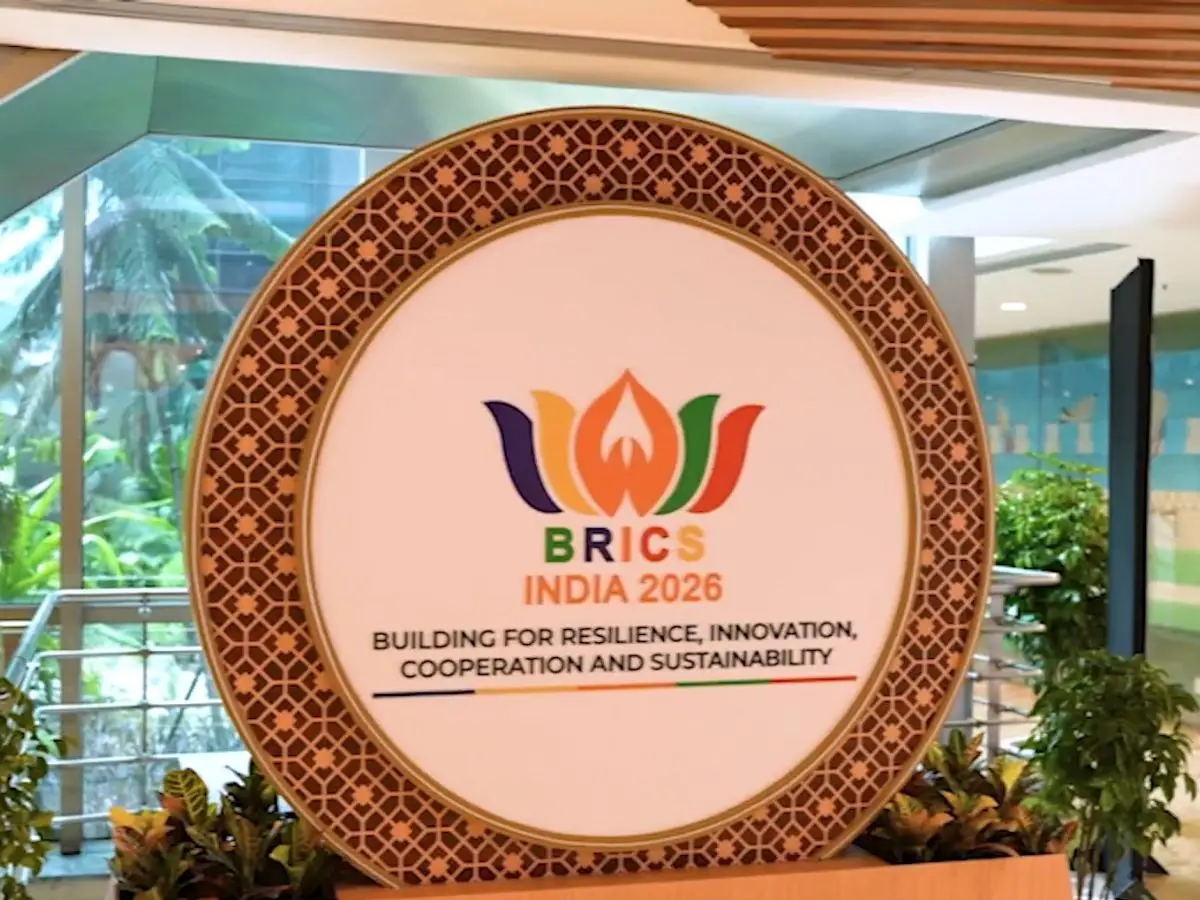
It also says BRICS should improve resilience and cooperation without creating another isolated bloc.

The reported U.S. effort to gain majority control of Venezuela's oil reserves is presented as part of a broader strategy.
Washington is increasingly focused on securing energy, minerals, technology, supply chains, data and financial infrastructure.
Artificial intelligence is intensifying competition over electricity, computing capacity, advanced chips and critical minerals.
The United States faces challenges from China, alternative payment systems and changing digital financial technologies.
The article urges the U.S. to pursue strategic leadership through open institutions and advises BRICS to build resilience rather than exclusive blocs.
- Who
- The United States, BRICS members, China and India are the main actors discussed.
- What
- The article examines an emerging U.S. strategy focused on controlling or securing critical resources, technologies, supply chains and financial infrastructure.
- Where
- The strategy is discussed in relation to Venezuela, Greenland, the Middle East, the Western Hemisphere and the wider international system.
- When
- The discussion concerns the current period, as BRICS prepares to meet in New Delhi.
- Why
- Washington is portrayed as trying to reduce vulnerabilities caused by dependence on foreign energy, minerals, technologies, supply chains and financial systems.
Control and Strategic Security
Open Leadership and Resilience
How the United States should protect its power
Control and Strategic Security
Washington should secure energy supplies, critical minerals, supply chains, technology and strategic access because dependence can become a vulnerability.
Open Leadership and Resilience
The United States should secure critical systems without monopolizing them and should rely on alliances, institutions and participation in an open system.
How BRICS should respond
Control and Strategic Security
BRICS could interpret U.S. actions as efforts to contain China, preserve dollar dominance or prevent a multipolar world, and respond by building a separate bloc.
Open Leadership and Resilience
BRICS should prioritize resilience, diversified supply chains, technological capability, secure energy networks and improved financial mechanisms while preserving trade and dialogue.
Security through control or cooperation
Control and Strategic Security
Greater possession and control of strategic resources may appear to offer protection against geopolitical and economic dependence.
Open Leadership and Resilience
Excessive control could create competing economic fortresses and generate the insecurity it is intended to prevent.
Key facts
- Venezuelan oil reserves
- The article refers to more than 65 billion barrels of proven reserves and a reported U.S. move to gain majority control.
- BRICS meeting
- BRICS is preparing to meet in New Delhi.
- Strategic assets
- The article identifies critical minerals, semiconductors, artificial intelligence, electricity generation, shipping routes, data and financial infrastructure as strategic assets.
- Financial competition
- Alternative payment mechanisms, reserve diversification, digital currencies, cryptocurrencies and stablecoins could affect the existing international payments architecture.
- Postwar institutions
- The article cites Bretton Woods, the Marshall Plan, NATO and the United Nations as foundations of the post-Second World War system.
- Recommended U.S. approach
- The article recommends strategic primacy through an open system, including alliances, institutions and secure but not monopolized supply chains.
Sources
Related news

US set to take majority control of Venezuelan oil wealth
India Balances Strategic Autonomy and Multilateralism at BRICS Summit

PM Modi Warns of Weaponisation of Fuel, Fertilisers and Medicines

Zuckerberg Warns US Risks Losing AI Edge to China

Bessent Says US Could Control 80% of Global Computing
Putin Faces Western Isolation While Russia Builds Non-Western Ties
Pentagon Turmoil Deepens as Hegseth Tightens Grip on Military

Germany Blames Russia for Leipzig Drone Attack, Europe Vows Response
Erdogan Says Turkey Would Consider Full Shanghai Cooperation Organisation Membership

Augsburg Train Station Closed After Explosion, Suspicious Object Found
