3 days ago
India Needs a Digital Neighbourhood Policy Against Cross-Border Cybercrime

Online scam groups are operating from guarded compounds near Myanmar’s border with Thailand.
They trick or force people into pretending to be other people online and stealing money.
The people running the scams, the victims and the stolen money can all be in different countries.
Some stolen money moves through many bank accounts before becoming cryptocurrency.
India has created systems such as the 1930 helpline to report cyber fraud quickly.
India has also signed a new international agreement meant to help countries share evidence.
However, countries may disagree about privacy, surveillance and how to investigate crimes.
The article says India should work with its neighbours because modern borders also include phones, computers and digital money.

India’s financial cybercrime complaints increased from 262,846 cases involving Rs 551 crore in 2021 to over 20.4 lakh cases involving Rs 22,495 crore in 2025.
Cyber scam compounds in Myanmar’s Myawaddy connect recruiters, traffickers, scammers, victims, cryptocurrency networks and financial intermediaries across several countries.
India has repatriated hundreds of people allegedly lured to Myanmar by fake job offers and forced into digital scams and crypto fraud.
India signed the United Nations Convention against Cybercrime, but the treaty needs 40 ratifications or accessions before entering into force.
The article calls for a digital neighbourhood policy combining evidence sharing, financial intelligence, trafficking investigations and action against recruiters and crypto networks.
- Who
- Indian authorities, cybercrime networks, recruiters, victims and neighbouring states are involved.
- What
- The article argues that India needs a digital neighbourhood policy to address cross-border cyber scams, trafficking and cryptocurrency-enabled crime.
- Where
- The scams are linked to compounds in Myawaddy, Myanmar, near the Thailand border, with victims and financial activity spread across multiple countries.
- When
- Financial cybercrime rose from 2021 to 2025; India recently signed the convention on the sidelines of the 81st United Nations General Assembly.
- Why
- Cybercrime networks operate across jurisdictions, while evidence-sharing, enforcement access, political trust and differing privacy rules remain difficult.
Supporters of Expanded Cooperation
Privacy and Sovereignty Concerns
International evidence sharing
Supporters of Expanded Cooperation
Broader cooperation could help India obtain telecom records, subscriber data and cryptocurrency evidence from other jurisdictions.
Privacy and Sovereignty Concerns
States may not trust one another, and cross-border requests could raise concerns about surveillance, privacy and proportionality.
Scope of the convention
Supporters of Expanded Cooperation
The convention offers a global framework for tackling cybercrime and improving cooperation beyond existing bilateral arrangements.
Privacy and Sovereignty Concerns
United Nations human rights experts warned that its electronic-evidence provisions could extend investigative powers beyond conventional cybercrime.
Treatment of people in scam compounds
Supporters of Expanded Cooperation
People inside compounds may have been trafficked or forced to commit fraud and should be recognised as possible victims.
Privacy and Sovereignty Concerns
Some people reportedly knew what work they were being recruited for or returned voluntarily, requiring authorities to distinguish exploitation from criminal responsibility.
Key facts
- India’s 2025 cybercrime complaints
- More than 20.4 lakh complaints involving Rs 22,495 crore.
- National Cyber Crime Reporting Portal
- Logged more than 5.38 million complaints involving over Rs 56,087 crore between 2023-24 and 2025-26.
- Main scam location
- Industrial-scale scam compounds are operating in Myawaddy, Myanmar, near the Thailand border.
- India’s response
- The Indian Cyber Crime Coordination Centre coordinates enforcement, while the 1930 helpline supports rapid reporting.
- International convention
- The United Nations Convention against Cybercrime has 95 signatories and requires 40 ratifications or accessions to enter into force.
- Regional scam losses
- The United Nations Office on Drugs and Crime estimated losses of $88-114 billion across East and Southeast Asia, Australia and New Zealand in 2025.
- Trafficking trend
- Trafficking for forced criminality rose from 1 percent of detected victims in 2016 to 8 percent in 2022, according to the article.
Sources
Related news

Cambodia Vows No Safe Haven for Online Scams
India Highlights Justice Reforms and Digital Cooperation at UN Congress

₹1.5 Crore, 51 Complaints, 15 States: Indore MBA Student Arrested

Indore Man Arrested Over Mule Account Linked to Cyber Fraud
Andaman Police Recognized for Strong Cybercrime Response Performance
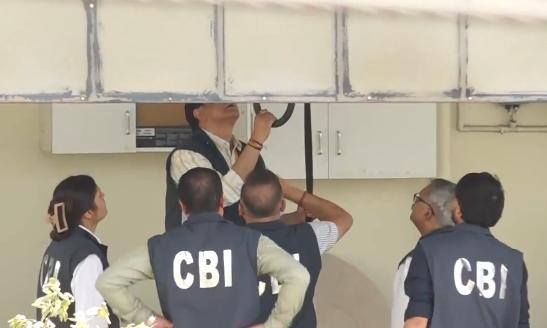
CBI Searches 22 Locations, Arrests Two in ₹11.42-Crore Digital-Arrest Case
India's ARIN-AP Presidency Stresses Fast Response in Cross-Border Asset Recovery

Nicotine Pouches Expose Gaps in India’s Substance-Use Policy