9 months ago
Golden Comet C/2025 K1 (ATLAS) Breaks Apart After Solar Encounter
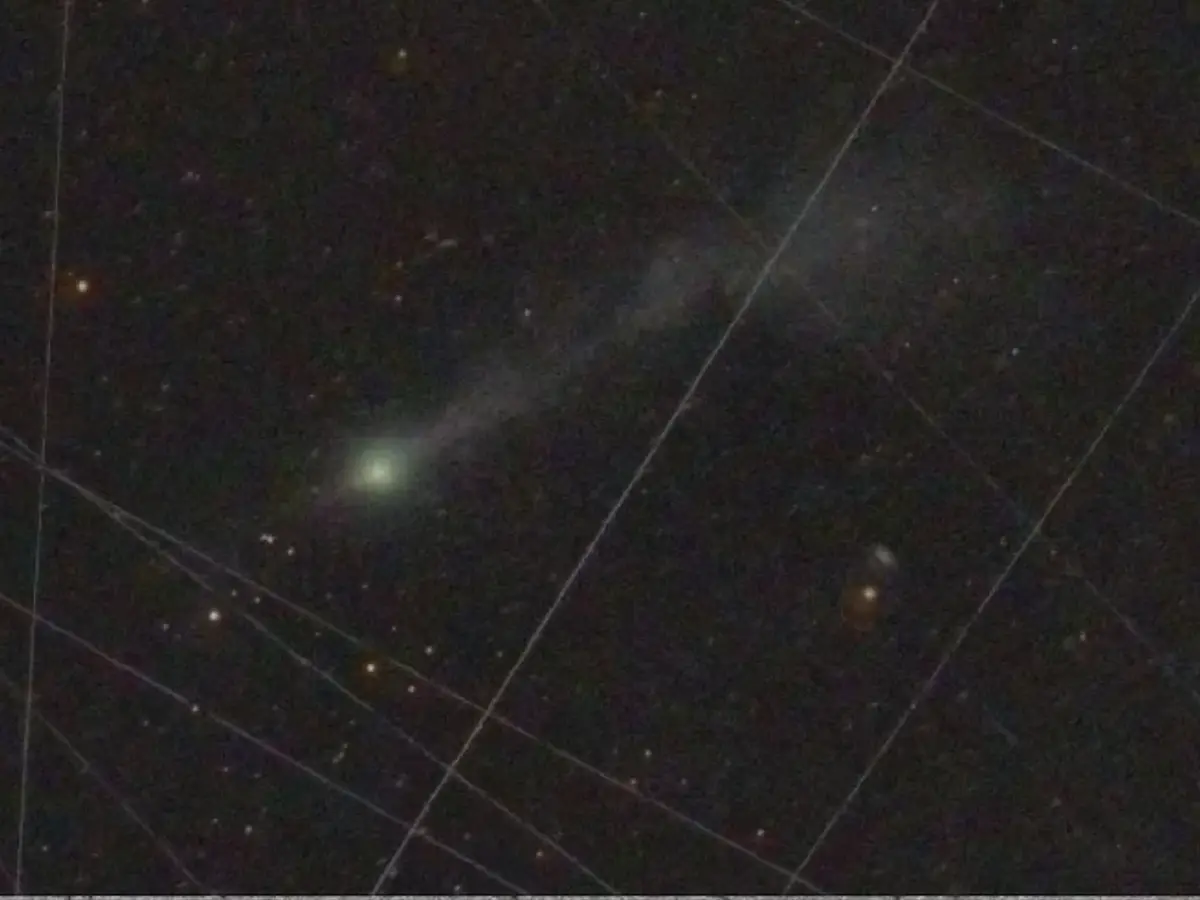
Imagine a giant snowball in space called a comet, named 'the other Atlas'.
It got close to the Sun, which is like a big, hot oven.
Usually, this closeness makes comets break apart, but scientists thought this one would survive.
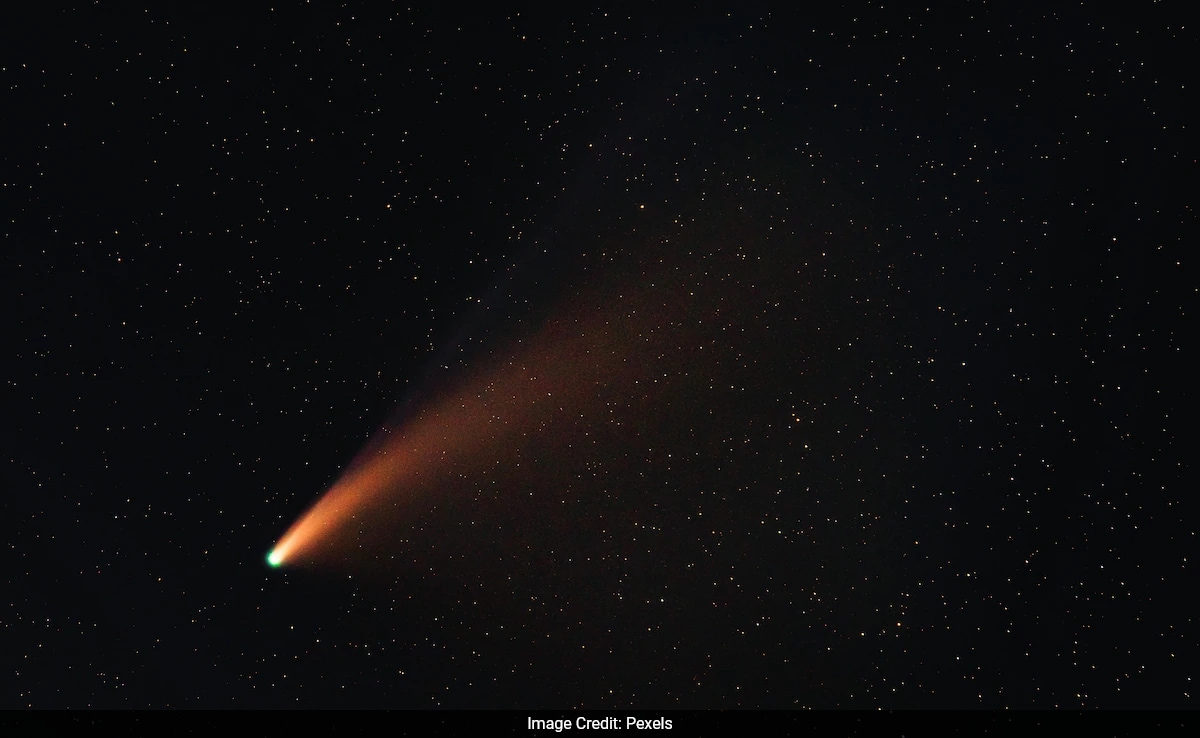
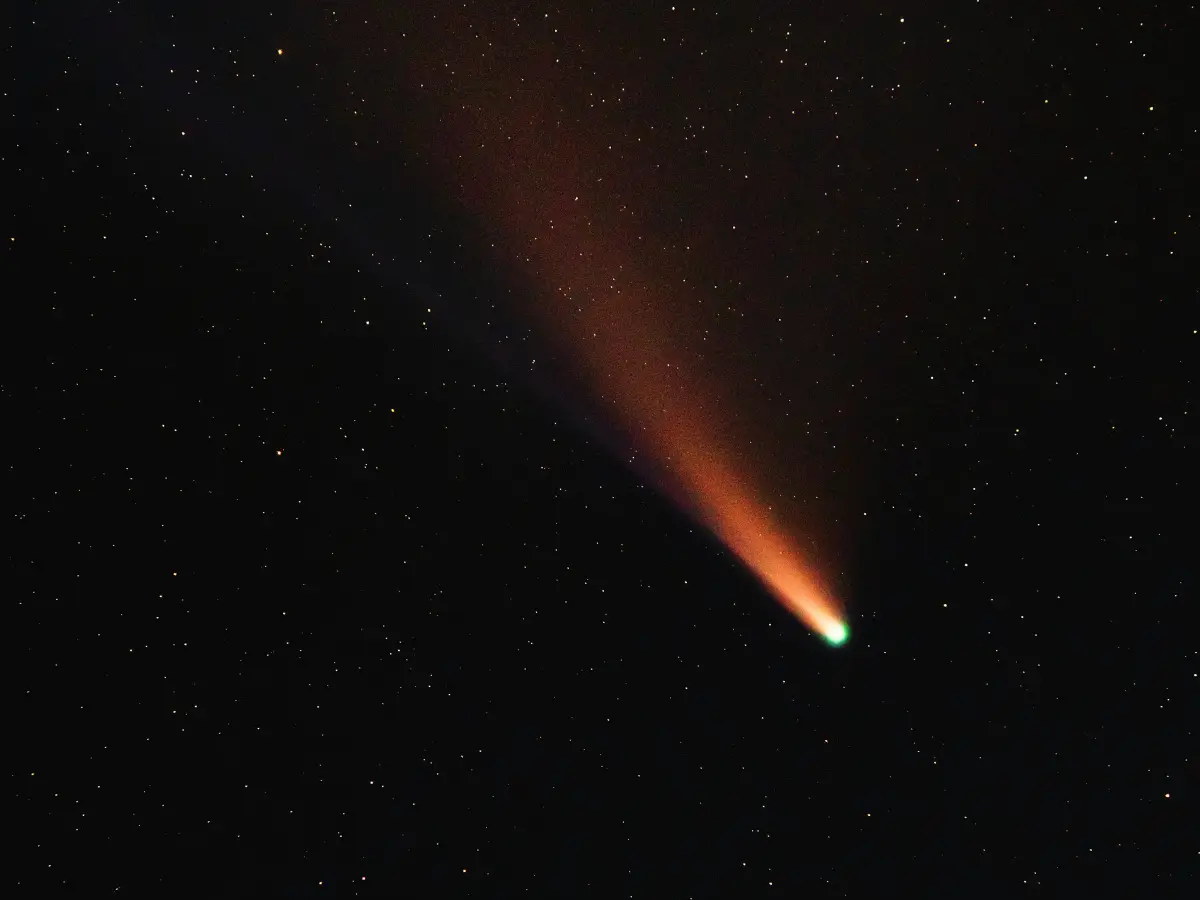
However, it turned a beautiful golden color, which is strange because most comets turn green!
Scientists aren't completely sure why it's golden, but maybe it doesn't have certain ingredients that make other comets green.
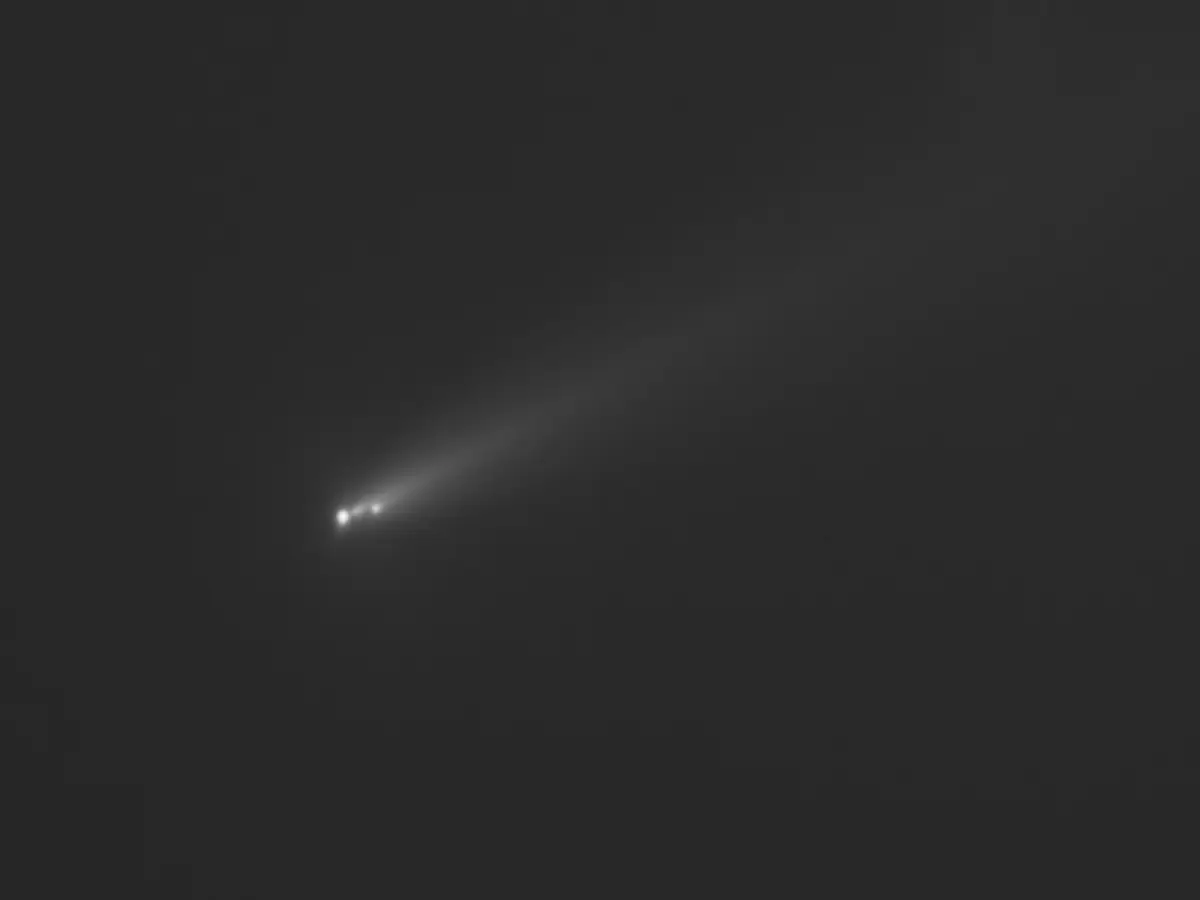
Sadly, even though it survived the Sun's intense pull for a bit, it did end up breaking into several smaller pieces.
It's now heading closer to Earth, but it will still be very far away when it passes by.
We'll get to watch it change even more as it travels.

Comet C/2025 K1 (ATLAS), known as the 'other Atlas', has broken into several pieces.
The comet survived its perihelion on October 8 but fragmented due to the Sun's gravitational force.
It displayed a rare golden color instead of the typical green hue seen in comets.
The golden color might be due to a lack of carbon-bearing molecules or other factors.
The comet is currently moving towards Earth and will make its closest approach on November 25, 60 million km away.
- Who
- Comet C/2025 K1 (ATLAS), astronomers, and astrophotographers
- What
- The comet broke apart into multiple pieces and exhibited an unusual golden color.
- Where
- Encountered the Sun's gravitational force near perihelion, observed from Earth-based telescopes and locations like June Lake, California.
- When
- Discovered in May, reached perihelion on October 8, and will pass Earth on November 25.
- Why
- The fragmentation is attributed to the Sun's gravitational pull, while the golden color may be due to a lack of carbon-bearing molecules or other factors.
Observations of Fragmentation
Unusual Golden Hue
Comet's Fate
Observations of Fragmentation
Astronomer Gianluca Masi observed that Comet C/2025 K1 (ATLAS) has fragmented into several pieces due to the Sun's gravitational force, surviving perihelion but breaking apart.
Unusual Golden Hue
Astrophotographer Dan Bartlett noted that the comet survived its October 8th perihelion, displaying a golden glow and a long tail, and is still expected to lose more matter as it approaches Earth.
Coloration
Observations of Fragmentation
The golden color is unusual for comets, which typically turn green. Scientists like David Schleicher suggest this might be due to a lack of carbon-bearing molecules like dicarbon or cyanide in its coma.
Unusual Golden Hue
While the golden hue is rare, the exact cause remains uncertain. It could be due to the solar flyby or a low gas-to-dust ratio, with only two other known comets exhibiting similar features.
Key facts
- Object Name
- Comet C/2025 K1 (ATLAS), also called the 'other Atlas'
- Discovery Date
- May [Year Not Specified]
- Perihelion Date
- October 8 [Year Not Specified]
- Observed Event
- Broke apart into several pieces after perihelion
- Unusual Characteristic
- Turned golden, unlike typical green comets
- Closest Approach to Earth
- November 25 [Year Not Specified], at 60 million km
Quotes
David Schleicher
Astronomer
“carbon-bearing molecules, such as dicarbon, carbon monoxide and cyanide.”
 wionews.com
“we don't know exactly why”
wionews.com
Gianluca Masi
Founder of The Virtual Telescope Project
“Several parts (sub-nuclei or clouds of debris) are visible, also a plume just below the leading (the first from the left) fragment.”
wionews.com
Dan Bartlett
Astrophotographer
“This comet was not supposed to survive its October 8th perihelion, but it did.”
wionews.com