

1 hr ago
India's AI Optimism May Mask Job Losses and Uncertainty
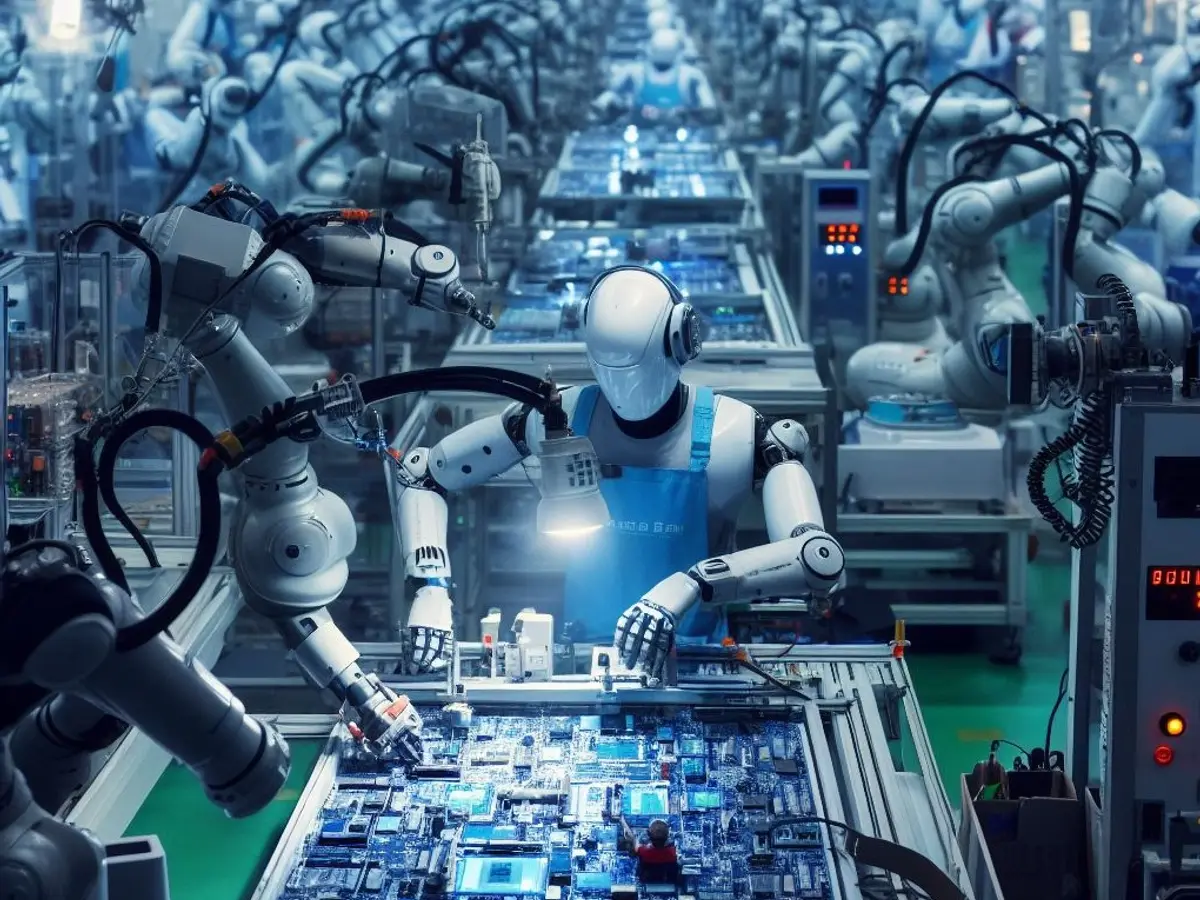
A survey asked people in 37 countries whether artificial intelligence would change the number of jobs.
Only 29% of people in India thought AI would lead to fewer jobs.
This was much lower than the shares in countries such as the United States, Australia and South Korea.
However, 35% of Indians said they did not know what AI would do to jobs.
This suggests that some of the optimism may come from limited awareness rather than confidence.
AI can more easily automate some office tasks, including coding, data processing and customer support.
Those tasks are important in parts of India's technology and business-services industries.
At the same time, many Indian workers are in agriculture or informal work, which may be less immediately affected.
India also has a growing economy that could create new jobs while some jobs disappear.

A Pew Research Center survey found that 29% of Indians expect AI to reduce jobs over the next 20 years.
India had one of the world's lowest expectations of AI-driven job losses, behind only Nigeria.
Thirty-five percent of Indian respondents were unsure how AI would affect jobs, reflecting relatively low AI awareness.
India's IT services and business-process industries are exposed to automation involving coding, data processing, customer support and administration.
Indians were more concerned that AI could widen the gap between rich and poor than reduce the overall number of jobs.
- Who
- Indian respondents and respondents in 36 other countries surveyed by the Pew Research Center.
- What
- The survey examined expectations about whether artificial intelligence will increase or reduce jobs over the next 20 years.
- Where
- India and 36 other countries, including the United States, Australia, South Korea, Canada, the United Kingdom, France, Germany and Nigeria.
- When
- The survey was conducted between February and May and published on September 17; a separate Ipsos survey cited in the article was conducted in late 2025.
- Why
- The differing expectations may reflect India's lower AI awareness, its workforce composition, and the possibility that economic growth could create jobs even as AI automates some work.
Reasons for caution
Reasons for optimism
Exposure to automation
Reasons for caution
India's IT services and business-process industries employ millions in roles involving routine, screen-based tasks that AI can automate.
Reasons for optimism
Most Indians work outside IT offices, including in agriculture and the informal economy, which may be less immediately exposed to this wave of automation.
Meaning of the 29% figure
Reasons for caution
India's low concern could prove mistaken as awareness of AI increases and opinions change.
Reasons for optimism
The figure may not represent blind confidence because 35% of respondents were unsure about AI's impact, and a separate survey found greater concern about job losses.
Future employment
Reasons for caution
AI could reduce jobs, particularly in routine cognitive work, and may worsen inequality.
Reasons for optimism
India's young, fast-growing economy could create new jobs even while AI eliminates some existing roles.
Key facts
- Countries surveyed
- 37
- Indians expecting fewer jobs
- 29%
- Indians expecting more jobs
- 21%
- Indians unsure of AI's job impact
- 35%
- United States expecting fewer jobs
- 71%
- Australia and South Korea expecting fewer jobs
- 76% in each country
- Separate Ipsos finding
- A majority of Indians expected significant AI-driven job losses in a late-2025 survey.
Sources
Related news

Young Americans Fear AI Will Reduce Future Job Opportunities

India’s AI Race Gains Momentum, But Jobs Remain Uncertain

Oracle Layoffs Reshape India’s IT Jobs Amid Cloud Expansion
AI Data Annotation Boom Creates Low-Paying Jobs in India

Breetzke Century Powers South Africa Past Australia in ODI Opener

Breetzke Matches Sidhu Record With Three Fifties Against Australia

Australia Tightens Student Visa Rules to Reduce Migration

Matthew Breetzke Breaks ODI Runs Record After 14 Innings
