1 hr ago
India’s Falling Loan Defaults Mask Rising Household Debt Risks
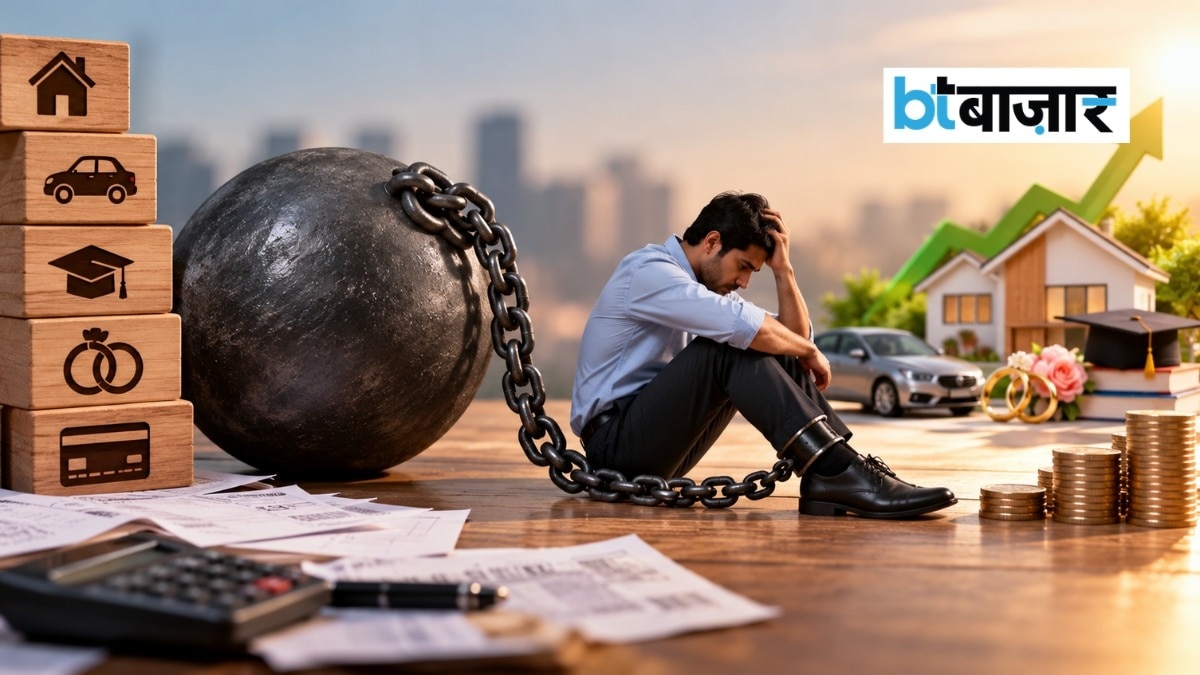
People in India are borrowing more money, and their debt is growing faster than the economy per person.
Some families may be borrowing to manage living costs or keep buying things.
Loan growth has picked up, though it is not rising equally for every kind of loan.
Fewer personal-loan borrowers are falling behind on payments than before.
But that does not necessarily mean families have less debt or are financially safer.
A person might pay current bills while taking on more loans.
If their income falls or borrowing becomes harder, repaying could become difficult.
Banks and other lenders need to check whether borrowers can afford all their loans.

India’s household borrowing grew faster than per-capita GDP, with a leverage intensity ratio of 2.1 during FY19–26.
Household debt stood at 46% of GDP, while non-mortgage borrowing rose to 27% of GDP from around 16% in 2019.
Non-food bank credit growth increased from 9.9% in July 2025 to 19.1% in July 2026; retail credit growth rose from 11.9% to 16.2%.
One-year personal-loan default rates fell from 0.51% to 0.35%, but borrowers may still be taking on debt faster than their incomes grow.
The article says banks and NBFCs need to assess total borrower debt, repayment capacity and income stability, not just reported defaults.
- Who
- Indian households, banks and non-banking financial companies (NBFCs).
- What
- Household borrowing and credit are rising rapidly even as reported personal-loan defaults have fallen.
- Where
- India.
- When
- The figures cover FY19–26 and credit data through July 2026.
- Why
- The article links borrowing to pressure on purchasing power, rising living costs and uncertainty over white-collar employment, and warns debt may outpace income growth.
Signs of improving credit quality
Concerns about rising household leverage
Falling defaults versus growing debt
Signs of improving credit quality
One-year personal-loan default rates fell from 0.51% to 0.35%; tighter RBI lending norms may be helping contain near-term credit risks.
Concerns about rising household leverage
Lower defaults do not establish that household finances are stronger: borrowers may be servicing loans while taking on additional debt, leaving them exposed to income shocks or tighter credit.
Credit expansion versus repayment capacity
Signs of improving credit quality
Consumption expenditure and several categories of lending increased, indicating a recovery in spending and credit activity.
Concerns about rising household leverage
Borrowing is growing relatively quickly compared with economic growth, and loan growth differs across categories; lenders need to determine whether incomes can support additional debt.
Key facts
- Leverage intensity ratio
- India stood at 2.1 during FY19–26, compared with China at 2.0, Malaysia at 1.3 and Thailand at 1.1.
- Household debt
- 46% of GDP.
- Non-mortgage borrowing
- 27% of GDP, up from around 16% in 2019.
- Non-food bank credit growth
- Rose from 9.9% in July 2025 to 19.1% in July 2026.
- Retail credit growth
- Rose from 11.9% in July 2025 to 16.2% in July 2026.
- Personal-loan defaults
- One-year default rates declined from 0.51% to 0.35%.
- Private final consumption expenditure
- Grew 7.7% in FY26, compared with 5.8% in FY25.
Sources
Related news

Personal Loans Outpace Home Loans as Credit Growth Accelerates

Indian Household Debt Outpaces Financial Asset Growth in 2025

Three NBFCs Position for India’s Next Unsecured Credit Cycle
Survey Finds EMI Burdens Push Borrowers Toward Debt Traps

Microfinance Shows Early Recovery as Legacy Bad Loans Persist
NBFCs Account for 47% of India's New Consumer Borrowers

India Balances Russian Oil Dependence Against US Trade Pressure

Kevin Rudd Says India-Australia Defence Ties Have Grown

UN Warns Developing-Economy Growth Is Splitting as Asian Economies Lead

China Tightens AI Oversight, Warns Against Tech Investment Bubbles