2 hrs ago
Himalayan Monals Raise Their Calls Amid Noisier Uttarakhand Habitats

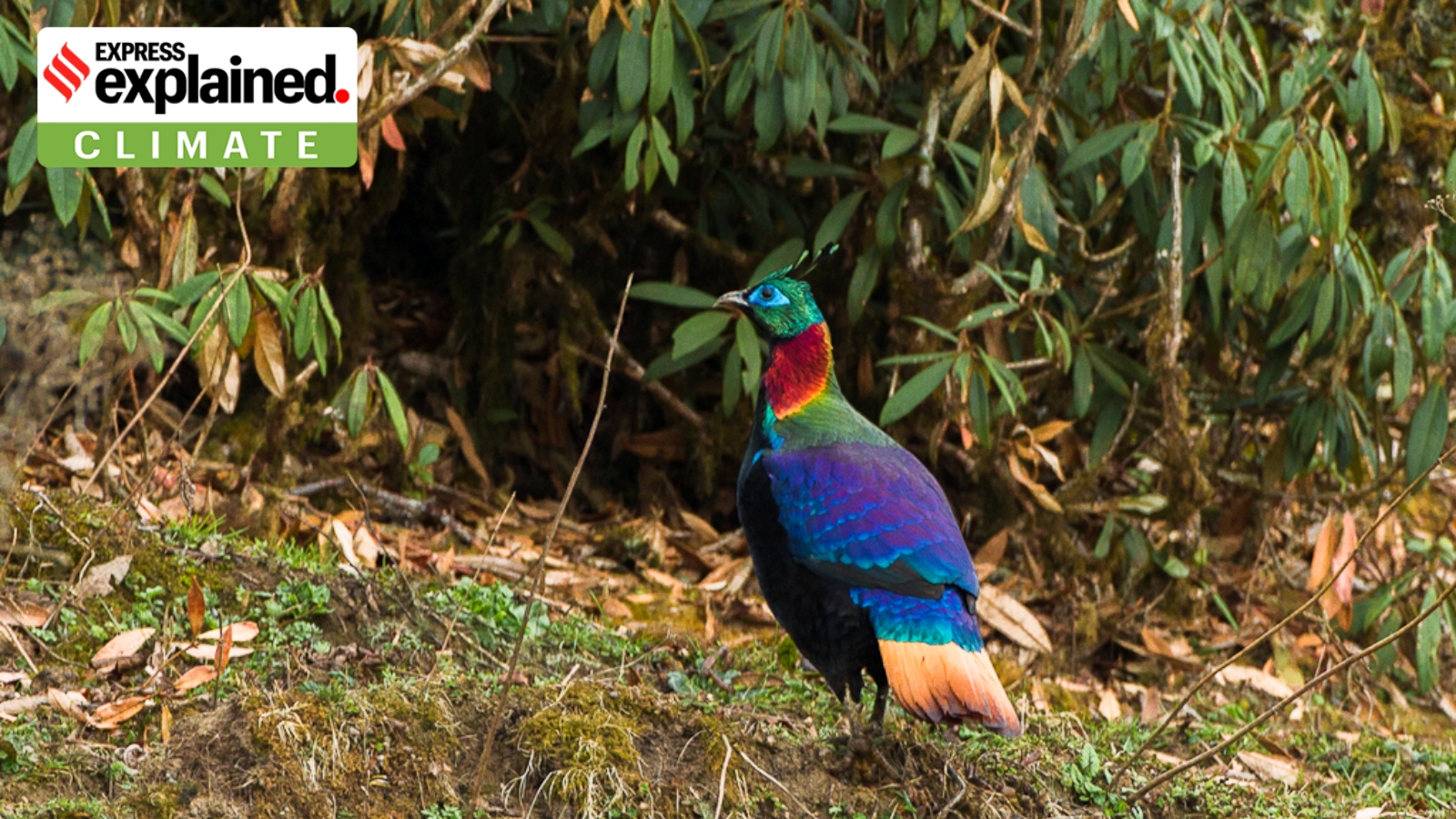
The Himalayan monal is a colorful bird and Uttarakhand’s state bird.
Scientists listened to monal calls in two Himalayan valleys.
One valley was quiet, while the other had roads, vehicles, tourists and pilgrims.
In the noisier valley, the birds made calls with higher sounds.
Their calls were also slightly longer.
Scientists think the birds may be trying to make themselves heard over human noise.
This does not mean noise is harmless or that the birds can adapt forever.
More research is needed to understand how the change affects their lives.

Researchers recorded 719 Himalayan monal calls between April 2023 and June 2024.
Monals in noisier Chopta Valley used higher-frequency and slightly longer calls.
The study compared relatively quiet Madmaheshwar Valley with busier Chopta Valley.
Researchers suggest the vocal changes may help reduce acoustic masking from human noise.
The study does not establish effects on mating success, population levels or long-term health.
- Who
- Researchers Rajeev Lochan, Dinesh Kumar Sharma and Anand Kumar studied Himalayan monals.
- What
- The study found that monals in noisier habitats used higher-frequency, slightly longer calls.
- Where
- The research took place in Madmaheshwar Valley and Chopta Valley in Uttarakhand’s Kedarnath Musk Deer Sanctuary.
- When
- Calls were recorded from April 2023 through June 2024; the study was published in August 2025.
- Why
- The birds may be adjusting their calls to reduce the effects of human-generated background noise, known as acoustic masking.
Key facts
- Species
- Himalayan monal (Lophophorus impejanus)
- Status
- Least Concern on the IUCN Red List
- Calls analyzed
- 719
- Recording period
- April 2023 to June 2024
- Quiet comparison site
- Madmaheshwar Valley, an area with relatively little human activity and no road
- Noisier site
- Chopta Valley, where roads, vehicles, pilgrims, trekkers, tourists and birdwatchers are present
- Key finding
- The median peak frequency was around 171 Hz higher in the noisier habitat
Sources
Related news
Human Noise Alters Himalayan Monal Calls, Studies Find
Why Wild Animals Need Quiet Places to Survive
Birdsong May Help Lower Stress and Promote Relaxation

Study Finds Monkeys, Wild Boars Drive Wayanad Wildlife Conflict

Custom-Designed Bird Guards End Power Failures, Protect Vindhya Wildlife

Rare Pallas’s Cat Revealed Across India’s High Himalaya