3 hrs ago
Human Noise Alters Himalayan Monal Calls, Studies Find
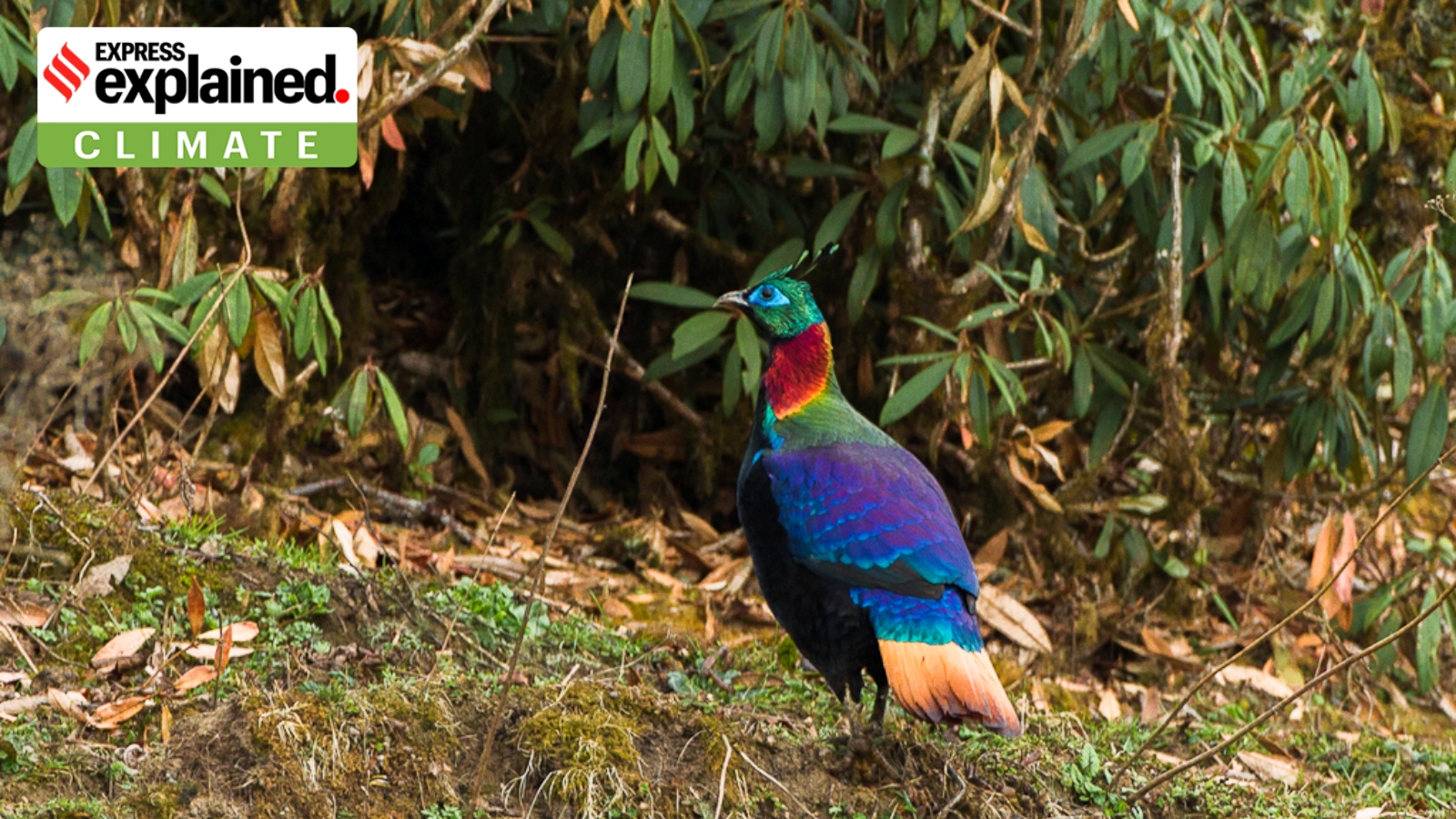
The Himalayan monal is a colorful bird that lives in the mountains.
Researchers studied its calls in two parts of a sanctuary.
One place was quiet, while the other had roads, tourists and pilgrims.
Birds in the noisier place made higher and louder calls.
This may help their calls stand out against human noise.
However, scientists do not yet know whether this makes it harder for the birds to find mates.
Another study examined how climate change could shift the places where the birds can live.
Some habitats may disappear, while new ones may become suitable.
The researchers say people should reduce noise and keep mountain habitats connected.

Researchers found Himalayan monals in noisier areas use higher-frequency, higher-amplitude calls.
The study compared relatively quiet Madmaheshwar Valley with busy Chopta Valley in Kedarnath Musk Deer Sanctuary.
Tourism, pilgrimage traffic and roads may mask mating calls, but effects on breeding remain unconfirmed.
A separate climate study projects that some current habitats may become unsuitable by 2100 while new areas emerge elsewhere.
Researchers recommend managing noise and protecting connected habitats across different elevations.
- Who
- Researchers Rajeev Lochan, Dinesh Kumar Sharma and Anand Kumar of Hemvathi Bahuguna Garhwal University studied the Himalayan monal.
- What
- Two studies examined how human-made noise changes the bird’s calls and how climate change may alter its habitat.
- Where
- The noise study took place in Madmaheshwar Valley and Chopta Valley within Kedarnath Musk Deer Sanctuary in the Himalayas.
- When
- The studies were conducted over five years, with climate projections extending to 2100.
- Why
- The researchers aimed to understand threats from increasing human noise, changing climate and fragmented habitats.
Key facts
- Species
- Himalayan monal
- Conservation status
- Globally classified as Least Concern on the IUCN Red List
- Noise comparison
- Madmaheshwar Valley was relatively quiet; Chopta Valley had roads, tourists, pilgrims and other visitors
- Observed call change
- Monals in the noisier area used higher-frequency and higher-amplitude calls
- Monitoring method
- Passive acoustic monitoring devices and microphones were used across different seasons
- Climate outlook
- The habitat study examined scenarios extending to 2100
- Recommended action
- Manage noise in heavily visited areas and protect habitat connectivity across elevations
Quotes
Dinesh Lochan
HBGU researcher and study co-author
“Madmaheshwar is relatively undisturbed because there is no road, whereas in Chopta there is a road and the pilgrimage is very heavy, so there is a heavy footfall.”
 indianexpress.com
“Protecting connections between habitats is as important as protecting the habitats themselves.”
indianexpress.com
Sources
Related news
Why Wild Animals Need Quiet Places to Survive

Study Finds Monkeys, Wild Boars Drive Wayanad Wildlife Conflict
Singalila National Park Reopens With Plea to Protect Fragile Ecosystem

Rare Pallas’s Cat Revealed Across India’s High Himalaya
Black-Headed Ibis Decline Alarms Naxalbari Conservationists

Bolivian Weird Cat Identified as New Species After Century

Rare Assam Plant Rediscovered After 180 Years On Hillside
Iceland to Consider Permanent Ban on Commercial Whaling

Five Infant Orangutans in Odisha Trigger Trafficking Investigation