2 weeks ago
ChatGPT Chat Says Trickle-Down Economics Era Is Ending

This article is a pretend conversation between a person and a smart computer called ChatGPT.
They talk about money, and how rich people and everyday workers share it.
A long time ago, President Ronald Reagan made rules that many people say helped rich people get richer.
For many years, workers did not get paid more even when they produced more.
The conversation says this period is now coming to an end.
They think a new mayor of New York City, Zohran Mamdani, winning the election shows people want things to be fairer.
ChatGPT explains that money and power swing back and forth every 40 years or so.
It predicts workers may get paid better next, but prices may also go up.
It compares this change to the time Franklin D. Roosevelt became president long ago.
The views in the article belong to the author, not the newspaper that published it.

An opinion piece framed as a chat between the author, CEO of Mecklai Financial, and ChatGPT argues that the cycle of trickle-down economics that began with Ronald Reagan is ending.
ChatGPT said 1980s-era policies of deregulation, tax cuts, globalisation, and suppression of organised labour decoupled worker productivity from real wage growth.
The dialogue predicts the next economic cycle will bring higher structural inflation, higher cost of capital, stronger wage growth for baseline workers, and more regulation of corporate monopolies.
The author cites the January election of democratic socialist Zohran Mamdani as mayor of New York, over establishment figures like Andrew Cuomo, as the turning point.
ChatGPT compared the victory to Franklin D. Roosevelt's 1932 election, which it said marked the start of 40 years of Keynesian, labour-centric economics.
- Who
- Zohran Mamdani, elected mayor of New York City; Ronald Reagan, whose 1980s policies the article discusses; and the author, identified as CEO of Mecklai Financial, chatting with ChatGPT.
- What
- An opinion dialogue arguing that the cycle of trickle-down economics and extreme wealth inequality is ending, with populist backlash rising.
- Where
- New York City, described as the global epicentre of Wall Street, real estate accumulation, and the billionaire class.
- When
- Mamdani's election took place in January; the article also references Reagan-era policies of the 1980s and FDR's 1932 election.
- Why
- Because capital concentration starved the broader consumer base of purchasing power, triggering a populist backlash against elite wealth concentration.
Key facts
- Article format
- A chat between the author (JM), CEO of Mecklai Financial, and ChatGPT
- Core claim
- The cycle of 'bastardised capitalism' begun with Reagan-era trickle-down economics is ending
- Policies criticised
- Deregulation, tax cuts, globalisation, and suppression of organised labour in the 1980s
- Turning point cited
- January election of Zohran Mamdani as mayor of New York City, over Andrew Cuomo
- Cycle length
- Economic pendulum swings between Capital and Labour roughly every 40 years
- Predicted next cycle
- Higher structural inflation, higher cost of capital, stronger wage growth, more monopoly regulation
- Historical comparison
- FDR's 1932 election, ushering in 40 years of Keynesian, labour-centric economics
- Publisher
- Financial Express (views are the author's own)
Sources
Related news

Socialism's US Rise Driven by Trump Policies and Inequality
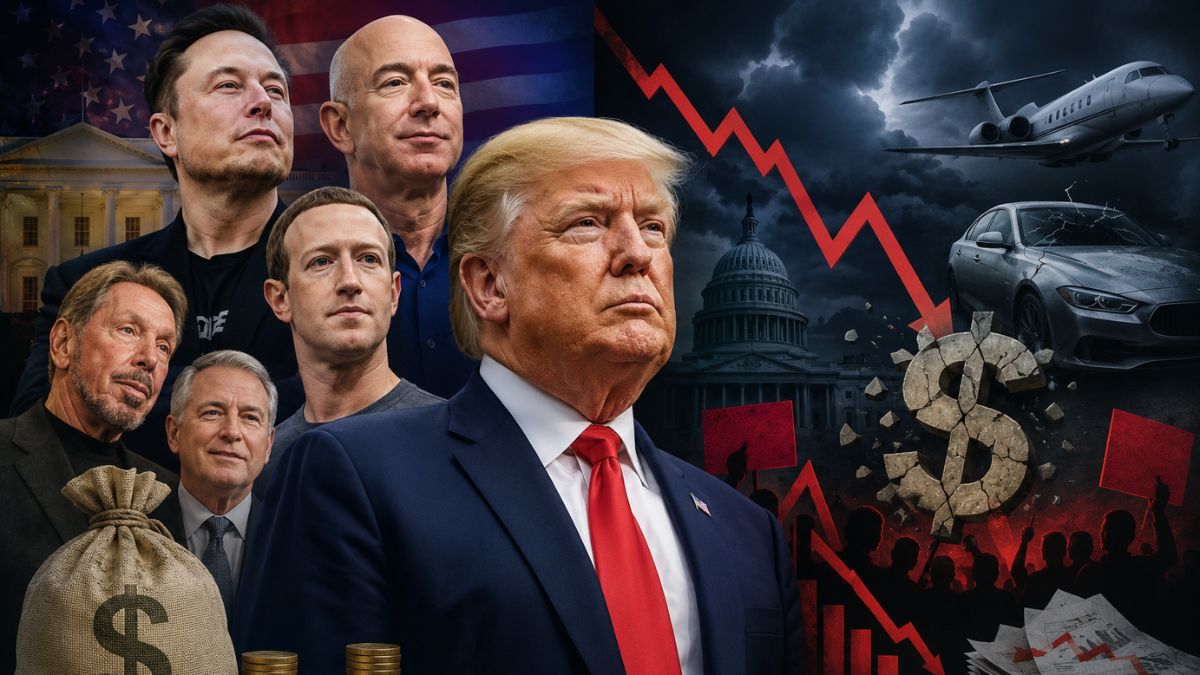
Trump's billionaire backers face costly political backlash over unpopular policies

History Suggests the Artificial Intelligence Bubble Won’t Burst Soon

Modi and Trump Face the Challenge of Wounded Power
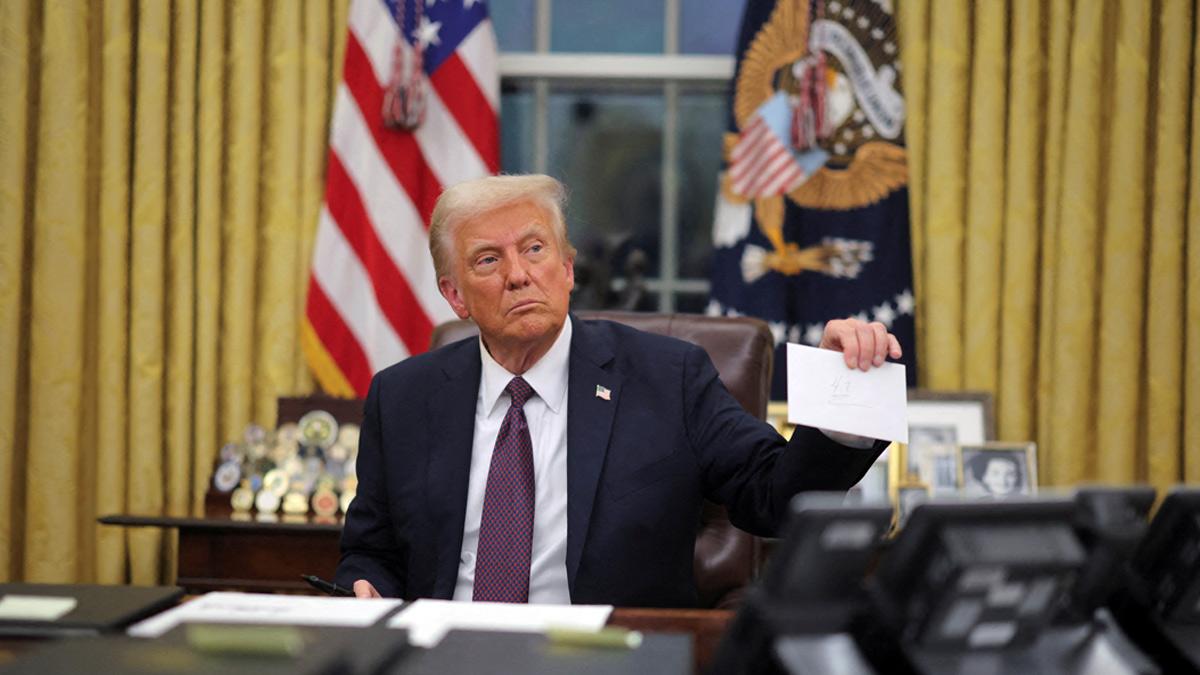
Trump Administration Promotes Growth-First Agenda at G20 Summit

Bernie Sanders and Bill Gates Warn AI Could Erase Jobs

Bengaluru Techie Dies After Seventh-Floor Fall, Man Injured

SoftBank Sells Second Lenskart Stake Worth ₹2,888 Crore

Paytm Parent Sees Rs 2,949-Crore Block Stake Sale

Traders Get Pickier in Emerging-Market Inflation-Linked Debt

EM Inflation-Linked Debt Draws Selective Bets After Big Run