3 weeks ago
Trump's billionaire backers face costly political backlash over unpopular policies
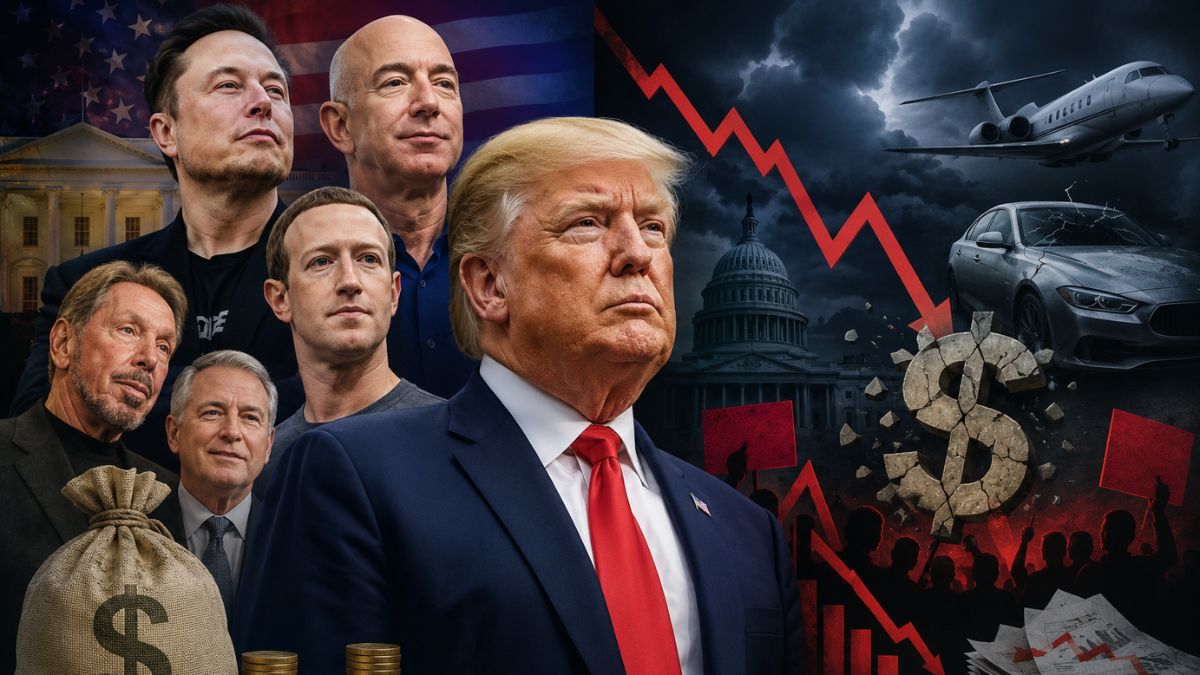
Some very rich people helped Donald Trump become president.
At first, Trump was very friendly to them and gave them lots of power.
But now, many regular people are unhappy with Trump.
He promised to make prices lower, but prices are still high.
He also started a trade war and a war with Iran, and people did not like that.
People who want to be elected are now attacking Trump's rich friends.
In Michigan, a doctor named Abdul El-Sayed won an election by promising to tax rich people more and to control big computer buildings.
In Florida, a man named James Fishback became popular with some voters who want to ban those buildings completely.
People are angry because rich people keep getting richer while jobs are uncertain and electricity bills go up.

Trump's billionaire backers, including Elon Musk and the heads of Apple, Google, Microsoft and Amazon, face growing backlash over his unpopular policies.
Abdul El-Sayed won Michigan's Democratic Senate primary, beating Representative Haley Stevens by about one percentage point.
El-Sayed's platform: crack down on monopolies, tax billionaires, regulate AI and pause new data centers — despite being outspent nearly 10 to 1.
Far-right Florida governor candidate James Fishback has won over young men with calls to ban data centers outright.
Voter resentment over billionaire wealth, high inflation and a wobbling job market is fueling attacks on AI and data centers.
- Who
- Donald Trump's billionaire backers — including Elon Musk and the CEOs of Apple, Google, Microsoft and Amazon — along with Democratic Senate primary winner Abdul El-Sayed and Florida candidate James Fishback.
- What
- A political backlash against Trump's wealthy business allies, with candidates on the left and right attacking big business, billionaires, AI and data centers.
- Where
- Michigan, Florida and Washington, D.C.
- When
- Following the early months of Trump's return to the White House; Michigan's Senate primary was held earlier this week.
- Why
- Because Trump failed to deliver promised lower prices, his trade war and war with Iran proved unpopular, and voters resent billionaire wealth amid inflation and a wobbling job market.
Populist voters and progressive candidates
Trump and his billionaire allies
Billionaire wealth and power
Populist voters and progressive candidates
Voters resent billionaires like Musk and Bezos getting richer while jobs and inflation worsen; candidates promise to tax billionaires and curb corporations.
Trump and his billionaire allies
Trump gave billionaire allies like Musk free rein inside the White House and Mar-a-Lago and rewrote rules to favor their companies — an arrangement his backers enjoyed.
AI and data centers
Populist voters and progressive candidates
El-Sayed wants a moratorium on new data centers and legal protections for communities, with support from Sanders and Ocasio-Cortez.
Trump and his billionaire allies
The Trump administration favored a hands-off approach to AI regulation; some right-wing populists like Fishback want to ban data centers outright.
Economic promises
Populist voters and progressive candidates
Trump promised voters lower prices and an easier life but has not delivered either, triggering a backlash, according to Bloomberg.
Trump and his billionaire allies
In a stronger economy, voters might see billionaire wealth aspirationally as proof the system works — but the job market is wobbling and inflation is high.
Key facts
- Michigan Senate primary winner
- Abdul El-Sayed, defeating Representative Haley Stevens
- Margin of victory
- About 1 percentage point
- Campaign platform
- Crack down on monopolies, tax billionaires, regulate AI, and pause new data centers
- Outside spending
- El-Sayed was outspent nearly 10 to 1, including by a group tied to the American Israel Public Affairs Committee (AIPAC)
- High-profile supporters
- Bernie Sanders and Alexandria Ocasio-Cortez
- Florida governor primary candidate
- James Fishback, who calls to ban data centers outright
- Backlash targets
- Elon Musk, Jeff Bezos and other Trump-allied billionaires
- Voter grievances
- Job losses, rising electricity bills tied to data-center power demand, and concentrated corporate power
Sources
Related news
Survey: 70% of Young Americans Distrust AI's Biggest Names

Crypto, AI and Betting Money Reshape 2026 Midterm Elections
Trump and Musk Turn Bitter Feud into $100 Million Alliance
Musk backs critique of parties; Khosla calls for centrist party
Trump Links Data Centre Opposition to China AI Advantage

Musk plans $100 million America PAC push for Republican midterms
Former Big Tech Workers Describe Layoffs’ Harsh Aftermath
Google Maps Prank Renames Lincoln Memorial Reflecting Pool

Trump Calls Iran a Failed Nation Amid Hormuz Tensions

Trump Says He Will Host Xi Jinping at September Summit

Supreme Court Allows Trump to Continue White House Ballroom Construction