

1 week ago
Stocks Rise as Treasury Buyback Fails to Sustain Gains
U.S. stock markets had a mixed day on Wednesday.
The Dow Jones and S&P 500 finished slightly higher.
The Nasdaq 100 fell because several technology and chip companies lost value.
The Treasury said it would buy back more long-term government bonds.
This helped government bond yields fall, but experts said it would not reduce the country’s overall debt.
The dollar also weakened, while gold rose above $4,500 an ounce.
Investors were also concerned that the Federal Reserve might raise interest rates again if inflation stays high.
Moderna and Merck shares jumped after their personalized melanoma vaccine showed encouraging trial results.

The Dow Jones and S&P 500 closed higher, while the Nasdaq 100 fell nearly 100 points.
The S&P 500 ended just above flat after gaining as much as 0.7% during the session.
The United States Department of the Treasury doubled the minimum size of longer-dated bond buybacks to at least $4 billion.
The announcement pushed the 30-year Treasury yield down to 5.18% and the 10-year yield to 4.64%.
Chip stocks declined after a report cited wider OpenAI losses, while Moderna and Merck shares surged on melanoma-vaccine trial results.
- Who
- U.S. stock-market investors, the United States Department of the Treasury, Federal Reserve officials, and companies including OpenAI, Moderna, and Merck & Co.
- What
- Wall Street indices ended mixed as Treasury bond-buyback plans affected yields, while technology and healthcare stocks moved sharply.
- Where
- Wall Street and global financial markets.
- When
- Wednesday, following the Federal Reserve’s recently concluded policy meeting; the national debt crossed $40 trillion on Tuesday.
- Why
- Treasury buyback plans lowered bond yields, while concerns about possible future rate hikes and OpenAI’s wider losses weighed on technology shares.
Supporters of the Treasury Intervention
Skeptics of Its Effectiveness
Impact on bond markets
Supporters of the Treasury Intervention
The larger buyback program helped push long-term Treasury yields lower, with the 30-year yield falling to 5.18% and the 10-year yield to 4.64%.
Skeptics of Its Effectiveness
Economists and market experts said the intervention would not reduce the overall national debt, which had exceeded $40 trillion.
Outlook for interest rates
Supporters of the Treasury Intervention
Lower bond yields and a weaker dollar supported a partial recovery in equities and helped gold prices rise.
Skeptics of Its Effectiveness
Minutes from the Federal Reserve’s latest meeting showed that many participants believed rate hikes could be needed if inflation does not cool.
Technology-stock reaction
Supporters of the Treasury Intervention
Some chip shares benefited from company-specific news, including Marvell Technology’s deal with Alphabet, which sent Marvell shares up 10%.
Skeptics of Its Effectiveness
A report citing OpenAI’s second-quarter results said revenue grew 18% year over year but losses widened, sending Broadcom, Intel, and AMD down more than 4% each.
Key facts
- S&P 500
- Snapped a three-day losing streak and finished just above flat.
- Nasdaq 100
- Fell nearly 100 points and underperformed other major indices.
- Treasury buyback plan
- Minimum buyback size for 10-year to 30-year securities increased from $2 billion to at least $4 billion.
- Bond yields
- The 30-year yield fell to 5.18%, while the 10-year yield fell to 4.64%.
- National debt
- Crossed $40 trillion for the first time on Tuesday.
- Market moves
- The U.S. Dollar Index fell below 99, while spot gold rose above $4,500 per ounce.
- Healthcare stocks
- Moderna rose 177% and Merck & Co. gained 13% after positive melanoma-vaccine trial news.
Sources
Related news
Nasdaq 100 Ends Five-Day Slump as Bitcoin Rallies
Wall Street Slides as Bond Yields Rebound, Walmart Drops
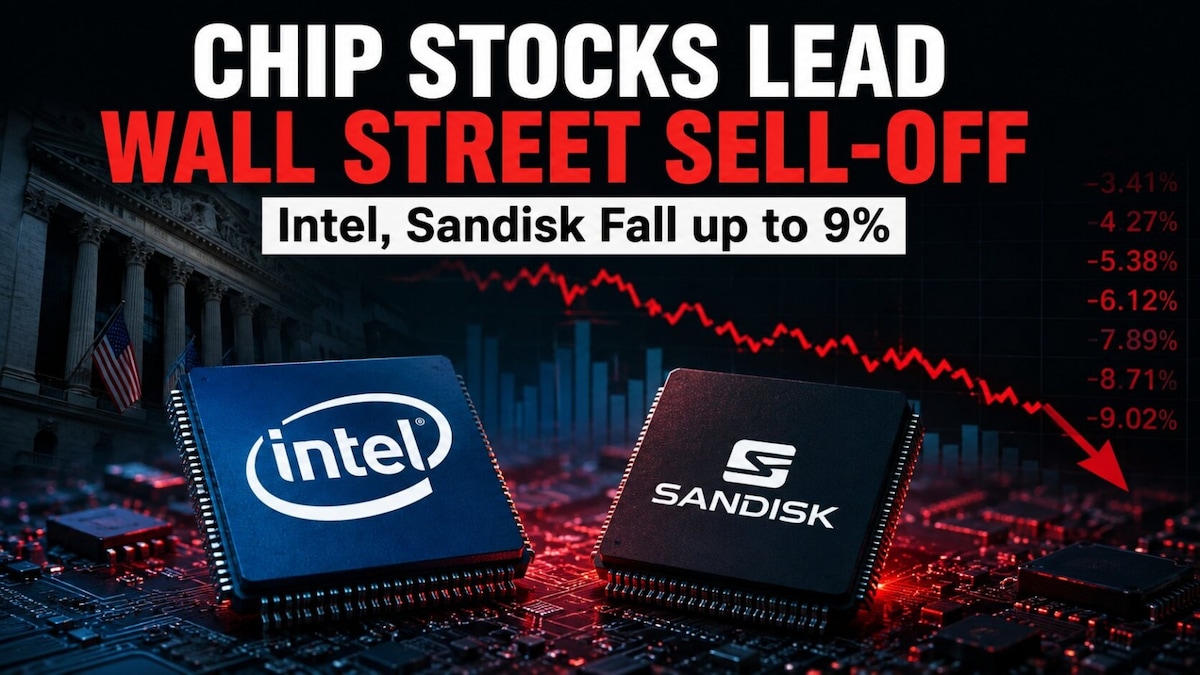
Nasdaq 100 Falls 500 Points as Chip Stocks Lead Sell-Off

Dow Jones Hits Record as Oil Falls on Iran Talk Hopes

Wall Street Futures Rebound as Bond Yields Stabilize, Oil Rises

World Shares Mixed as US Debt Buybacks Expand
Nvidia Reports $96.2 Billion Revenue, Guides Toward $108 Billion

Google-Marvell $120 Billion Deal Is A Conditional Partnership
Indian Overseas Equity Investments Surge 5.6 Times in Five Years

Semicon India 2.0 Aims to Build Global Chip IP
