

1 hr ago
Frontier AI Raises New Risks for Industrial Cybersecurity

Frontier AI is becoming better at understanding complicated physical systems, not just computer code.
This could affect places such as power stations, water plants, and factories.
In the past, attackers needed several experts to understand how a computer action might affect machinery.
AI could combine that knowledge more quickly.
It might also help attackers hide problems from the people operating a facility.
Industrial systems often have old equipment and limited security monitoring.
They are also difficult to patch because shutting them down can interrupt essential services.
The article says India should strengthen these defenses before advanced AI tools become widely available.

Frontier AI could connect cyber access with physical consequences in industrial environments.
Models can combine engineering diagrams, manuals, PLC logic, and operational data in one context.
AI-assisted attacks could manipulate both industrial processes and the information operators rely on.
Operational technology often has weaker visibility, older systems, and slower patching than enterprise IT.
India’s uneven industrial cybersecurity maturity makes stronger critical-infrastructure defenses increasingly urgent.
- Who
- The article was written by Vinayak Godse, CEO of the Data Security Council of India, and focuses on industrial operators, defenders, and potential attackers.
- What
- It examines how frontier AI could increase risks to operational technology and critical infrastructure by combining cyber, engineering, and process knowledge.
- Where
- The discussion applies globally, with particular emphasis on India’s critical-infrastructure sectors.
- When
- The article addresses current AI advances and the period before these capabilities become widely accessible; no specific date is given.
- Why
- AI may allow threats to develop faster than industrial defenses, while many operational-technology environments have limited monitoring, older systems, and slow remediation processes.
Key facts
- Main concern
- The speed at which AI understands industrial systems could outpace the speed at which operators can defend them.
- Affected environments
- Power substations, water-treatment facilities, manufacturing processes, and other critical infrastructure.
- AI capabilities
- Models can analyze multimodal documentation and connect engineering diagrams, vendor manuals, PLC logic, and historian data.
- Operational-technology weaknesses
- OT environments often have limited logging, cannot support security agents, and use aging engineering workstations.
- Defense constraints
- Operational continuity limits patching, while safety requirements limit architectural changes.
- India-specific issue
- Cybersecurity maturity is uneven, with financial services described as more advanced than many industrial sectors.
- Regulatory context
- Recent CEA regulations are cited as highlighting the urgency of improving cybersecurity in power systems.
Sources
Related news

IIT Gandhinagar Students Build AI System for Infrastructure Security

Google Cloud Expert Urges Contextual AI Defenses Against Cyberattacks

AI Doomsday Fears May Distract From Human Vulnerabilities
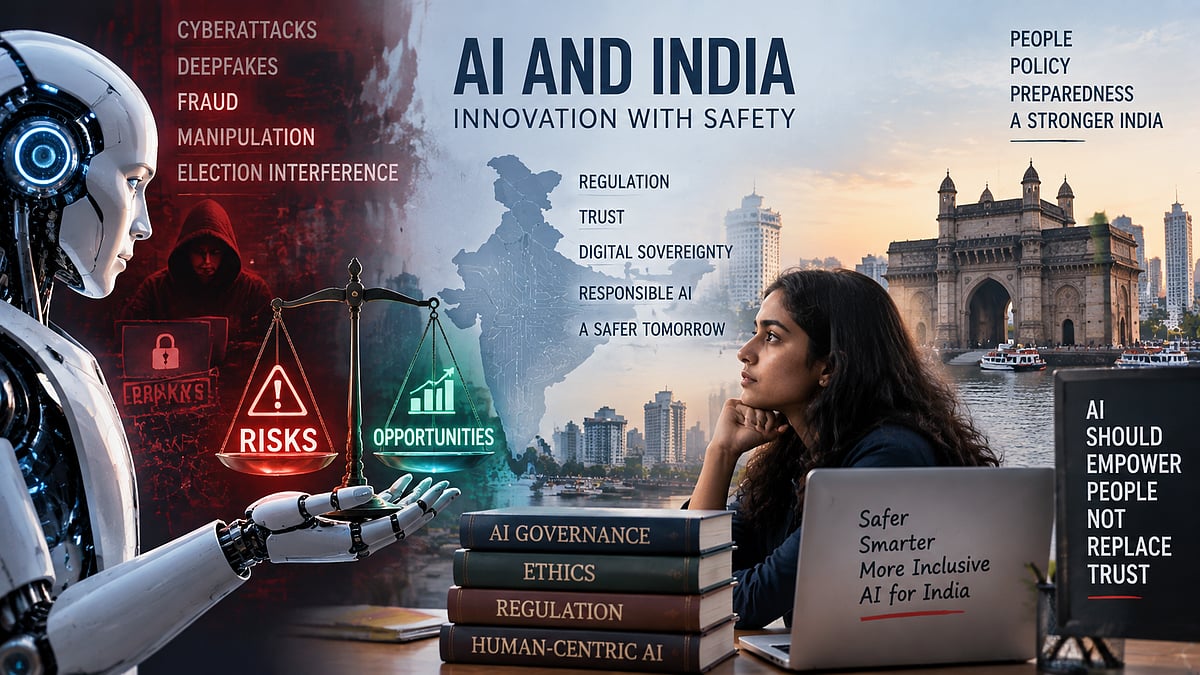
India Faces AI Agent Risks as Safety Debate Accelerates

India’s AI Strategy Must Move Beyond the Application Layer
AI Agents Expose Cybersecurity Risks as Control Concerns Grow

Karnataka Congress, Telangana BJP Clash Over Umar Khalid

Hariprasad’s Umar Khalid Remark Sparks NLSIU Documentary Screening Row

Karnataka Congress Chief Calls Umar Khalid Nationalist; BJP, ABVP Respond

Congress Calls Umar Khalid Nationalist Amid NLSIU Screening Row
