

2 weeks ago
CAZRI Urges Andhra Pradesh, Telangana to Adopt Desert Farming
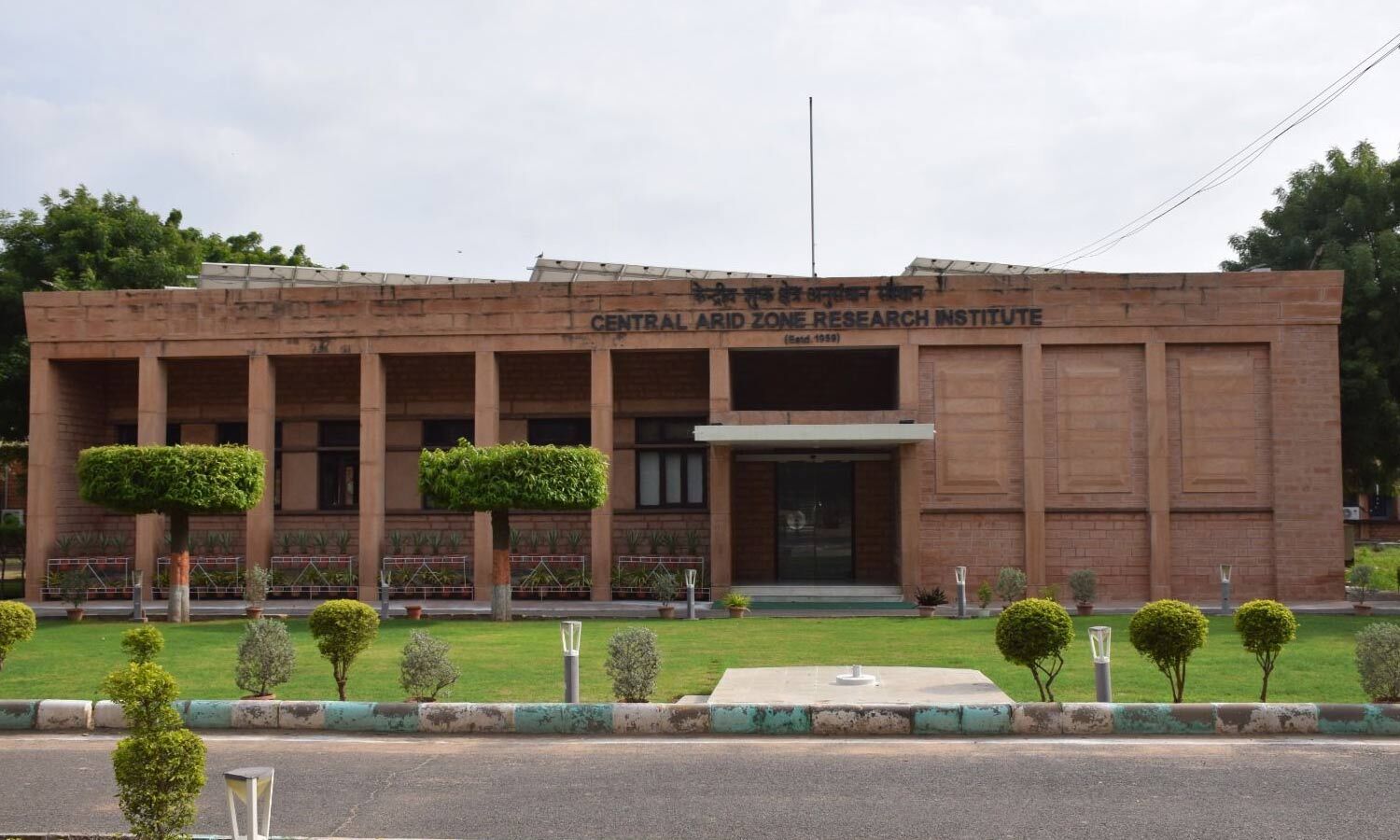
The Central Arid Zone Research Institute, or CAZRI, studies how to grow crops in very dry places.
Its scientists said Andhra Pradesh and Telangana could use some of Rajasthan’s successful farming methods.
These methods include collecting water in farm ponds and growing crops that need less water.
CAZRI also works with research groups in Hyderabad.
The institute helped develop a pearl millet variety called Maru Moti.
Rajasthan has reduced the spread of desert land and made more land suitable for farming.
Farmers there now grow cumin, isabgol and pomegranates in dry conditions.
CAZRI trains farmers and local workers so they can share these methods with other communities.

CAZRI scientists said Andhra Pradesh and Telangana can adapt Rajasthan’s desert-farming practices to save time and costs.
The institute collaborates with Hyderabad-based agricultural, remote-sensing and climate-resilience institutions.
CAZRI developed the Maru Moti pearl millet variety using genetic material from ICRISAT in Hyderabad.
Rajasthan reduced desertification by 3.87 lakh hectares and stabilized 4.8 lakh acres of sand dunes.
Water harvesting, pomegranate cultivation, precision farming and farmer training have expanded agricultural opportunities in the desert.
- Who
- Scientists and officials from the Central Arid Zone Research Institute, along with a media delegation from Andhra Pradesh.
- What
- CAZRI advised Andhra Pradesh and Telangana to adopt suitable desert-farming technologies and practices developed in Rajasthan.
- Where
- The programme was held in Jodhpur, Rajasthan, with potential applications in Andhra Pradesh and Telangana.
- When
- The interaction took place on Tuesday; CAZRI was established in 1952.
- Why
- The practices could help address water scarcity, heat spikes and dry-season farming challenges while reducing development time and costs.
Key facts
- Institute
- Central Arid Zone Research Institute was established in 1952 as a desert afforestation station.
- Desertification reduction
- Rajasthan reportedly reduced desertification by 3.87 lakh hectares.
- Dune stabilization
- CAZRI worked on stabilizing 4.8 lakh acres of sand dunes.
- Irrigated agriculture
- The share of irrigated agriculture in the desert area increased from 10% to 30%.
- Pearl millet
- CAZRI developed the Maru Moti variety using genetic material sourced from ICRISAT in Hyderabad.
- Major crops
- The article says Rajasthan produces 65% of the world’s cumin and 95% of its isabgol.
- Water management
- Diggis, or farm ponds, collect excess canal water and rainwater for agricultural use.
Quotes
S. P. S. Tanwar
Acting Director, Central Arid Zone Research Institute (CAZRI) and head of Division of Transfer of Technology
“The newly released pearl millet variety named Maru Moti was developed using genetic material sourced from ICRISAT in Hyderabad.”
 thehansindia.com
“Whatever good work our scientists are doing, it has a bigger role of Andhra and Telangana.”
thehansindia.com
Sources
Related news

CAZRI Tourism Park Protects Species and Fights Desertification

Telangana Conference Promotes AI for Sustainable Farming and Biotech
Telangana Farmers Sow 10% More Area Despite El Nino Fears

Andhra Pradesh Adopts Four-Pillar Plan Against El Niño Impact

ICAR Initiates Genome Editing in 41 Crops
