10 months ago
ICAR Denies 'Baseless' Claims of Rigged Data on Gene-Edited Rice Varieties

Some people in India who are against genetically modified (GM) crops are saying that the government's agricultural research organization, ICAR, might have faked good results for two new types of rice.
These rice types were made using a newer gene-editing technique.
The anti-GM group looked at official reports from ICAR and found what they believe are big differences between the actual test numbers and what ICAR announced.
They say one rice variety wasn't better in salty soil and didn't yield as much as claimed, and another rice variety didn't yield more or mature faster in many places, despite claims.
ICAR strongly denies these accusations, calling them untrue and saying they are against progress.
ICAR insists that they followed all the rules and used a fair, blind testing system for these rice varieties, and that they have already explained their findings.

ICAR has refuted allegations from the Coalition for a GM-Free India that test data for gene-edited rice varieties Pusa DST-1 and DRR Dhan 100 were rigged.
The Coalition claims ICAR's conclusions contradict its own data from the 2023 and 2024 AICRPR Annual Progress Reports, citing examples of underperformance and marginal yield gains.
The Coalition also highlighted issues with Pusa DST-1 regarding drought/salinity tolerance testing and inconsistent yield results across trial sites.
For DRR Dhan 100 (Kamala), the Coalition reported underperformance in multiple trial sites, contradicting claims of higher yield and early maturity.
ICAR described the allegations as baseless and motivated by an anti-development agenda, asserting that all standard protocols and procedures were strictly followed in testing and releasing the varieties.
- Who
- The Indian Council of Agricultural Research (ICAR) and the Coalition for a GM-Free India
- What
- ICAR has rejected allegations by the Coalition for a GM-Free India that test data for two gene-edited rice varieties, Pusa DST-1 and DRR Dhan 100, were rigged and hyped.
- Where
- India, concerning rice variety trials conducted by ICAR's All India Coordinated Research Project on Rice (AICRPR).
- When
- The Coalition held a press conference today, presenting data from 2023 and 2024 reports; the varieties were released on May 4, 2024.
- Why
- The Coalition claims scientific manipulation to falsely showcase success, while ICAR states the allegations are baseless and driven by an anti-development agenda.
Coalition for a GM-Free India
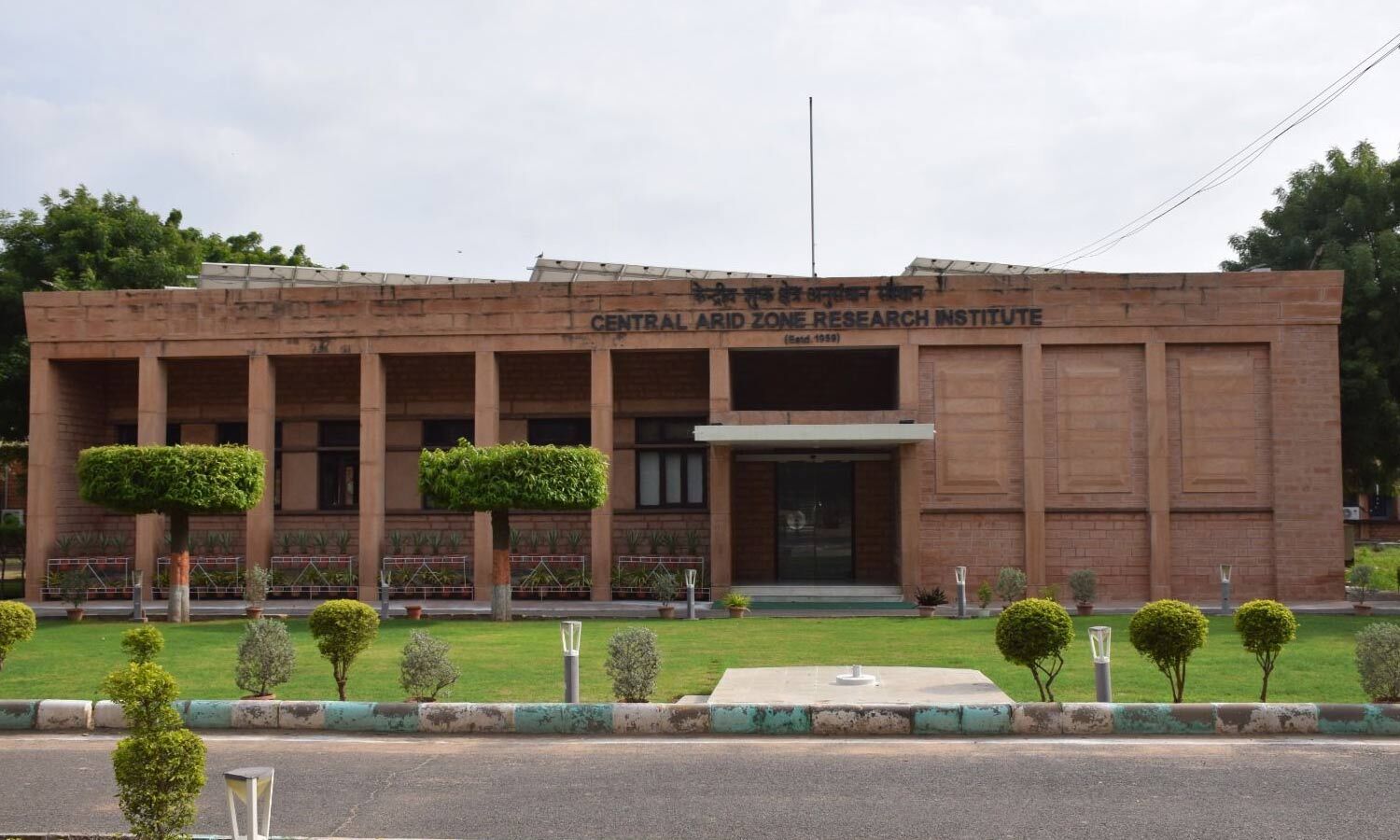
Indian Council of Agricultural Research (ICAR)
Data Integrity and Representation
Coalition for a GM-Free India
Alleges ICAR manipulated and hyped trial data for gene-edited rice, presenting conclusions that contradict the raw data, showing underperformance in many trial sites for Pusa DST-1 and DRR Dhan 100.
Indian Council of Agricultural Research (ICAR)
Denies rigging or hyping results, stating all allegations are baseless and motivated by an anti-development agenda; asserts that standard, transparent, and unbiased multi-location trials were conducted according to established protocols.
Scientific Process and Methodology
Coalition for a GM-Free India
Claims specific instances of failed drought/salinity tolerance tests, marginal yield advantages, and underperformance across multiple locations for both rice varieties, questioning the validity of ICAR's claimed successes.
Indian Council of Agricultural Research (ICAR)
Affirms that the gene-edited lines were subjected to standard evaluation procedures under the AICRPR, including blind-coded multi-location trials involving over 24 sites for each variety, ensuring independent validation.
Motivation and Agenda
Coalition for a GM-Free India
Accuses ICAR of engaging in 'bad science' to promote genome-edited varieties, impacting farmers' livelihoods.
Indian Council of Agricultural Research (ICAR)
Labels the Coalition's allegations as undermining the achievements of Indian scientists and driven by an anti-development agenda.
Key facts
- Accused Group
- Coalition for a GM-Free India
- Responding Organization
- Indian Council of Agricultural Research (ICAR)
- Contested Varieties
- Pusa DST-1 and DRR Dhan 100 (Kamala)
- Allegation
- Trial results for gene-edited rice varieties were rigged and hyped.
- ICAR's Response
- Allegations are baseless, motivated by anti-development agenda; all protocols followed.
- Data Source for Allegations
- ICAR's All India Coordinated Research Project on Rice (AICRPR) Annual Progress Reports (2023, 2024)
- Release Date of Varieties
- May 4, 2024
Quotes
Coalition for a GM-Free India
A civil society group
“According to ICAR’s own reports: no testing data for the claimed drought or salinity tolerance in 2023 due to “limited seed quantity. At-par or – 4.8% lower yield compared to the parent MTU-1010 in 2023 trials. In 12 of 20 sites, the genome-edited line underperformed. In 2024, no yield advantage in coastal or inland salinity trials; only a 1.6% marginal gain in alkaline soils. Yet, the summary table on page 9.27 claims “30% higher yield” drawing on results from just 8 locations in one zone.”
 indianexpress.com
“Kamala was projected as a miracle variety — with 17% higher yield, early maturity, and superior nitrogen use efficiency. The truth from ICAR’s own documents is far from it… In 2023, Kamala underperformed in 8 of 19 trial sites.”
indianexpress.com
Indian Council of Agricultural Research (ICAR)
An organization
“Under AICRPR, all nominated breeding lines are blind-coded and sent to cooperating research centres for independent field evaluation. Every year, over 500 breeding lines are tested under this system, which has been in operation since 1965 and has contributed to the development of more than 1,000 rice varieties. Both DRR Rice 100 (Kamala) and Pusa DST Rice 1 were coded and evaluated under AICRPR along with other entries and check varieties during 2023 and 2024, ensuring full compliance with established procedures and independent validation by participating research centres.”
indianexpress.com
“The genome-edited plants were indeed subjected to the standard evaluation procedures established by ICAR for testing and identification of crop varieties. This is carried out through All-India multi-location trials in a transparent and unbiased manner. Both DRR Rice 100 (Kamala) and Pusa DST Rice 1 were independently tested, each at more than 24 locations across the country under the All India Coordinated Research Project on Rice (AICRPR) – the nodal and sole agency in India responsible for evaluating and recommending rice varieties for release.”
indianexpress.com
Kavitha Kuruganti
Activist and Coalition member
“Doing bad science in agriculture, that too from the public sector, has a direct bearing on the lives and livelihoods of millions of farmers.”
indianexpress.com