2 hrs ago
IBC Resolutions Retained 85% of Workforce Across 300 Firms

A study looked at about 300 companies going through India’s insolvency process.
These companies had around 96,200 workers when the process began and about 82,100 when it ended.
That means most of their workers were still employed at the end.
Some companies even hired more people during the process.
New investment and restarting production may have helped in those cases.
The study says that resolving a company can help it keep operating and protect jobs.
But it did not show whether workers’ pay or working conditions changed.
The process can also take time, and delays may put jobs and businesses at risk.

An IBBI analysis of around 300 firms found about 82,100 of 96,200 employees and workmen remained when insolvency proceedings ended.
About 12–15% of the companies increased their workforce during the process.
The analysis said resolution plans can help stabilise businesses and preserve jobs, though it did not assess wages or working conditions.
The NCLT approved a record 107 resolution plans in the September 2026 quarter, bringing first-half FY27 approvals to 185.
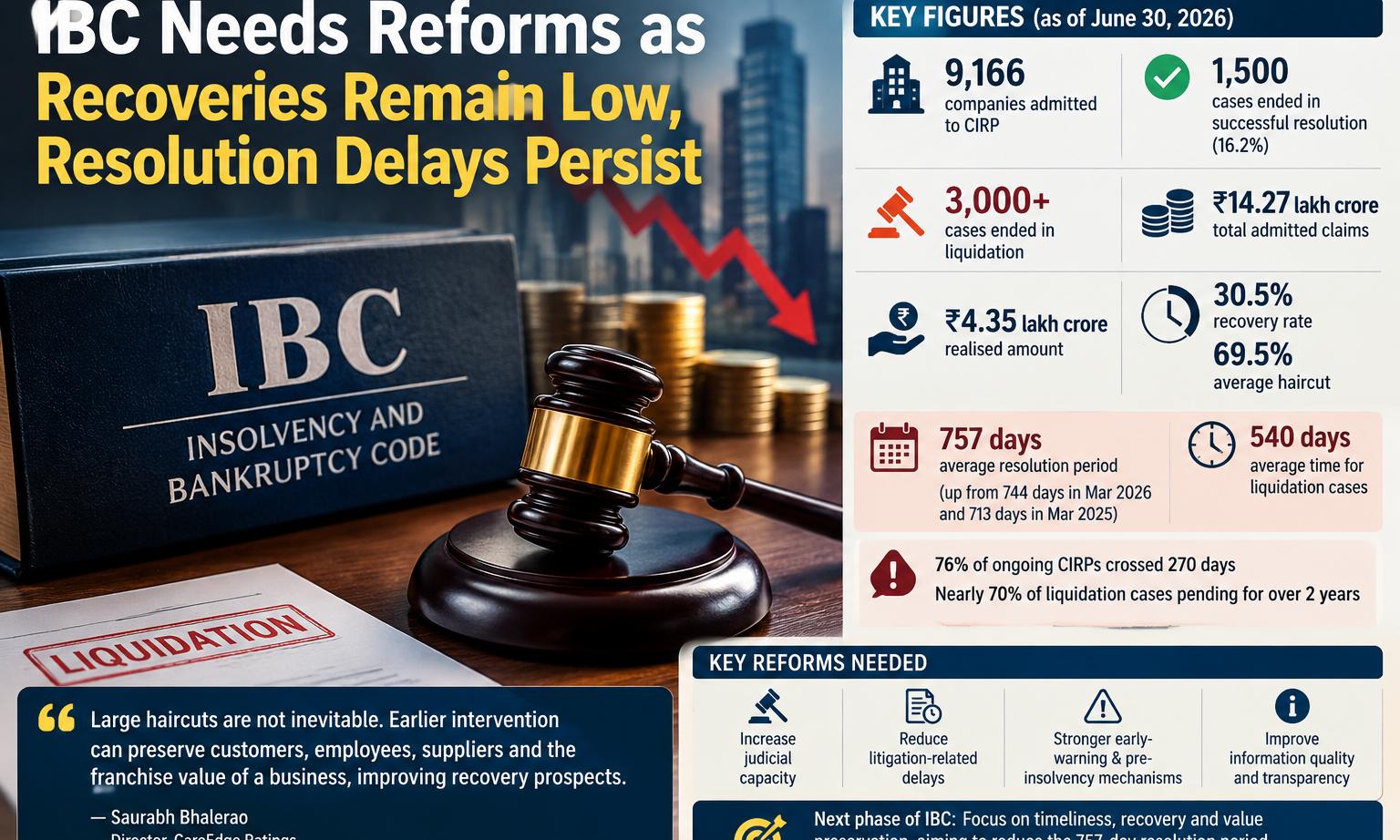
By June 2026, creditors had recovered about Rs 4.35 lakh crore through approved plans, equal to 30.52% of admitted claims.
- Who
- The Insolvency and Bankruptcy Board of India (IBBI) analysed workforce figures for around 300 companies undergoing insolvency proceedings.
- What
- The analysis found that the companies retained about 85% of their combined workforce by the end of proceedings.
- Where
- India.
- When
- The analysis was reported alongside insolvency figures through June 2026 and NCLT approvals in the September 2026 quarter.
- Why
- The analysis examined whether insolvency resolution and approved plans helped businesses continue operating and preserve employment.
Employment benefits of resolution
Limits and risks
Workforce retention
Employment benefits of resolution
IBBI’s analysis found that about 85% of the workforce remained at the close of proceedings; commentators said resolution plans and employee safeguards can help preserve jobs.
Limits and risks
The aggregate figures do not show whether retained workers experienced changes in wages, working conditions or job security.
Timely resolution
Employment benefits of resolution
Successful resolution may bring new capital, restart production and support worker confidence; some companies increased their workforce.
Limits and risks
Prolonged proceedings can put business value and employment at risk, according to Varun Singh.
Key facts
- Companies studied
- Around 300, including MSMEs
- Workforce at start
- About 96,200 employees and workmen
- Workforce at end
- About 82,100 employees and workmen
- Companies with workforce growth
- About 12–15%
- Resolution plans approved
- 107 in the September 2026 quarter; 185 in the first half of FY27
- Creditor recoveries
- About Rs 4.35 lakh crore through approved plans by June 2026, or 30.52% of admitted claims
- Study method
- Compared employee and workmen numbers at the start and close of proceedings using secondary data from MCA, NCLT, IBBI and company financial reports
Quotes

IBBI analysis
Analysis by the Insolvency and Bankruptcy Board of India on workforce retention.
“That such a high proportion of jobs remained at the close of CIRP (corporate insolvency resolution process) demonstrates the stabilising role of successful resolution plans.”
 financialexpress.com
“A resolution plan should be judged by whether the business can sustain operations and employment after the paperwork is complete.”
financialexpress.com
Sources
Related news

IBC Faces Prolonged Timelines and Steep Haircuts
IBC Reform Urged as Recoveries Fall and Delays Persist
NCLT Clears Record 107 Resolution Plans Worth Rs 11,071 Crore

IBC Revives Stalled Projects for 1.4 Lakh Homebuyers

IBBI Study Proposes Insolvency Professionals for Failed Bank Liquidations

NCLT Approves ₹7.42 Crore Plan Despite ₹560 Crore Claims

Regulation Tweak Could Shield Healthy Realty Projects From Bankruptcy

Regulator Tightens Data Trail for Personal Guarantor Insolvency