1 hr ago
Pakistan Supreme Court Suspends Lawyer Couple’s Social Media Sentences

Pakistan’s top court heard an appeal by two married lawyers.
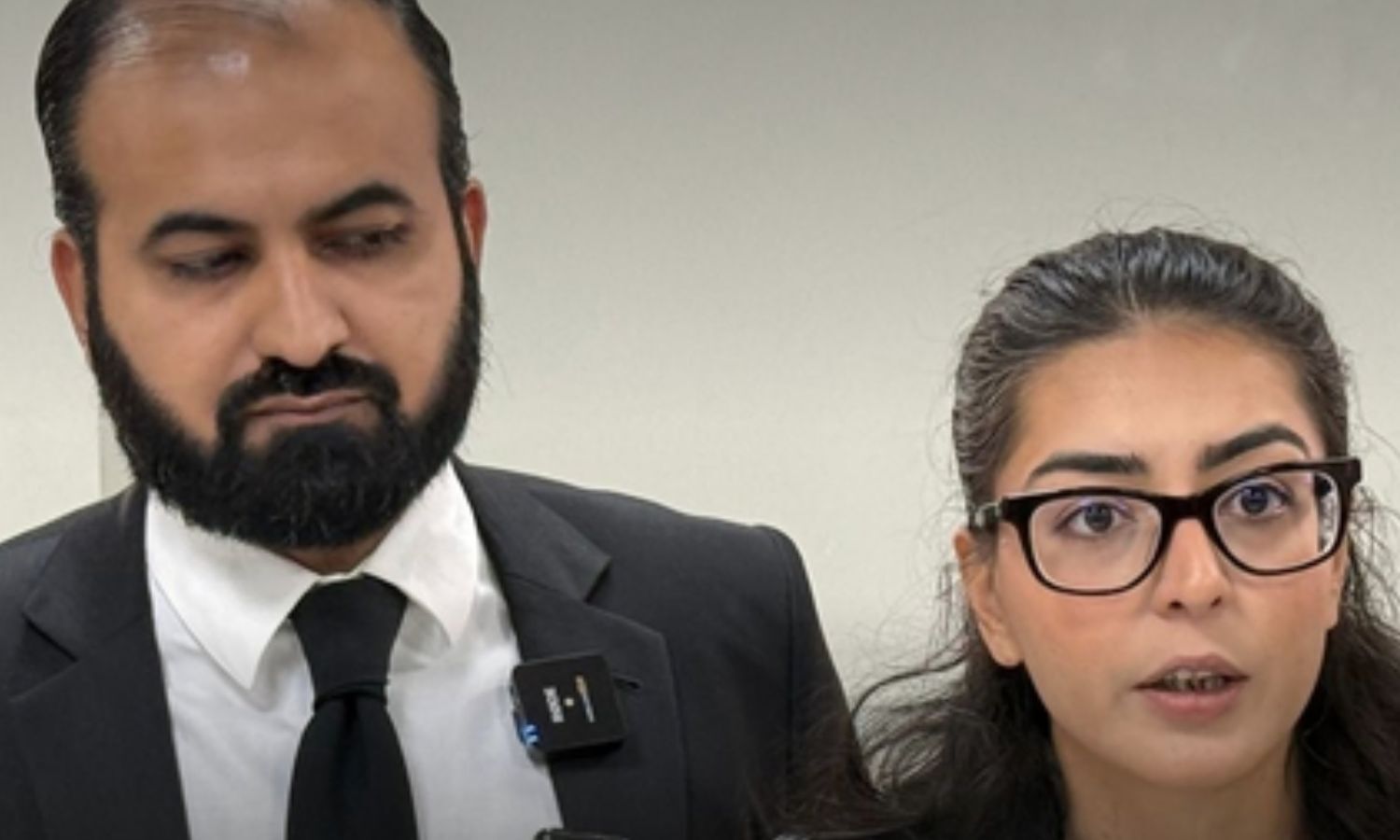
The lawyers, Imaan Mazari-Hazir and Hadi Ali Chattha, had been given 17-year prison sentences.
The case involved posts they shared on social media.
Authorities said the posts supported hostile or banned groups.
The posts also blamed security forces for some missing-person cases.
The couple had earlier been arrested after a protest outside the Islamabad High Court.
The Supreme Court accepted their appeal and ordered them released on surety bonds.
Human rights groups and United Nations experts said the punishment affected important rights.
The report describes the decision as both suspending their sentences and exonerating them.

The Supreme Court of Pakistan ordered the release of lawyers Imaan Mazari-Hazir and Hadi Ali Chattha after accepting their appeals.
The couple had received 17-year prison sentences in January under the Prevention of Electronic Crimes Act.
The case concerned social media posts alleging security-force responsibility for missing-person cases in Khyber Pakhtunkhwa and Balochistan.
The couple were also arrested over a protest outside the Islamabad High Court and alleged mistreatment of its bar association president.
Rights groups, politicians, journalists and United Nations experts criticized the convictions, citing fair-trial and free-expression concerns.
- Who
- Human rights lawyers Imaan Mazari-Hazir and Hadi Ali Chattha, and the Supreme Court of Pakistan.
- What
- The Supreme Court accepted the couple’s appeals, suspended their sentences and ordered their release; the report also says they were exonerated.
- Where
- Islamabad, Pakistan, including proceedings before the Supreme Court and Islamabad High Court.
- When
- Thursday, September 17; the couple had been sentenced in January and arrested on January 23.
- Why
- The appeal challenged 17-year convictions under the Prevention of Electronic Crimes Act over social media posts.
Rights and Due Process Concerns
Authorities’ Case Against the Posts
Nature of the social media content
Rights and Due Process Concerns
Rights critics said the couple were punished for exercising rights protected by international human rights law.
Authorities’ Case Against the Posts
The complaint accused Imaan Mazari-Hazir of disseminating and propagating narratives aligned with hostile terrorist groups and proscribed organizations, while Hadi Ali Chattha was accused of reposting some of her posts.
Treatment of security forces
Rights and Due Process Concerns
The couple’s posts raised allegations concerning security forces’ responsibility for missing-person cases in Khyber Pakhtunkhwa and Balochistan.
Authorities’ Case Against the Posts
The case treated the alleged online material as criminal content, and the prosecution also arose amid allegations that the couple protested outside the Islamabad High Court and manhandled its bar association president.
Fairness of the convictions
Rights and Due Process Concerns
Rights bodies, politicians, journalists and United Nations experts criticized the lengthy sentences and stressed the couple’s right to a fair trial.
Authorities’ Case Against the Posts
A sessions court convicted the couple, and the authorities’ allegations formed the basis of the case under the Prevention of Electronic Crimes Act.
Key facts
- Defendants
- Imaan Mazari-Hazir and Hadi Ali Chattha
- Sentence
- 17 years in prison each
- Law cited
- Prevention of Electronic Crimes Act
- Release condition
- Surety bonds of PKR 200,000
- Arrest date
- January 23
- Appeal court
- Supreme Court of Pakistan
- Criticism
- Rights groups, politicians, journalists and United Nations experts criticized the convictions
Quotes
Justice Naeem Akhtar Afghan
Justice of Pakistan’s Supreme Court who headed the bench hearing the couple’s appeals
“Both are lawyers, and we are keeping their honour”
 theprint.in
UN special rapporteurs
UN experts who criticized the couple’s convictions in a February statement
“for simply exercising rights guaranteed by international human rights law”
theprint.in
Sources
Related news
Journalists Urge Swift Hearings for Jailed Pakistani Human Rights Lawyers

Pakistan Journalist Detained as Press Freedom Group Condemns Cybercrime Case
Pakistan High Court Ends Solitary Confinement for Imran Khan

Imran Khan’s Sister Files Second Contempt Plea Over Family Access
Supreme Court Suspends YouTuber Gulshan Pahuja’s Contempt Sentence

Madhya Pradesh High Court Suspends Sentence for Interfaith Wife

Imran Khan’s Sons Accuse Army Chief of Personal Vendetta