

1 month ago
Why No Tiny Dinosaurs? Mammals Might Have Played a Role
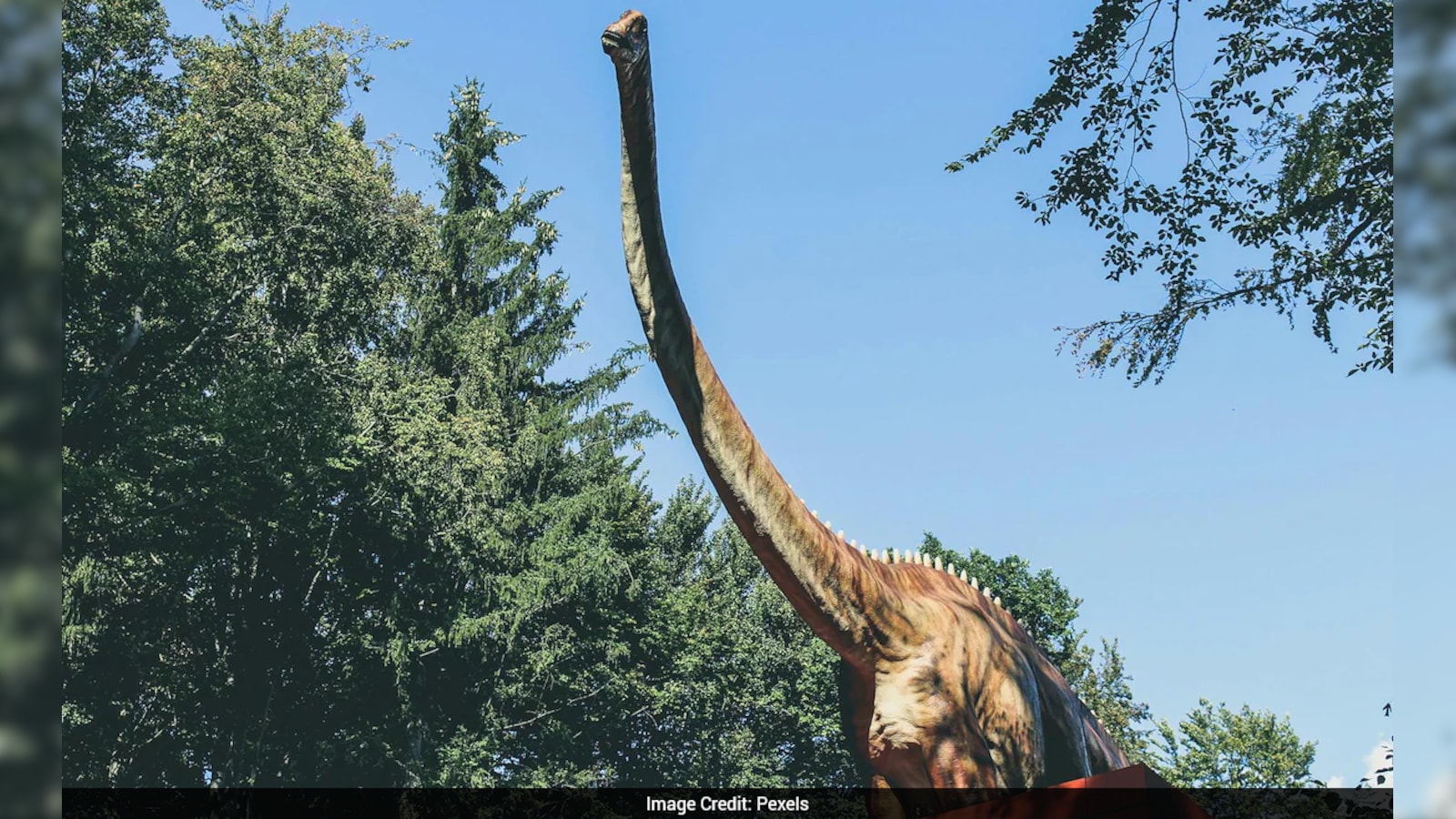
Millions of years ago, dinosaurs were the biggest animals on Earth, but scientists noticed there were never any really tiny ones, like mouse-sized.
So they used math to study why.
They found that the same rules that explain small mammals and birds do not explain why there were no small dinosaurs.
They think early mammals, which were tiny like shrews, got to the small-animal jobs first.
Because mammals were already filling those niches, dinosaurs could not shrink down to fit in.
Meanwhile, big dinosaurs stopped mammals from getting too big.
The very smallest dinosaurs were still much heavier than the smallest birds and mammals alive today.
Scientists also wondered if tiny dinosaurs existed but left no fossils, but they think that is unlikely.
Flight may have let birds become small later, and that is why there are so many different kinds of birds today.

New research used mathematical models to explore body-size evolution in vertebrate groups, finding that energetics and physiology explain mammal, bird and turtle sizes but not the absence of tiny dinosaurs.
The researchers hypothesize that small, shrew-sized early mammals filled ecological niches for small animals, outcompeting dinosaurs and preventing them from evolving tiny body sizes.
The smallest known dinosaurs, such as crow-sized Microraptor at about 430 grams, were still far larger than today's smallest bird, mammal and lizard.
The study, published in the journal Evolution, was co-led by Stephanie Lechki of Princeton University and Roger Benson of the American Museum of Natural History.
The researchers call the alternative idea that tiny dinosaurs existed but left no fossils improbable, and suggest flight allowed birds to escape competition and become small.
- Who
- Paleontologists Stephanie Lechki of Princeton University and Roger Benson of the American Museum of Natural History co-led the study.
- What
- A study investigating why no tiny, mouse-sized dinosaurs ever existed, concluding that early mammals likely outcompeted them for small-animal ecological niches.
- Where
- Research carried out by scientists at Princeton University in New Jersey and the American Museum of Natural History in New York.
- When
- The study was published in the journal Evolution; the articles do not give a specific publication date.
- Why
- Small-bodied early mammals likely occupied the ecological niches suited to tiny body sizes, preventing dinosaurs from evolving small size; large dinosaurs similarly prevented early mammals from growing large.
Key facts
- Study journal
- Evolution
- Co-lead investigator
- Stephanie Lechki, Princeton University
- Co-lead investigator
- Roger Benson, American Museum of Natural History
- Smallest known dinosaurs
- Microraptor (~430g), Anchiornis (~530g), Fruitadens (~730g)
- Today's smallest bird
- Bee hummingbird, about 1.75 grams
- Today's smallest mammal
- Etruscan shrew, about 1.8 grams
- Origin of dinosaurs
- About 230 million years ago
- Asteroid mass extinction
- 66 million years ago
Quotes
Stephanie Lechki
Postdoctoral fellow at Princeton University and co‑leader of the study
“"We know based on observations of living animals and the fossil record that most animal groups have members that achieve very small body sizes, and that these small animals typically dominate their ecosystems."”
 NDTV
NDTV
“"Most living species are small, much smaller than us, and smaller than even the smallest dinosaurs."”
NDTV
Sources
Related news
Scientists Reconstruct Chirps Of Jurassic Forest Insect Soundscape
Some Animals Can Pause Pregnancy Through Embryonic Diapause
Pangea Ultima Could Make Most Land Uninhabitable for Mammals
How to Tell a Mouse From a Rat at Home
Six Surprising Animals That Hibernate Beyond Bears and Bats
