6 hrs ago
Bhopal Water Capacity May Fall Short Under Master Plan 2047
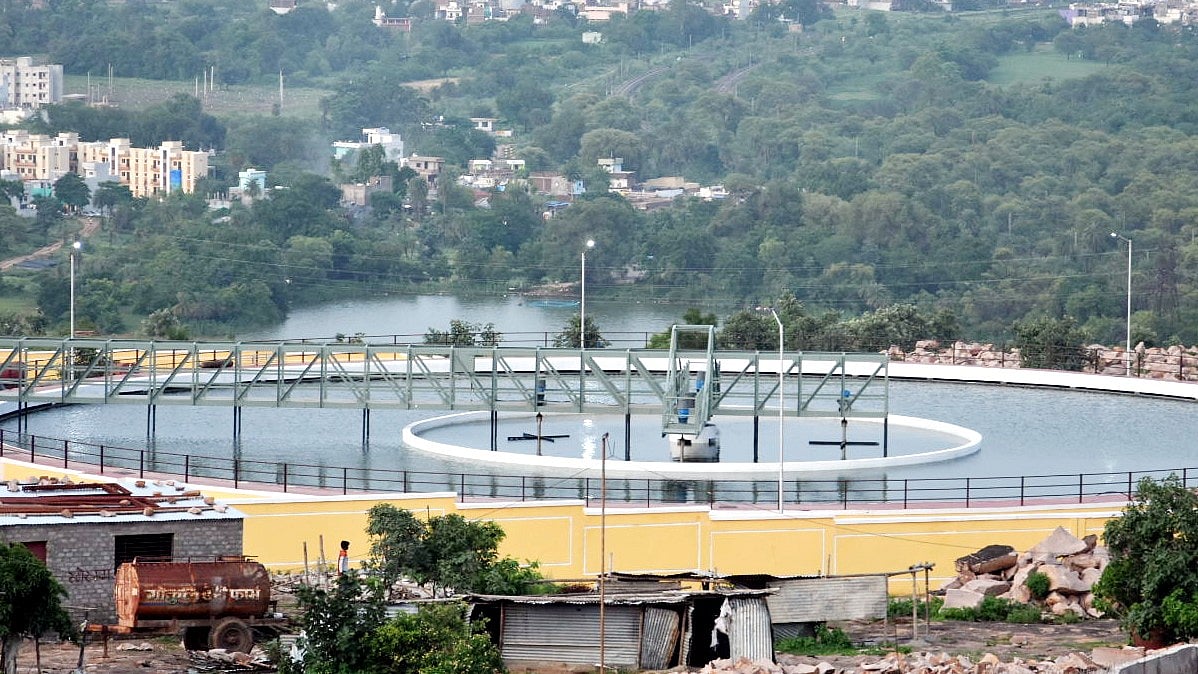
Bhopal is expected to grow, and more people will need water.
The city’s current water system may not be able to provide enough.
Experts say homes alone could need much more water than the city can currently supply.
Leaks in pipes could make the shortage worse.
By 2047, each person might receive less water than experts say is needed.
The city could reduce the problem by fixing leaks and reusing treated wastewater.
It could also help recharge groundwater and restore old water sources.
Experts say these steps should go along with expanding the water system.

Experts warn Bhopal’s existing water supply capacity could be outgrown as early as 2027–29, with capacity potentially exhausted by 2035.
The draft Master Plan 2047 projects annual population growth of 2.56% and a population of about 44.25 lakh.
Residential demand alone could reach about 675 million litres per day (MLD), compared with current reported capacity of 466–475 MLD.
After accounting for leakage and distribution losses, Prof Jagdish Singh estimates a 328–498 MLD shortfall; per-capita availability could fall to 80–97 litres daily by 2047.
Singh recommends reducing losses, reusing treated wastewater, recharging groundwater and reviving traditional water sources, alongside infrastructure expansion.
- Who
- Bhopal residents and city water planners; Prof Jagdish Singh of MANIT, Bhopal, raised concerns.
- What
- Experts warn that projected demand under the proposed Master Plan 2047 could exceed Bhopal’s water supply capacity.
- Where
- Bhopal, Madhya Pradesh, India.
- When
- The shortfall is projected through 2047; current capacity may be outgrown by 2027–29 and could be exhausted by 2035.
- Why
- Projected population growth and increased commercial and industrial activity could raise demand beyond available water capacity.
Experts’ concerns
Proposed remedies
Future water capacity
Experts’ concerns
Experts warn that population growth and increased commercial and industrial activity could push demand beyond current capacity, creating a substantial shortfall.
Proposed remedies
Prof Jagdish Singh says measures such as leakage control, wastewater reuse, groundwater recharge and restoring traditional sources could potentially bridge around 70% of an estimated 395 MLD deficit when combined with infrastructure expansion.
Key facts
- Projected population by 2047
- Around 44.25 lakh
- Draft plan annual population growth
- 2.56%
- Current reported water capacity
- Around 466–475 MLD
- Projected residential demand
- Around 675 MLD, based on 150 litres per capita per day
- Estimated shortfall including losses
- 328–498 MLD, according to Prof Jagdish Singh
- Projected per-capita availability by 2047
- 80–97 litres per capita per day, compared with an estimated requirement of around 135
- Water Readiness Index
- Projected to decline from 0.53 in 2026 to around 0.31 in 2047
Sources
Related news
MP Sribharat says Vizag will have ample water by 2040
Bhopal’s Planning Journey From Raja Bhoj to 2047
Bhopal’s Master Plan Remains Stalled After Nearly 22 Years
BMC Targets Nearly 400 MLD Recovery By Cutting Water Losses
Mumbai Water Crisis: BMC Plans Zone-Wise Supply Amid Shortages
Bhopal 2047 Mixed-Use Plan Raises Traffic, Parking Concerns

Madhya Pradesh Child Deaths Expose Failures in Last-Mile Healthcare

Four Indore Residents Lose Over ₹6 Lakh to Cyber Frauds
Indore Doctor’s 23-Year Mission to Help End Tuberculosis
Bhopal Tightens Birth and Death Certificate Rules, Adds Checks
Ujjain’s Simhastha 2028 Makeover Sparks Protests and Urgency