3 hrs ago
AI Expands Across Packaging, Desserts, Robots, Travel and Industry
AI is being used in many new ways outside ordinary computer screens.
Researchers in Japan are making food packages that can notice problems and help reduce waste.
FamilyMart is using AI to help invent new desserts.
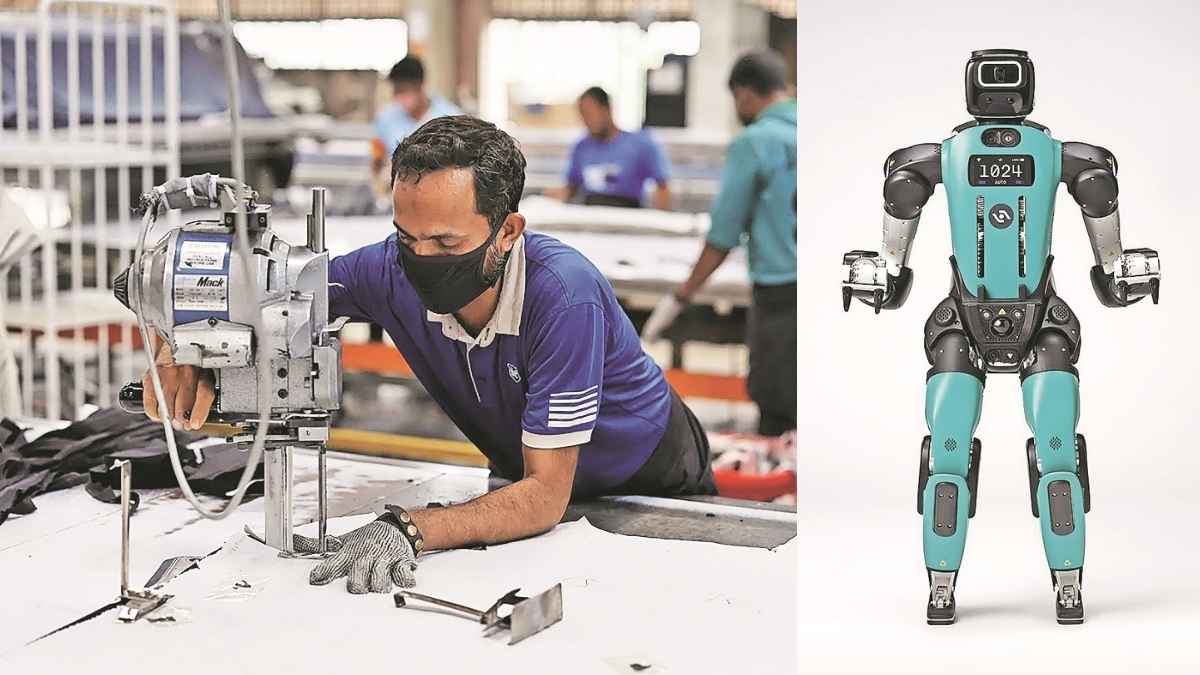
A robot called Digit 5 is being designed to work safely near people in factories.
Another robot in Tokyo can pick up objects and even hammer a nail.
An AI-generated character was interviewed on British television about appearing in a film.
A student in California is using AI to study pollution near schools.
Travelxp has made an AI helper that can arrange and pay for trips.
Clothing factories in Bangladesh are using connected machines to monitor work and find defects.

Kyushu University researchers developed food packaging that combines intelligent sensors, self-healing materials and AI prediction to monitor products in real time.
FamilyMart plans about 10 AI-assisted desserts by the end of its fiscal year after successful trials, including a 285-yen sweet potato canele.
Agility Robotics’ Digit 5 uses sensors and AI to detect nearby people, avoid collisions and stop or lower itself when someone comes too close.
AI is being used in entertainment, air-pollution mapping and Tokyo robot demonstrations involving object handling and industrial tasks.
Travelxp’s Marco can plan, book and pay for trips within user-set limits, while Bangladeshi garment factories use AI-enabled devices to track production and defects.
- Who
- Researchers, companies, factories, a student, and technology developers are applying AI to packaging, food, robotics, entertainment, travel, environmental monitoring and garment production.
- What
- The roundup describes new AI-enabled products and systems, including smart packaging, desserts, robots, an AI-generated actress, pollution analysis, a travel concierge and factory monitoring tools.
- Where
- The projects span Japan, the United States, India, Bangladesh and the United Kingdom, including Tokyo, San Jose and television program Good Morning Britain.
- When
- The developments are described as current; Travelxp’s Marco was unveiled at Global Fintech Fest 2026, and FamilyMart plans launches by the end of its fiscal year.
- Why
- The stated goals include reducing food waste, responding to consumer preferences, improving robot safety, supporting travel transactions, studying local pollution and raising industrial productivity.
Key facts
- Food packaging
- Kyushu University’s system combines intelligent sensing, self-healing materials and AI-driven prediction.
- FamilyMart desserts
- The Japanese convenience-store chain plans around 10 AI-driven products by the end of its fiscal year.
- Robot safety
- Digit 5 can detect nearby people, avoid them or stop, and lower itself when someone gets very close.
- Air-quality project
- Sixteen-year-old Kelly Liu used AI and low-cost sensors to study pollution around schools in San Jose, California.
- Travel assistant
- Travelxp’s Marco can discover, plan, book and pay for trips within spending limits set by users.
- Garment production
- Bangladeshi factories use AI-driven Internet of Things devices to monitor production, machine performance and defects.
- Reported productivity
- Some garment factories have reported productivity gains of up to 25%.
Sources
Related news
Hexaware Pushes AI Beyond Chatbots Into Software, Robots
AI Tracker Highlights Medical Tools, Robots, Books, Art and Music
AI Tracker: Robots, Viral Films, Digital Voices and Archaeology

Google Adds AI Tools to Help Save on Travel

Humanising AI Makes Online Content Harder to Verify
Humanoid Robot Dances at Ujjain Sandwich Shop Opening
Hilsa Breeding Grounds Shift From Bengal To Gujarat

Nine-Member Gang Held in Telangana Cattle, Mobile Theft Cases

India’s Full Asian Games Schedule for September 20

India Faces Packed Asian Games Schedule With Medal Opportunities