2 hrs ago
Wall Street Falls as Fed Signals Higher Rates Ahead
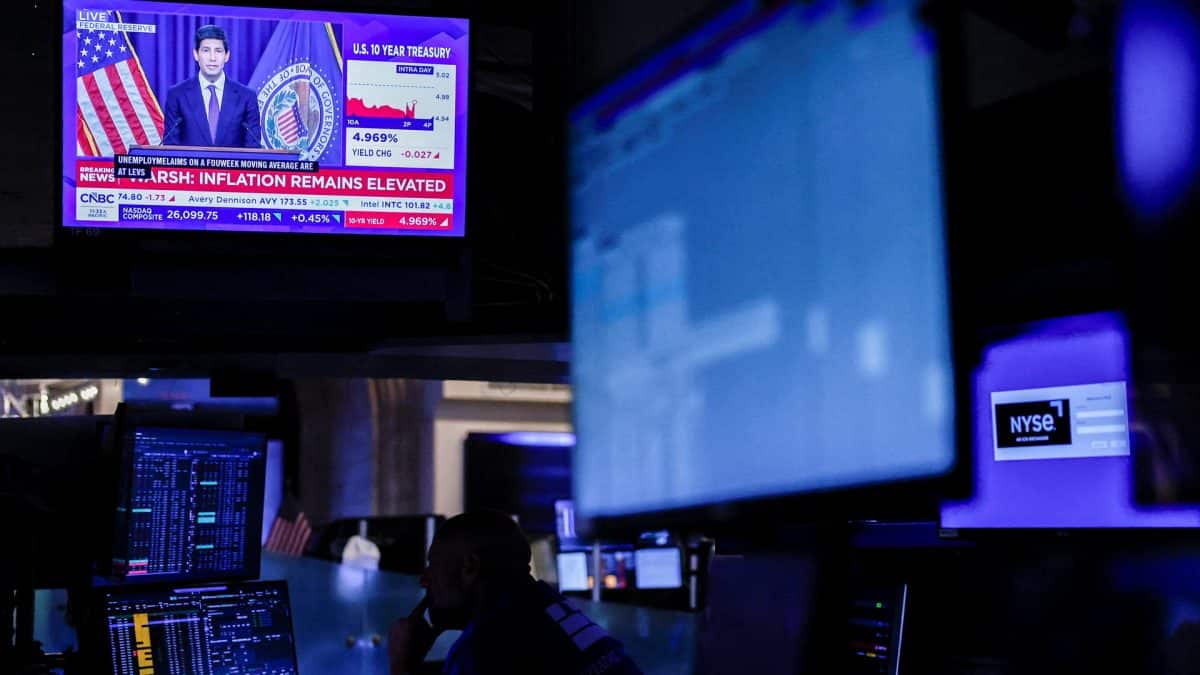
The Federal Reserve raised interest rates to help slow inflation.
It also suggested that rates might rise again in 2026.
Investors worried that borrowing costs could stay high for longer than expected.
High rates can make bonds more attractive and can reduce the value investors place on company stocks.
Strong retail sales showed that American consumers were still spending.
Import prices also rose, which could add to inflation.
Oil prices fell after supply concerns eased, but they remain higher than before the recent conflict escalation.
Other major central banks are also watching renewed inflation pressure.
As a result, investors are less certain that interest rates around the world will soon fall steadily.

The Federal Reserve raised its benchmark interest rate by 25 basis points to 3.75%-4%.
The Dow fell 1.21%, while the S&P 500 declined 0.44% and the Nasdaq slipped 0.01%.
Fed projections indicated that 16 of 18 policymakers expect at least one more rate increase in 2026.
August retail sales rose 1.2%, while core retail sales increased 1.4%, exceeding expectations.
Oil prices fell, but elevated energy costs continued to complicate the global inflation outlook.
- Who
- The Federal Reserve, its policymakers, US investors, and American consumers.
- What
- The Federal Reserve raised interest rates and signaled that another increase may be needed, prompting US stocks to fall.
- Where
- US financial markets, with implications for global markets and emerging markets such as India.
- When
- The decision and market reaction occurred on Wednesday; the Fed projected its interest-rate outlook for 2026.
- Why
- Inflation remains above the Fed’s 2% target, while strong consumer spending and higher import prices give policymakers reason to keep rates elevated.
Federal Reserve’s rationale
Investors’ concerns
Keeping rates high
Federal Reserve’s rationale
The Federal Reserve indicated that persistent inflation and a strengthening economy may require another rate increase before the end of 2026.
Investors’ concerns
Investors fear that higher rates will remain in place for longer, increasing borrowing costs and weighing on stock valuations and expected earnings.
Economic resilience
Federal Reserve’s rationale
Strong retail sales suggest consumers continue to spend, giving policymakers more room to wait for inflation to cool.
Investors’ concerns
Continued spending and rising import prices could prolong inflation and make it harder for markets to anticipate future rate cuts.
Energy prices
Federal Reserve’s rationale
Lower oil prices after Saudi Arabia offered additional crude cargoes through Oman eased some immediate supply concerns.
Investors’ concerns
Oil remains significantly above pre-escalation levels, potentially adding inflation while also weakening consumer spending and economic growth.
Key facts
- Rate decision
- The Federal Reserve unanimously raised its benchmark rate by 25 basis points, to a range of 3.75%-4%.
- Dow performance
- The Dow Jones Industrial Average fell 631.33 points, or 1.21%, to 51,461.78.
- S&P 500 performance
- The S&P 500 declined 0.44% to 7,552.14.
- Nasdaq performance
- The Nasdaq Composite slipped 0.01% to 25,978.43.
- 2026 projections
- Sixteen of the Fed’s 18 policymakers projected at least one more rate increase in 2026; the median year-end rate projection was 4.1%.
- Inflation projection
- The Fed expects personal consumption expenditures inflation to remain at 3.7% in 2026.
- Retail sales
- US retail sales rose 1.2% in August, while core retail sales increased 1.4%.
Sources
Related news
Federal Reserve Raises Rates, Signals Another Hike Ahead

Wall Street steadies as markets await expected Fed rate hike
Dow Jones Drops 330 Points as Oil and Yields Rise

Fed Rate Hike Leaves Treasury Yields Elevated Amid Inflation

Fed Rate Decision May Pressure Stocks, Gold, and Rupee

Global Stocks Rise Ahead of Closely Watched Fed Decision

Images Show Extensive Damage From Iranian Strikes on US Bases
Oman Pitches Ports as Gateway for Indian Businesses

US Officials Meet Houthis in Oman Amid Yemen Offensive

India Manages Energy Crisis Amid Middle East Tensions