

1 hr ago
Wall Street steadies as markets await expected Fed rate hike
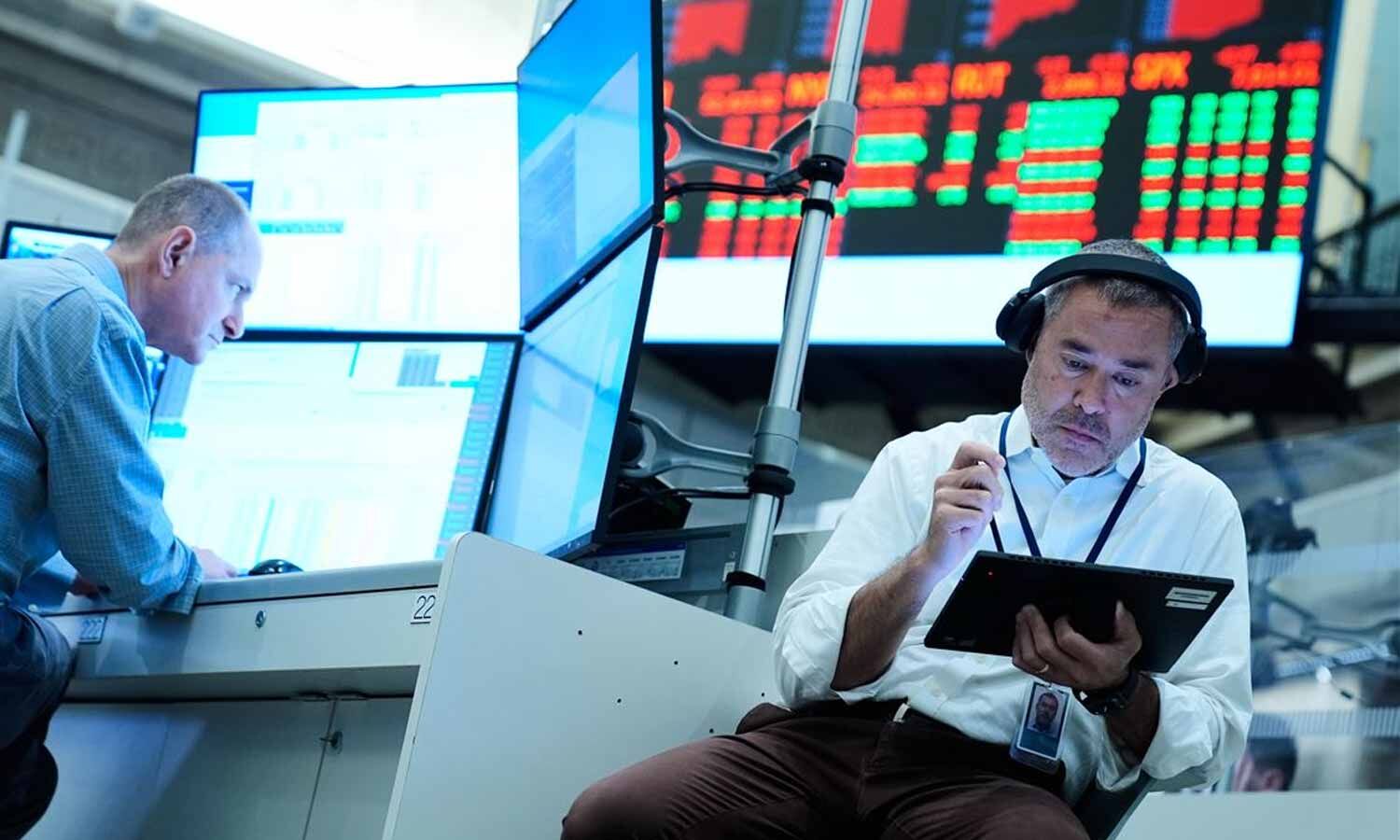
Investors were waiting to hear whether the Federal Reserve would raise interest rates.
Most traders thought the Fed would make its first rate increase since 2023.
Higher rates make borrowing more expensive and can help slow down rising prices.
They can also make stocks less attractive.
Oil prices and the interest rate on a key government bond fell slightly, which helped stocks stay steady.
A report showed that people spent more at U.S. stores than expected.
Technology companies connected to artificial intelligence recovered somewhat after falling earlier in the week.
NVIDIA and Advanced Micro Devices rose, but J.B. Hunt Transport Services fell sharply after warning about higher costs and weaker earnings.

The S&P 500 rose 0.2%, while the Dow fell 0.1% and the Nasdaq gained 0.5%.
Traders largely expect the Federal Reserve to raise interest rates to combat persistent inflation.
Brent crude fell 1.1% to $107.59, while the 10-year Treasury yield eased to 4.97%.
Stronger-than-expected U.S. retail spending could support the case for higher interest rates.
NVIDIA and Advanced Micro Devices rose, while J.B. Hunt Transport Services dropped 10.5% on an earnings outlook warning.
- Who
- The Federal Reserve, Wall Street investors, President Donald Trump, and companies including NVIDIA, Advanced Micro Devices, and J.B. Hunt Transport Services.
- What
- U.S. stocks held mostly steady as investors awaited the Federal Reserve’s expected interest-rate decision and updated economic forecasts.
- Where
- Wall Street and New York, amid movements in U.S., European, and Asian markets.
- When
- Wednesday, with the Fed’s decision expected later that day.
- Why
- Investors were assessing how the Federal Reserve would respond to persistent inflation, elevated oil prices, and economic activity.
Higher-rate advocates
Lower-rate advocates
How to respond to inflation
Higher-rate advocates
Federal Reserve officials were expected to raise interest rates because inflation remains high; stronger-than-expected retail spending could indicate that the economy can withstand higher borrowing costs.
Lower-rate advocates
President Donald Trump has been lobbying for lower interest rates instead of higher ones, while some traders still expected the Fed might delay a hike.
Market consequences
Higher-rate advocates
Higher rates could slow borrowing and economic activity, reducing pressure on prices.
Lower-rate advocates
Higher rates can undercut stock and other investment prices, and a decision not to raise rates could be interpreted by investors as a sign that the Fed is less committed to lowering inflation.
Key facts
- S&P 500
- Rose 0.2% and was on track for only its second gain in eight days.
- Dow Jones Industrial Average
- Fell 42 points, or 0.1%, as of 9:35 a.m. Eastern time.
- Nasdaq composite
- Rose 0.5%.
- Brent crude
- Declined 1.1% to $107.59 per barrel.
- 10-year Treasury yield
- Eased to 4.97% from 5.00% late Tuesday.
- Expected Fed action
- Traders largely expected the Federal Reserve to announce its first interest-rate increase since 2023.
- International markets
- South Korea’s Kospi gained 1.4%, while indexes rose across much of Europe and Asia.
Sources
Related news

Wall Street Falls as Oil Tops $100, Inflation Fears Rise

Dollar rises as oil boosts yields before expected Fed hike
Dow Jones Drops 330 Points as Oil and Yields Rise

Fed Rate Hike Puts US Treasury Yields Under Pressure

Big Tech Backs Rapid AI Growth With Company-Led Safety
Salesforce Unveils Koa and AI Partnerships at Dreamforce
Dreamforce Puts AI Safety and Speed Debate Center Stage
Nvidia’s Jensen Huang Says Companies Must Ensure AI Safety
