

1 hr ago
Far-right triumph in eastern Germany leaves migrants questioning their future

The AfD, a German political party that wants stricter immigration rules, won a major election in Saxony-Anhalt.
Some people who moved to Germany now worry about what this means for their lives.
Mamad Mohamad, who came from Syria, won a seat but called the victory “poisoned.”
Some migrant families are thinking about leaving the state.
A migrant organization said discrimination already affects work, education, healthcare and public services.
Some businesses are also wondering whether workers will feel safe there.
The AfD says it welcomes people who work, pay taxes and follow the law.
Germany’s constitution still protects minorities and limits what any state government can do.

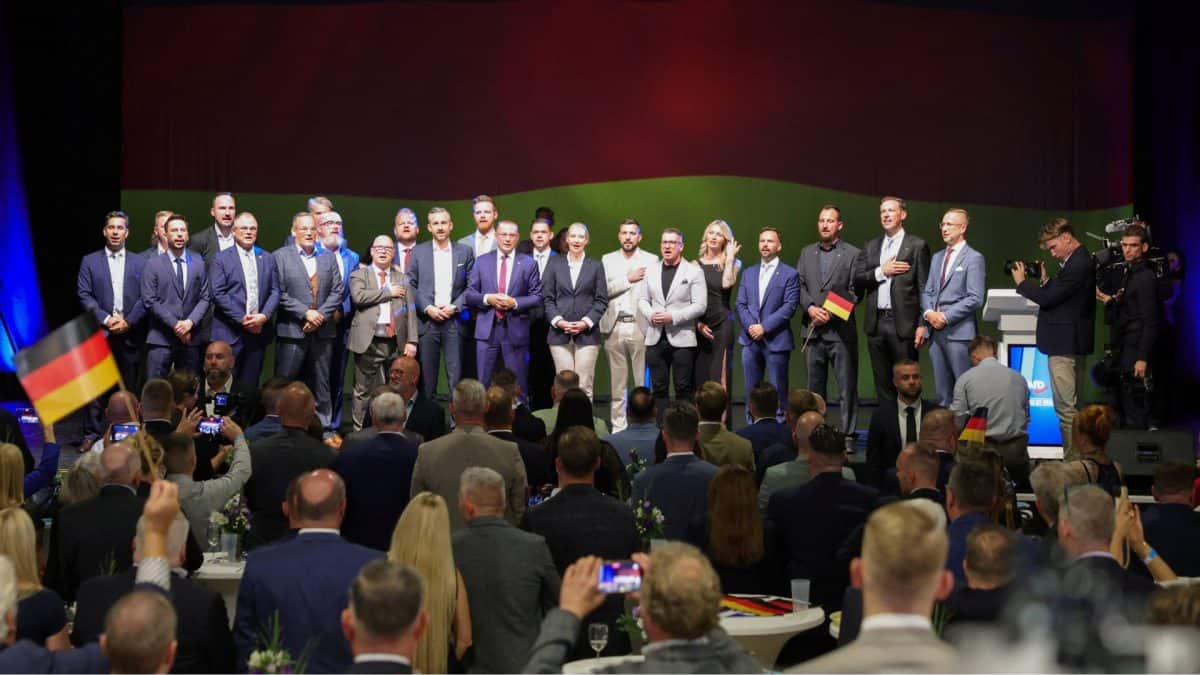
The Alternative for Germany won a historic victory in Saxony-Anhalt on Sunday, Sept. 7.
The result coincided with a historic low for Chancellor Friedrich Merz’s governing conservatives.
Mamad Mohamad and Mustafa Groener are set to become lawmakers with immigrant backgrounds.
Migrants and employers fear the result could make Saxony-Anhalt less welcoming and attractive.
The AfD supports tighter immigration policies and a campaign to deport rejected asylum seekers.
- Who
- The Alternative for Germany, migrant communities, Mamad Mohamad, Mustafa Groener, and Saxony-Anhalt’s governing political forces are central to the report.
- What
- The AfD achieved a historic election victory in Saxony-Anhalt, prompting concerns among migrants and employers about the state’s future.
- Where
- Saxony-Anhalt, an eastern German state.
- When
- The election took place on Sunday, Sept. 7; reactions were reported on Monday.
- Why
- The AfD campaigns for tighter immigration and asylum policies, while migrants and employers fear the result could worsen the social and economic climate.
Migrant and employer concerns
AfD’s stated position
Immigration and asylum
Migrant and employer concerns
Migrant representatives fear stricter policies and a more hostile climate could deepen existing discrimination and encourage people to leave.
AfD’s stated position
The AfD argues that Germany has lost control of its borders and supports tighter immigration and asylum rules, including deporting rejected asylum seekers.
Economic future
Migrant and employer concerns
Mamad Mohamad and others warn that skilled workers and families may choose other destinations, while employers question whether workers will feel safe.
AfD’s stated position
The AfD says businesses should use artificial intelligence and automation rather than rely on skilled migration from backgrounds it describes as culturally alien.
Social inclusion
Migrant and employer concerns
Migrant organizations say discrimination and structural barriers already affect access to work, education, healthcare and public services.
AfD’s stated position
AfD co-leader Alice Weidel says people who contribute positively, work, are qualified, pay taxes and obey the law are welcome.
Key facts
- Election result
- The AfD recorded a historic victory in Saxony-Anhalt.
- Migrant lawmakers
- Mamad Mohamad of the Greens and Mustafa Groener of Die Linke are set to enter the state parliament.
- AfD immigration policy
- The party supports tighter immigration and asylum policies and proposes deporting rejected asylum seekers at the state level.
- Community reaction
- Some migrants reportedly have plans to leave Saxony-Anhalt, while others have already left.
- Business concerns
- Some companies are reassessing whether to locate in the state and whether workers will be safe.
- Constitutional limits
- Future governments remain bound by Germany’s constitutional order and protections for minorities.
Quotes
Undra Dressler
Managing director of the State Network of Migrant Organisations in Saxony-Anhalt
“There are many people in our communities who say: ‘We’ve already packed our bags and have concrete plans, and we’ll be leaving soon,’ or, in some cases, have already left.”
 theprint.in
“Everyone is warmly welcome who contributes positively to our society, who wants to work here, who is qualified, who pays taxes, and who abides by the law”
theprint.in
Sources
Related news

AfD Victory in Saxony-Anhalt Signals Major Shift for Germany

AfD Wins Historic Saxony-Anhalt Vote, Falls Short Majority
Merz Warns AfD Victory Could Deter Investors in Saxony-Anhalt

Merz expands Taliban diplomats-for-deportees deal amid far-right pressure
AfD Wins Historic Saxony-Anhalt Election, Challenging Germany’s Political Firewall
AfD surges in east Germany ahead of looming regional elections

Young Far-Right AfD Leader Behind Historic German State Win