1 week ago
Technology Expands Retail Investing but Deepens Derivatives Risks

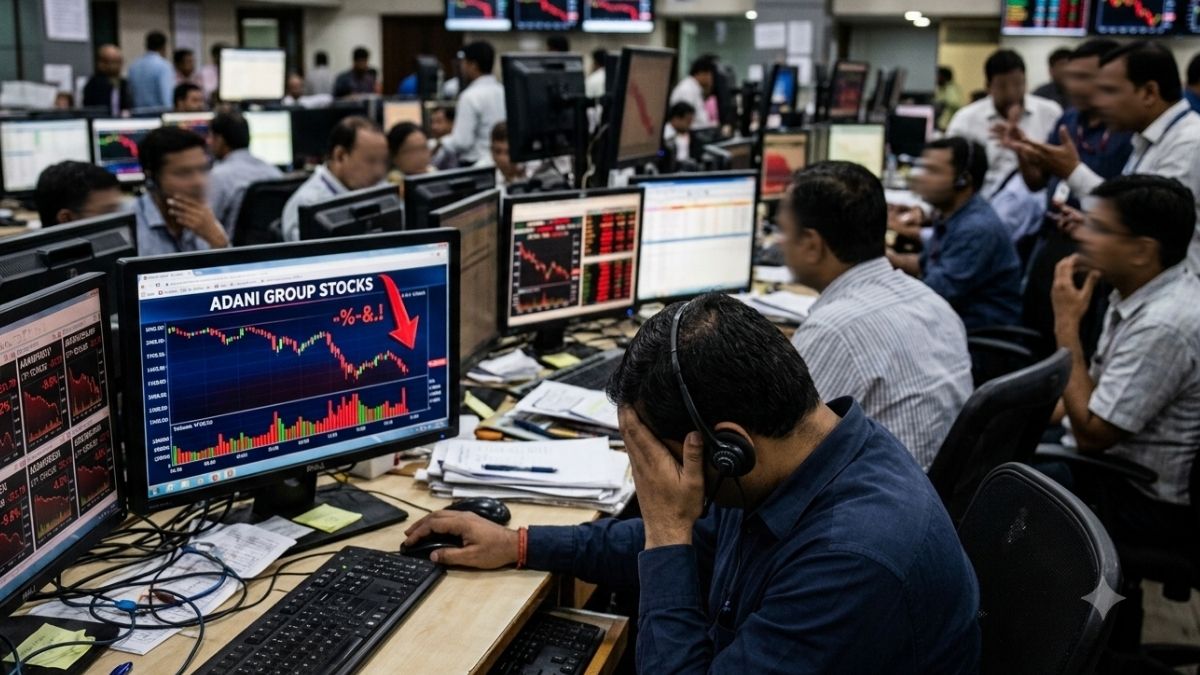
Technology has made it much easier for people in India to start investing.
People can open accounts online without visiting a financial institution.
Mobile apps also allow investors to buy and sell stocks quickly.
However, easy access can encourage people to make risky trades in futures and options.
Retail investors lost a very large amount of money in these markets during FY26.
Large institutions often have better information and faster computer systems.
Artificial intelligence may also be used to spread misleading information about stocks.
The article says technology should help people research and invest carefully instead of taking unnecessary risks.

India had more than 21 crore demat accounts by December 2025, according to the article.
eKYC, digital onboarding and discount brokers have made equity investing easier for individuals.
Retail investors lost Rs 91,685 crore in equity derivatives during FY26, about $9.61 billion.
Losses declined roughly 18% year over year after Securities and Exchange Board of India restrictions on derivatives trading.
Institutional investors use advanced tools, including algorithmic and AI-powered systems, giving them advantages over many retail traders.
- Who
- Indian retail investors, brokerage firms, institutional investors and the Securities and Exchange Board of India.
- What
- Technology has expanded equity investing while contributing to risky derivatives trading and possible market manipulation.
- Where
- India’s equity and equity-derivatives markets, including mobile-based trading platforms.
- When
- By December 2025; the reported derivatives losses occurred during FY26.
- Why
- Digital tools have simplified investing, but they have also made risky trading and technology-driven manipulation easier.
Technology’s Investment Benefits
Technology’s Investment Risks
Access to markets
Technology’s Investment Benefits
Digital onboarding, eKYC and brokerage apps have made equity investing faster, easier and more accessible.
Technology’s Investment Risks
The same convenience has enabled large numbers of retail investors to enter risky derivatives markets quickly.
Trading capability
Technology’s Investment Benefits
Technology can help investors research stocks, make informed decisions and invest with fewer logistical barriers.
Technology’s Investment Risks
Retail investors generally cannot match institutional investors’ information, algorithmic systems and AI-powered trading speed.
Artificial intelligence
Technology’s Investment Benefits
The article suggests technology should be redirected toward informed, hassle-free investing.
Technology’s Investment Risks
AI can help create and amplify misleading information about stocks or markets, potentially trapping retail investors.
Key facts
- Demat accounts
- India had more than 21 crore demat accounts by the end of December 2025.
- Retail derivatives losses
- Retail investors lost Rs 91,685 crore, or about $9.61 billion, in equity derivatives during FY26.
- Annual change
- Reported retail losses declined by around 18% year over year in FY26.
- Account opening
- eKYC and digital onboarding allow people to complete the process without physically visiting a financial institution.
- Brokerage platforms
- The article identifies Zerodha and Groww as fintech startups that made stock investing easier.
- Institutional technology
- Institutional investors use algorithmic trading and increasingly AI-powered systems.
- Regulatory response
- Securities and Exchange Board of India introduced norms intended to discourage retail participation in futures and options trading.
Sources
Related news
India's AI Platform Targets Retail Traders' F&O Losses
Indian Retail F&O Losses Reach ₹91,685 Crore Despite SEBI Curbs

SEBI Finds 88% of Individual Derivatives Traders Lost Money

SEBI Report Urges Stronger Measures Against Retail F&O Speculation

SEBI deploys AI tools as 62% investors follow finfluencers
SEBI Curbs Slow Retail Derivatives Rush as Losses Persist

Zerodha Receives SEBI Approval for Merchant Banking Licence

Kamath Says FII Panic Selling Often Precedes Market Gains

Internet Stocks Rally as MSCI Rejig Boosts IPO Activity
Nithin Kamath Jokes After Employee Praises Brother’s Looks

Adani Stocks Mixed After Heavy Sell-Off Amid MSCI Reshuffle