1 week ago
Karnataka High Court bars mechanical arrests in matrimonial dispute cases
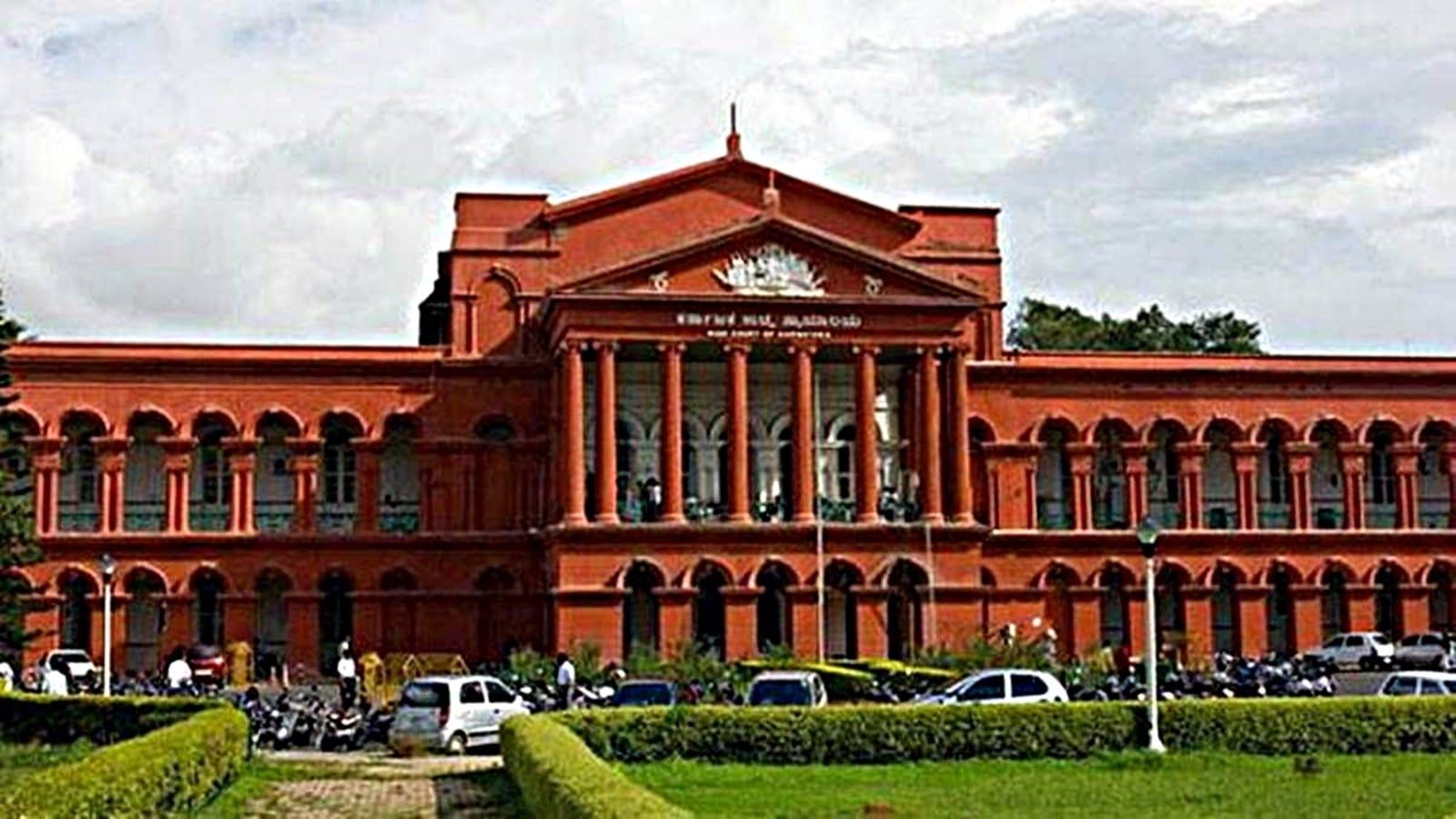
The Karnataka High Court said police must not automatically arrest people after a complaint about a marriage dispute.
Police should first conduct a preliminary inquiry within 14 days.
They must also explain why an arrest is needed and what it would achieve.
The court said a complaint or initial evidence alone is not enough to justify an arrest.
The case involved Naveen Kumar and his father, P Javara Shetty.
Kumar was arrested at an airport after returning from the United Kingdom, while his father said he was assaulted in detention.
The court found that Kumar’s arrest, lookout circular and passport seizure were unlawful.
It also ordered compensation and new police training on arrest safeguards.

The Karnataka High Court directed police to conduct a preliminary inquiry within 14 days before making arrests in matrimonial dispute cases.
Justice Suraj Govindaraj said registration of a first information report or a prima facie case alone does not justify arrest.
The court ruled that Kumar’s lookout circular, arrest and passport seizure were unlawful, and that his anticipatory bail was not honored.
The Bengaluru Police Commissioner was ordered to pay Rs 5 lakh to Naveen Kumar and Rs 4 lakh to P Javara Shetty.
The court directed police to document the necessity of arrest and conduct training on arrest and detention safeguards.
- Who
- The Karnataka High Court, Justice Suraj Govindaraj, petitioners Naveen Kumar and P Javara Shetty, and Karnataka police officials.
- What
- The court restricted routine arrests in matrimonial disputes, ordered a preliminary inquiry before arrest, found Kumar’s arrest and related actions unlawful, and awarded compensation.
- Where
- The case involved Vidyaranyapura police station and Bengaluru; Kumar was arrested at an airport after arriving from the United Kingdom.
- When
- The order was dated August 4; the underlying arrest occurred in 2014 and the complaint was registered in March 2014.
- Why
- To prevent illegal arrest and detention and stop criminal proceedings from being used to pressure parties into monetary, property or settlement demands.
Key facts
- Pre-arrest requirement
- Police must conduct a preliminary inquiry within 14 days before proceeding with arrests in matrimonial dispute cases.
- Arrest standard
- Investigating officers must separately record why an arrest is necessary and what purpose it will serve.
- Relevant offences
- The direction includes complaints under Section 498-A of the Indian Penal Code, corresponding to Section 85 of the Bharatiya Nyaya Sanhita, 2023.
- Petitioners
- P Javara Shetty, 68, and his son Naveen Kumar, 31.
- Compensation
- Naveen Kumar was awarded Rs 5 lakh and P Javara Shetty Rs 4 lakh.
- Police training
- The Director General of Police was directed to organize sensitisation and training programs on arrest and detention safeguards.
- Court finding
- The court said Kumar’s lookout circular, arrest and passport seizure were not legal.
Quotes
Karnataka High Court bench
The bench adjudicating the petition by P Javara Shetty and Naveen Kumar
“Neither the registration of a first information report, nor the existence of a prima facie case by itself justifies arrest; the necessity to arrest must be separately satisfied by the investigating officer by recording reasons and by strictly following the conditions laid down by the Supreme Court in the case of Arnesh Kumar v. State of Bihar (2014).”
 indianexpress.com
“The issuance of the LOC, the arrest of Kumar, and the seizure of his passport were not legal, and were not in accordance with the Code of Criminal Procedure, 1983, the Passports Act, 1967, or the applicable executive instructions.”
indianexpress.com
Sources
Related news
MP High Court Warns Rajasthan Police Over Missing Newlyweds

Delhi High Court Criticizes Police Over Selective Arrests

J&K High Court Questions Police Search for Five-Year-Old

Court Grants Pre-Arrest Bail to Ex-MP Vinayak Raut, Kin

Karnataka High Court Questions Police Bringing Udupi Leader

Karnataka High Court Questions Whitefield Police Custody Over Kamra Show
Orissa High Court Says Brothel Customers Cannot Face Trafficking Charges

Karnataka High Court Restores Mosque Loudspeaker Licence, Faults Police Action

Karnataka High Court Upholds Divorce, Awards Wife Rs 25 Lakh
ED Challenges MUDA B Report Before Karnataka High Court

Karnataka High Court Says No to Elephant Corridor Acquisition