

16 hrs ago
BRICS Frames Climate Resilience as Economic Growth Strategy
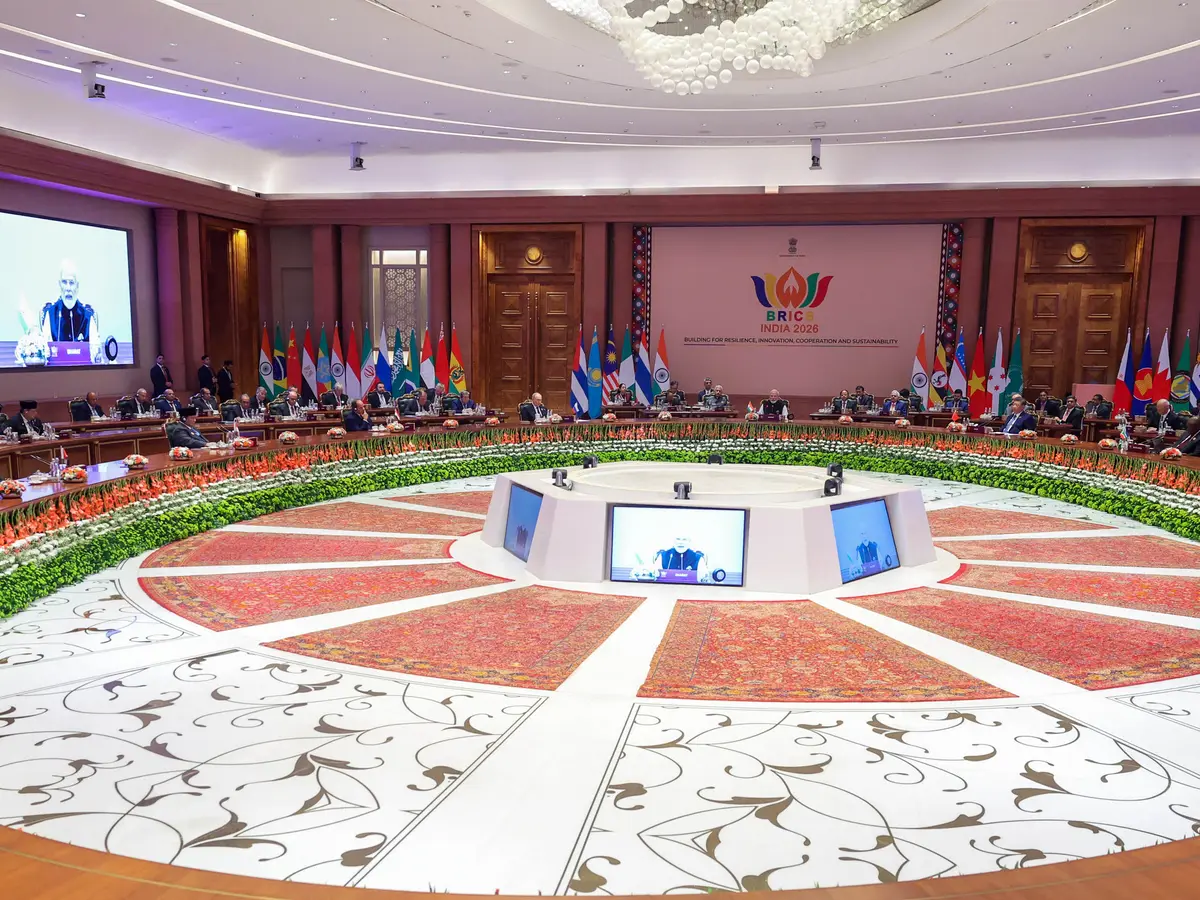
BRICS is a group of eleven countries that issued a long statement about their shared plans.
The statement treats climate change as part of economic development, not only as an environmental problem.
It connects climate resilience with trade, finance, supply chains and industry.
The countries criticized the European Union’s carbon border tax.
They said developing countries should help decide how their energy systems change.
The statement does not use the phrase “net zero.”
It proposes better planning for climate risks and a new insurance center.
It also supports more cooperation on solar energy manufacturing.
Analysts still wonder whether debt and different national interests could make these plans difficult to carry out.

The New Delhi Declaration links climate resilience to trade, growth, finance and industrial policy.
Analysts said BRICS uses a development-focused climate framework rather than emphasizing “net zero.”
The declaration criticizes European Union carbon border measures as punitive, discriminatory and protectionist.
Members proposed voluntary climate-risk planning principles and a BRICS Insurance Resilience Centre.
A proposed Solar Photovoltaic Cooperation Roadmap could deepen industrial cooperation among BRICS nations.
- Who
- BRICS’s eleven member countries, along with analysts and experts quoted in the article.
- What
- The New Delhi Declaration incorporates climate resilience into the bloc’s economic, trade, finance and energy agenda.
- Where
- The declaration was issued in New Delhi, and its proposals concern cooperation among BRICS countries.
- When
- The declaration was discussed by analysts this week; no exact date is provided.
- Why
- BRICS is seeking to align development, decarbonization, industrial capacity, trade and national policy space while opposing unilateral climate measures.
Development-led climate transition
European-style climate policy
Role of economic development
Development-led climate transition
BRICS experts say climate resilience should be integrated with development, trade, finance, industrial capacity and national policy space.
European-style climate policy
The European climate approach is portrayed as framing climate change more directly around decarbonization and the net-zero concept.
Carbon border measures
Development-led climate transition
The declaration rejects the European Union’s carbon border measures as unilateral, punitive, discriminatory and protectionist.
European-style climate policy
European Union carbon-border policy is presented as an external climate measure, though the article does not provide the European Union’s response.
Fossil fuels and energy transition
Development-led climate transition
BRICS countries insist that fossil fuels remain part of the energy mix for developing economies while pursuing decarbonization and renewable manufacturing.
European-style climate policy
The article contrasts this position with climate diplomacy that places stronger emphasis on net zero, without detailing a specific European Union fossil-fuel position.
Key facts
- Document
- 45-page New Delhi Declaration
- Bloc size
- BRICS comprises eleven nations, according to the article.
- Climate framing
- Climate change is presented within sustainable development, economic resilience and industrial policy.
- Net zero
- The phrase “net zero” does not appear in the declaration.
- Carbon border tax
- The declaration calls European Union carbon border measures unilateral, punitive, discriminatory and protectionist.
- Disaster preparedness
- The declaration includes voluntary principles for incorporating climate risk into land-use planning.
- Energy cooperation
- A proposed Solar Photovoltaic Cooperation Roadmap could support deeper industrial cooperation.
Quotes
Archana Chaudhary
Climate researcher
“It does not treat climate resilience as a standalone environmental issue. It places it inside a wider argument about economic resilience, industrial capacity, trade, finance and national policy space.”
 wionews.com
“BRICS is determined to chart its own course on climate and energy, one that emphasizes the alignment of development and decarbonization rather than treating them as competing priorities”
wionews.com
Sources
Related news
BRICS Climate Declaration Rejects One-Size-Fits-All Net Zero Model
BRICS Pushes Global South Climate Priorities in Delhi Declaration
BRICS Declaration Defends Fossil Fuels, Opposes EU Carbon Border Tax

BRICS Leaders Reaffirm Commitment to Paris Agreement Climate Goals

BRICS Ministers Adopt Climate Resilience and Wildfire Roadmap
Delhi BRICS Summit to Advance Climate Cooperation and Resilience

Delhi Capitals Reportedly Add Chaminda Vaas to Coaching Staff
Sridhar Vembu Urges India to Consider Leaving UN

‘Sovereign Decision’: Oman Addresses Potential BRICS Membership Question
Modi, Egypt’s El-Sisi Hold Talks During BRICS Summit