1 hr ago
BRICS Declaration Puts Development Before Western-Style Net Zero
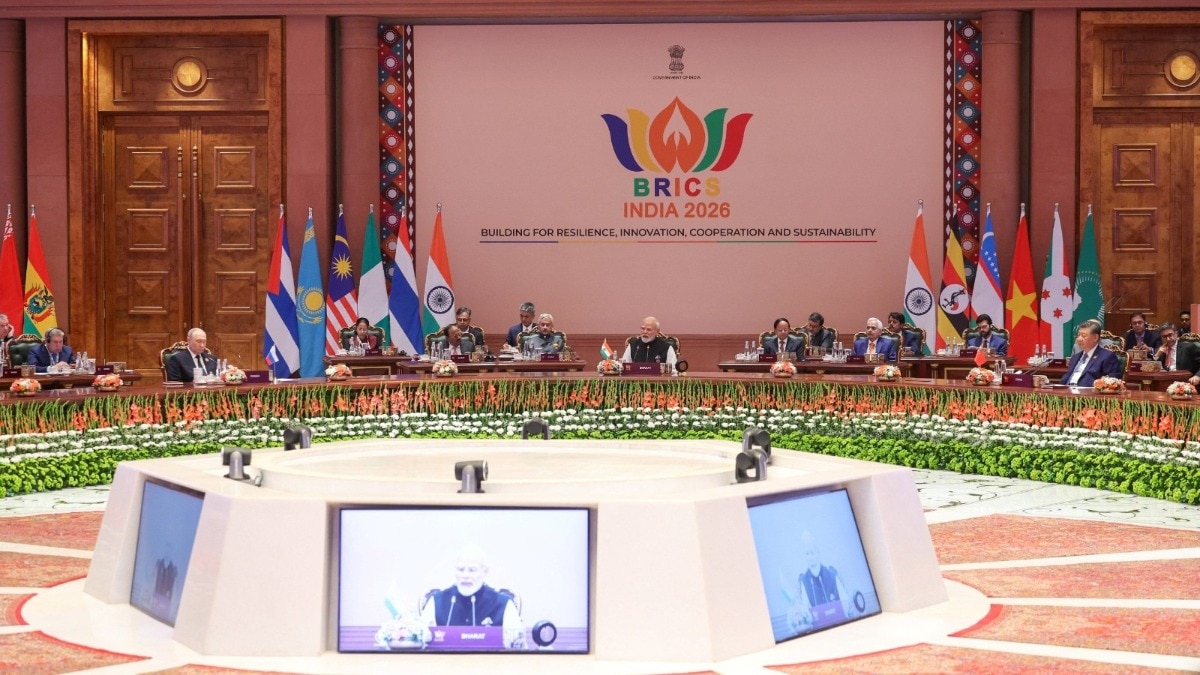
BRICS countries released a declaration about cooperation and sustainable development.
The document talks about climate change, but it does not use the popular phrase “Net Zero.”
Instead, it connects climate action with economic growth, energy access and building stronger industries.
The countries say developing economies need room to choose their own paths.
They also want richer countries to provide more climate finance, technology and training.
BRICS supports clean-energy projects such as solar power, hydrogen and energy storage.
At the same time, the declaration says fossil fuels will still have an important role in some developing economies.
The group also criticized carbon taxes on imports when they are imposed by individual countries or regions.
Its approach tries to combine cutting emissions with development and economic resilience.

The New Delhi Declaration emphasizes sustainable development, with climate action treated as part of a broader development agenda.
The declaration does not use the term “Net Zero,” signaling a different framing from the European and American approach.
BRICS links climate resilience to industrial policy, energy systems, infrastructure, finance, insurance and food security.
The bloc supports cooperation on smart grids, energy storage, hydrogen and solar manufacturing while retaining a role for fossil fuels.
BRICS opposes unilateral carbon-border measures, calling them potentially punitive, discriminatory and protectionist.
- Who
- BRICS countries and their representatives, with views discussed by Rathin Roy and Li Shuo.
- What
- The New Delhi Declaration sets out a BRICS approach to sustainable development, climate action and energy transition that omits the term “Net Zero.”
- Where
- The declaration is identified as the New Delhi Declaration; the article does not provide a more specific location for its adoption.
- When
- The article does not specify when the declaration was issued.
- Why
- BRICS seeks to align climate action with development, economic resilience and greater policy space for developing economies.
BRICS and developing-economy approach
European and American climate framing
Climate and development
BRICS and developing-economy approach
Climate action should be aligned with sustainable development, energy access, industrialization, economic growth and national circumstances.
European and American climate framing
The article characterizes the European and American framing as placing greater emphasis on the “Net Zero” approach to climate change.
Energy transition
BRICS and developing-economy approach
BRICS seeks its own pathway, combining decarbonization with development and retaining a significant role for fossil fuels in developing economies.
European and American climate framing
The article presents the Western framing as distinct from BRICS because it centers the “Net Zero” terminology and does not describe the same development-first emphasis.
Carbon-border measures
BRICS and developing-economy approach
BRICS argues that unilateral carbon-border adjustment measures can be punitive, discriminatory, protectionist and harmful to developing countries’ ability to adapt and develop.
European and American climate framing
The article does not provide a detailed defense of carbon-border measures, but identifies them as a point of disagreement between BRICS and the approach it opposes.
Key facts
- Declaration
- New Delhi Declaration
- Climate framing
- Sustainable development is presented as including climate action.
- Missing term
- The declaration does not use “Net Zero.”
- Policy priorities
- Climate resilience is linked to industry, energy, infrastructure, finance, insurance and food security.
- Requested support
- BRICS calls for greater climate finance, technology transfer and capacity-building from developed economies.
- Energy transition
- The declaration supports smart grids, energy storage, hydrogen and solar manufacturing.
- Carbon-border measures
- BRICS opposes measures it views as unilateral, punitive, discriminatory or protectionist.
Quotes
Rathin Roy
Professor and economic policy adviser discussing the declaration’s climate framing
“On sustainable development, the line is fairly clear. All of them collectively are prioritising sustainable development. In most places, where climate change is mentioned – the word ‘including’ precedes climate change. So this is sustainable development, including climate. They are weaving in a broader lens”
 businesstoday.in
“BRICS is determined to chart its own course on climate and energy, one that emphasizes the alignment of development and decarbonization rather than treating them as competing priorities”
businesstoday.in
Sources
Related news

BRICS Leaders Reaffirm Commitment to Paris Agreement Climate Goals

BRICS Ministers Adopt Climate Resilience and Wildfire Roadmap
BRICS Endorses Inclusive Energy Transition While Backing Fossil Fuels
Delhi BRICS Summit to Advance Climate Cooperation and Resilience

BRICS expands climate cooperation, but financing and implementation lag
BRICS Reaches New Delhi Consensus Despite Iran-UAE Divisions

T.M. Krishna questions symbolism behind hockey team's new saffron kits
Beidaihe Retreat Begins Amid Xi’s Consolidated Power

Padma Lakshmi Hopes Book Sparks Curiosity Amid US Darkness

Australia's Ambassador Kevin Rudd Steps Down Early