1 month ago
DS Group Launches Nano-Fibre Protection for Women Farmers
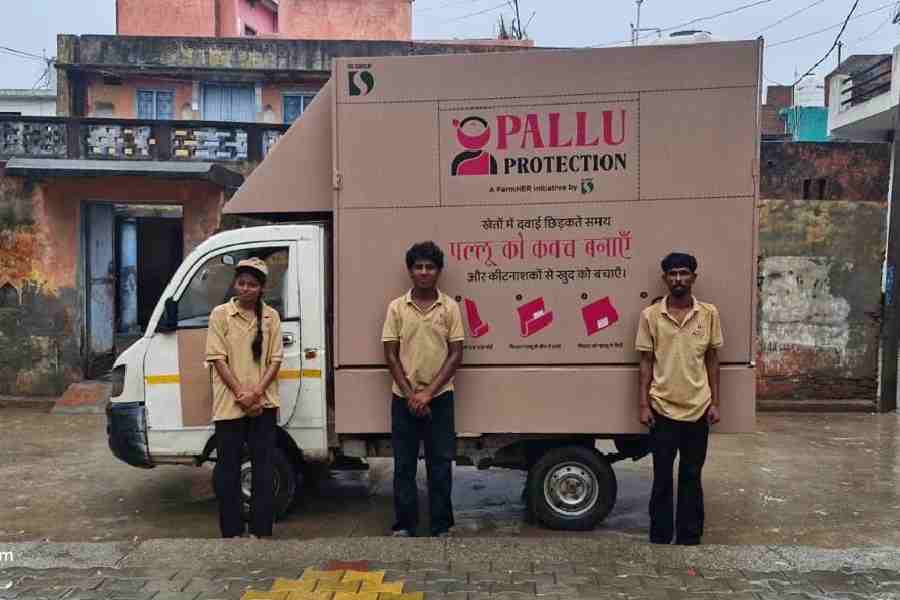
DS Group has started a special program to help women farmers in Uttar Pradesh stay safe from harmful chemicals used in farming.
They have created a special filter made of tiny fibres that can be sewn into the pallu of a saree or a dupatta.
This filter protects the women from pesticides, dust, and other harmful particles.
The program also includes teaching the women about the dangers of these chemicals and providing free health check-ups.
The filters are being given out for free in seven villages in the Baghpat district.
The company is also working with local communities and authorities to make sure the women understand the importance of safe farming practices.
This initiative is part of DS Group's broader FarmHER program, which supports women farmers across India.

DS Group launched a nano-fibre-based protection solution for women farmers in rural Uttar Pradesh.
The Pallu Protection Equipment (PPE) filter is designed to be sewn into saree pallus or dupattas, providing protection against pesticides, dust, and harmful chemicals.
The initiative includes awareness campaigns, health check-ups, and door-to-door educational outreach in seven villages in Baghpat district.
The program aims to promote safer farming practices and provide practical, culturally relevant solutions for women farmers.
DS Group's broader FarmHER program supports women farmers across India with essential health and safety information.
- Who
- DS Group, women farmers in rural Uttar Pradesh
- What
- Launch of nano-fibre-based protection solution for women farmers
- Where
- Seven villages in Baghpat district, Uttar Pradesh
- When
- Currently ongoing
- Why
- To address occupational health risks faced by women farmers due to exposure to agricultural pesticides and chemicals
Proponents of the Initiative
Skeptics of the Initiative
Effectiveness of the Solution
Proponents of the Initiative
The Pallu Protection Equipment (PPE) filter is a practical and culturally relevant solution that offers protection against pesticide particles, dust, and harmful chemicals, including PM2.5 pollutants.
Skeptics of the Initiative
Some may question the long-term effectiveness and durability of the nano-fibre filters, especially under rigorous agricultural conditions.
Cultural Relevance
Proponents of the Initiative
The solution is designed to be integrated into saree pallus and dupattas, making it culturally appropriate and easily adoptable for women farmers.
Skeptics of the Initiative
Critics might argue that the solution, while culturally relevant, may not address all the health risks faced by women farmers comprehensively.
Key facts
- Initiative Name
- Pallu Protection Equipment (PPE) filter
- Location
- Seven villages in Baghpat district, Uttar Pradesh
- Key Villages
- Pali, Katha, Bandpur, Sunehra, Basi, Mavikala, Sankrodh
- Protection Offered
- Pesticide particles, dust, harmful chemicals, PM2.5 pollutants
- Awareness Methods
- Mobile awareness vans, puppet shows, nukkad nataks, health check-up camps, door-to-door outreach
- Health Services
- Blood pressure and blood sugar screenings, basic health counselling, distribution of PPE masks
- Additional Materials
- Mirrors and calendars with safe farming messages
- Corporate Values
- Collective good, environmental sustainability, ESG priorities
Quotes
Mr Rajeev Jain
Senior Vice President, Corporate Marketing, DS Group
“Women farmers play a vital role in India’s agricultural economy, yet awareness of the occupational health risks they face remains limited. Our field research revealed that the saree pallu and dupatta are often used as informal protective coverings during pesticide-intensive agricultural work, despite offering inadequate protection. This highlights the urgent need for simple, practical and culturally appropriate solutions that women farmers can seamlessly adopt. Through the Pallu Protection Equipment’ Awareness Campaign, DS Group combines awareness with action, providing accessible solutions that can help make agricultural work safer and healthier for women.”
 telegraphindia.com
Sources
Related news

UK and Ukraine Open Battlefield AI Partnership Amid War

ASUS Expands TUF Gaming Laptops in India With New Models
IITs Launch India’s First Practice-Oriented Four-Year Cybersecurity Degree

Australian Police Charge Two Men in Open-Source Hacking Case
New model maps Delhi’s traffic noise across urban landscape

Professor, Five Students Arrested in IGKV Paper Leak

Gold Loans Quadruple as India’s Untapped Gold Wealth Fuels Growth

Mirzapur: The Movie Sells Over One Lakh Advance Tickets

BJP MLA Anil Sharma Dies After Prolonged Illness, Yogi Mourns

UP Minister Visits Ankit Baliyan Family, Promises Strict Action

UP Launches Outsource Corporation With Expanded Worker Protections