

1 week ago
JEE-Advanced Aspirants Push IITs for Three Attempts

Many students want to take the JEE-Advanced exam three times instead of only twice.
This exam helps students compete for BTech seats at the Indian Institutes of Technology.
The current rule gives one chance during Class XII and one the next year.
Students say this can be unfair because illness, stress or mistakes may affect a single exam day.
They also say some rural and disadvantaged students learn about the exam late and need more time to prepare.
More than 10,000 students have signed an online petition.
They compare the rule with JEE-Main, which allows six attempts over three years, and NEET-UG, which has no attempt limit or age bar.
A former exam chairman said the limit was introduced because students were spending too many years trying to pass.
The debate is about balancing another chance for students with avoiding lengthy exam preparation.

More than 10,000 IIT aspirants have signed a petition seeking three JEE-Advanced attempts.
Current IIT rules allow only two attempts: once in Class XII and once the following year.
JEE-Main permits six attempts across three consecutive years, while NEET-UG has no attempt limit or age bar.
Aspirants say health issues, exam pressure, limited resources and late preparation can prevent two attempts from showing their ability.
A former IIT JEE chairman said attempts were limited because some students were spending too many years pursuing success.
- Who
- More than 10,000 IIT aspirants, along with a former IIT JEE chairman, are involved in the debate.
- What
- Aspirants are demanding that the number of JEE-Advanced attempts increase from two to three.
- Where
- The demand is being made across India through an online petition and amid nationwide student protests over exam-related irregularities.
- When
- The movement has gained pace ahead of JEE-Advanced 2026; the current two-attempt policy dates to rules introduced in 2013.
- Why
- Aspirants say two high-pressure attempts may not reflect students' abilities, especially when preparation begins late or resources are limited; officials previously cited concerns about students spending too many years preparing.
Aspirants seeking more opportunities
Defenders of the two-attempt limit
Number of attempts
Aspirants seeking more opportunities
Students want three JEE-Advanced attempts, arguing that two chances may not fairly measure their ability.
Defenders of the two-attempt limit
The existing policy limits candidates to two attempts to prevent prolonged exam preparation and repeated unsuccessful attempts.
Fairness and preparation time
Aspirants seeking more opportunities
Aspirants say rural and socially marginalised students may discover the exams only after Class XII and need additional time and resources to prepare.
Defenders of the two-attempt limit
The current rules preserve a defined eligibility window, with one attempt in Class XII and another the following year.
Comparison with other exams
Aspirants seeking more opportunities
Students point to JEE-Main's six attempts over three years and NEET-UG's unlimited attempts as evidence that JEE-Advanced is comparatively restrictive.
Defenders of the two-attempt limit
The former chairman's explanation supports treating JEE-Advanced as an exam with a limited attempt period rather than allowing students to pursue it for many years.
Key facts
- Petition support
- More than 10,000 IIT aspirants have signed an online petition demanding three JEE-Advanced attempts.
- Current JEE-Advanced rule
- Candidates may appear twice: once in Class XII and once in the following year.
- JEE-Main attempts
- Students may appear for JEE-Main six times over three consecutive years, beginning with the year they clear Class XII.
- JEE-Advanced eligibility
- The top-scoring 2.5 lakh JEE-Main candidates are allowed to appear for JEE-Advanced.
- NEET-UG comparison
- NEET-UG allows unlimited attempts and has no age bar, according to the article.
- Aspirants' alternative
- If three attempts are not feasible, one candidate suggested allowing two attempts across three consecutive years from Class XII.
- Policy rationale
- A former IIT JEE chairman said limits were introduced because some students were spending several years pursuing success.
Quotes
An unnamed JEE aspirant from Begusarai, Bihar
Candidate from Bihar discussing the impact of the two-attempt rule
“Yet, under the current policy, students are limited to only two consecutive attempts, while JEE-Main allows three attempts within the same admission system. If improvement is allowed in JEE-Main, why is it restricted in JEE-Advanced? This inconsistency denies many capable and hardworking students a fair opportunity to demonstrate their true potential.”
 telegraphindia.com
“Earlier, unlimited chances were allowed in JEE. But it was felt that many students were wasting several years in the pursuit of success. Such students were finding it difficult to focus on higher studies after failing to crack the exam. That is why the opportunities were limited to two.”
telegraphindia.com
Sources
Related news

12,000 IIT Aspirants Seek Third JEE Advanced Attempt

JEE Board Rolls Back BTech Counselling Curbs After Protests

Centre Forms Nandan Nilekani Panel to Overhaul India's Examination System

India Needs Fewer Public Exams With Broader Applicability

India Compresses Professional Training Across Law, Science, and Medicine

India's R&D Ecosystem Faces Hurdles On Path To Knowledge Economy

India’s AI Ambition Faces Questions About School Foundations
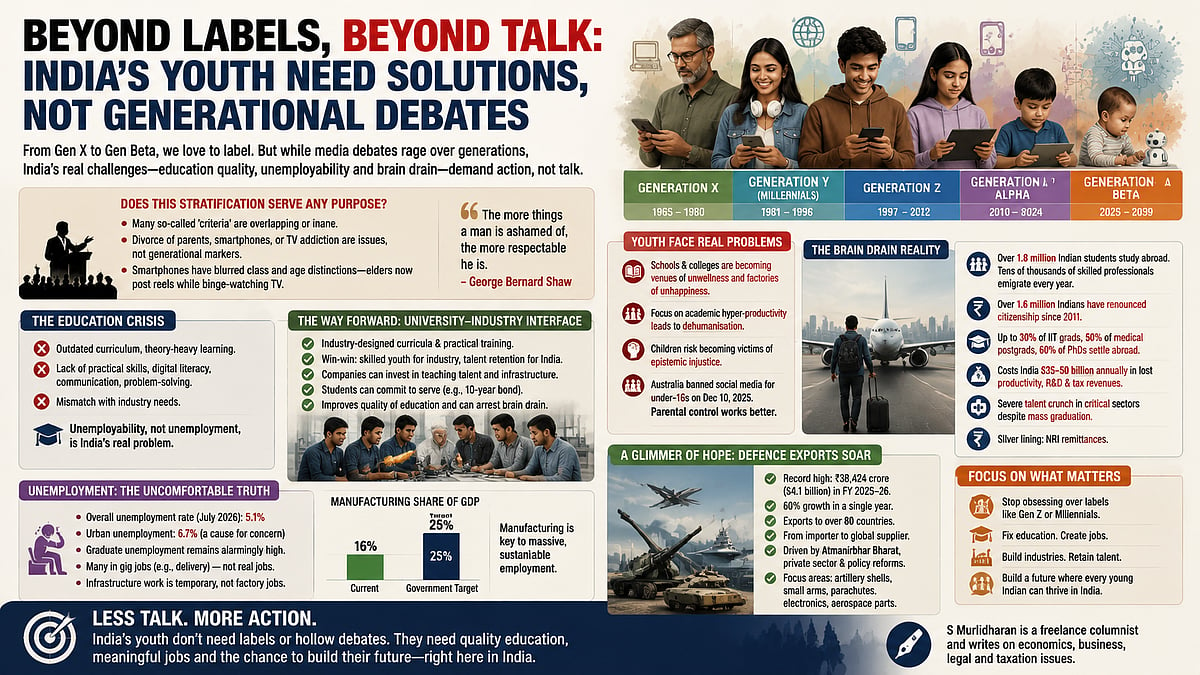
India’s Youth Need Better Education and Jobs, Not Labels
