3 weeks ago
Centre Forms Nandan Nilekani Panel to Overhaul India's Examination System

In India, big exams decide who gets into college and medical school, and millions of students take them every year.
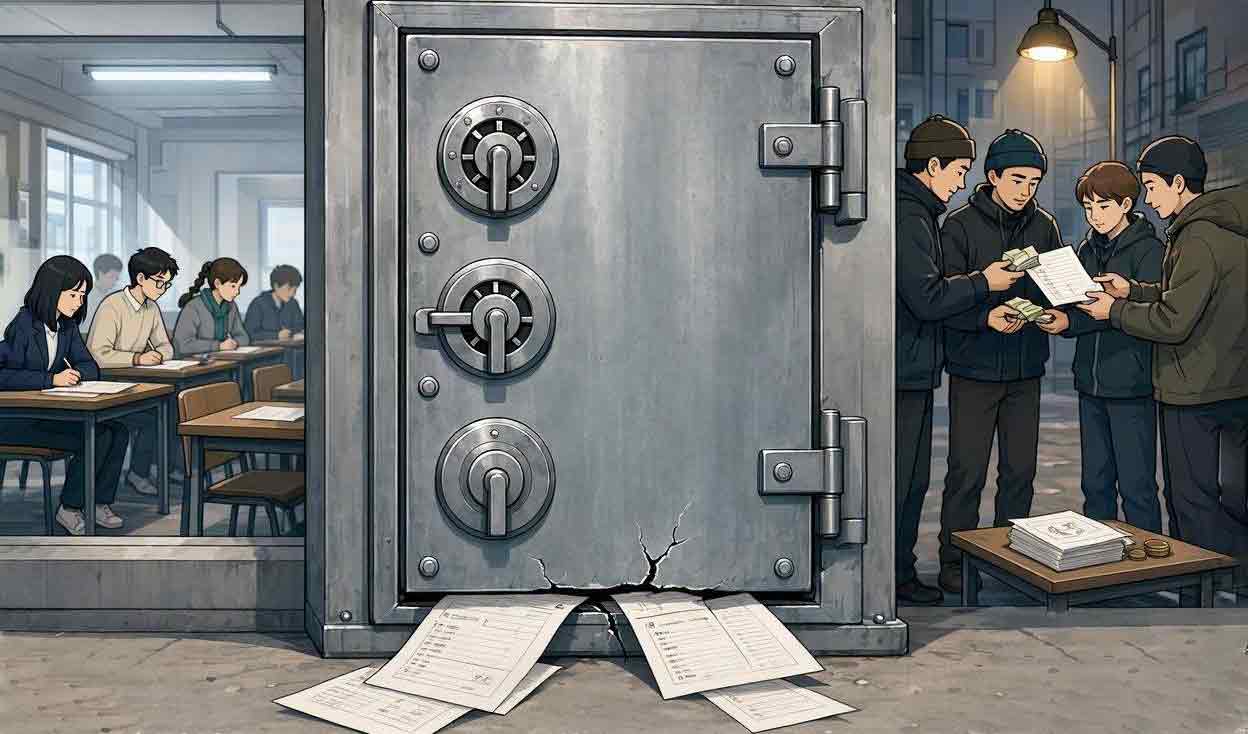
Sometimes, bad people steal the question papers before the exam, which is very unfair to students.
This year, the paper for a very important medical exam called NEET-UG was leaked, so the exam had to be cancelled and held again.
The Indian government has now asked a smart team of experts, led by a man named Nandan Nilekani, to find ways to stop these leaks.
The team includes space scientists, engineers, and other experienced people.
Some experts say better computers and technology will make exams safer.
Others say technology is not enough, and the government should create more seats in colleges and let students try more than once.
When there aren't enough seats, cheating becomes a big problem because students feel too much pressure.
Many states have also made strict new laws to punish people who cheat or leak papers.
The expert team will now decide the best way to make exams fair for everyone.

The Union government has set up a six-member expert panel headed by Nandan Nilekani to recommend long-term reforms for India's examination system.
The panel was formed after the leak of the NEET-UG question paper forced the exam's cancellation in May, sparking protests that led to Education Minister Dharmendra Pradhan's resignation.
Panel members include former ISRO chief S Somanath, IIT Madras director V Kamakoti, former school education secretary Anita Karwal, former Intelligence Bureau chief Tapan Deka and former Bihar chief secretary Amrit Lal Meena.
Education experts say technology alone cannot stop exam leaks and urge seat expansion in higher education, multiple exam attempts per year and higher spending on examination infrastructure.
Several states, including Karnataka, Uttarakhand, Gujarat and Andhra Pradesh, have stringent anti-cheating laws that could serve as a model for national reforms.
- Who
- A six-member expert panel led by Nandan Nilekani, including former ISRO chairperson S Somanath, IIT Madras director V Kamakoti, former education secretary Anita Karwal, former Intelligence Bureau chief Tapan Deka and former Bihar chief secretary Amrit Lal Meena.
- What
- The panel will recommend long-term reforms to overhaul India's corruption-plagued examination system while improving the reliability of upcoming exams in the short term.
- Where
- India
- When
- The panel was constituted in 2026, after the NEET-UG paper leak forced the exam's cancellation in May 2026 and the resignation of Education Minister Dharmendra Pradhan.
- Why
- To address chronic question paper leaks and weaknesses in examination security, heightened by the NEET-UG leak that affected over 2 million candidates competing for 137,000 medical seats.
Technology-Led Exam Security
Structural Capacity Expansion
How to stop question paper leaks
Technology-Led Exam Security
Using the 'best technology' is essential so students do not have to sit for an examination again because of a paper leak; better use of technology will bring down cheating.
Structural Capacity Expansion
Technology alone is unlikely to eliminate cheating; as long as seats in prestigious institutions are limited, criminals will find sharper ways to defeat technology — the core issue is undersupply of seats.
Exam data storage and evaluation
Technology-Led Exam Security
Exam data can be hosted on modern encrypted national-level cloud servers for efficiency and security.
Structural Capacity Expansion
Centralised cloud servers make it easier to penetrate security and tamper with results; data should be decentralised to the exam-centre level, as Haryana does with distributed evaluations.
Key facts
- Panel head
- Nandan Nilekani, Infosys cofounder and former UIDAI chairperson
- Panel members
- 6, including former ISRO chief S Somanath, IIT Madras director V Kamakoti, Anita Karwal, Tapan Deka and Amrit Lal Meena
- NEET-UG 2026 candidates
- Over 2 million for 137,000 medical seats
- NEET-UG qualifiers
- About 1.1 million, nearly 90% of whom will not get a medical seat
- CBSE Class 12 results 2026
- 1.76 million students appeared; 85.2% passed
- CUET seats
- About 300,000 openings across 240 universities
- Exam cost per student
- Rs 2,493 (CBSE); Rs 1,200 (NTA)
- Karnataka anti-cheating law
- 5-12 years imprisonment and fines from Rs 15 lakh to Rs 10 crore
Quotes
T V Mohandas Pai
Former Infosys CFO and educational institution governor
“"The life of a student cannot be held hostage to a three‑hour performance," he said.”
 rediff.com
Sources
Related news
NEET-UG 2026 Paper Leak Crisis Exposes India's Exam Flaws
Supreme Court Seeks NTA Reform Details After NEET Leak

Beyond Leaks: India Needs to Reset Entire Exam System

Nilekani Panel Seeks Public Input on Examination Reforms

Former UGC Chief Urges Strengthening NTA, Rejects Replacement

Experts Split Over Whether NTA Should Be Reformed or Scrapped

Haryana Records Highest SGST Growth Among States in 2026-27
Haryana sanitation workers’ strike puts BJP government under pressure

Hooda Accuses Haryana Government of Evading Assembly Questions

Four-Time India Gold Medallist Drives Cab Amid Support Wait
Tamil Nadu Police Arrest Suspect in Two Chennai ATM Robberies