23 hrs ago
BRICS Summit Must Boost Internal Trade to Realize Potential
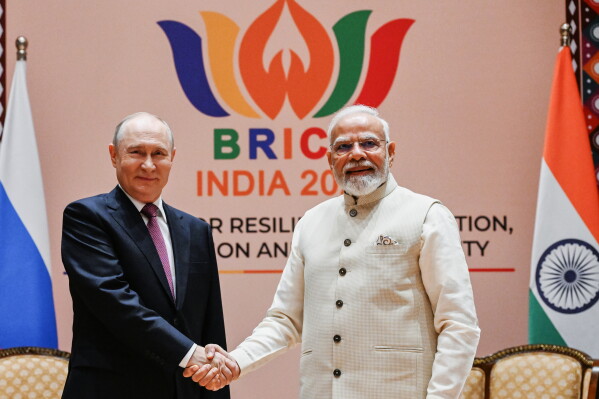
BRICS is a group of countries that wants to work together more closely.
Russian President Vladimir Putin said the group is not created to fight against anyone.
He said BRICS countries produce a large share of the world’s goods and services.
However, the members do not trade with one another as much as they could.
India and Russia agreed to try to increase their trade to $100 billion by 2030.
They also plan to cooperate in defence, minerals, nuclear energy and other areas.
India told Russia that talks and diplomacy should help resolve the Russia-Ukraine conflict.
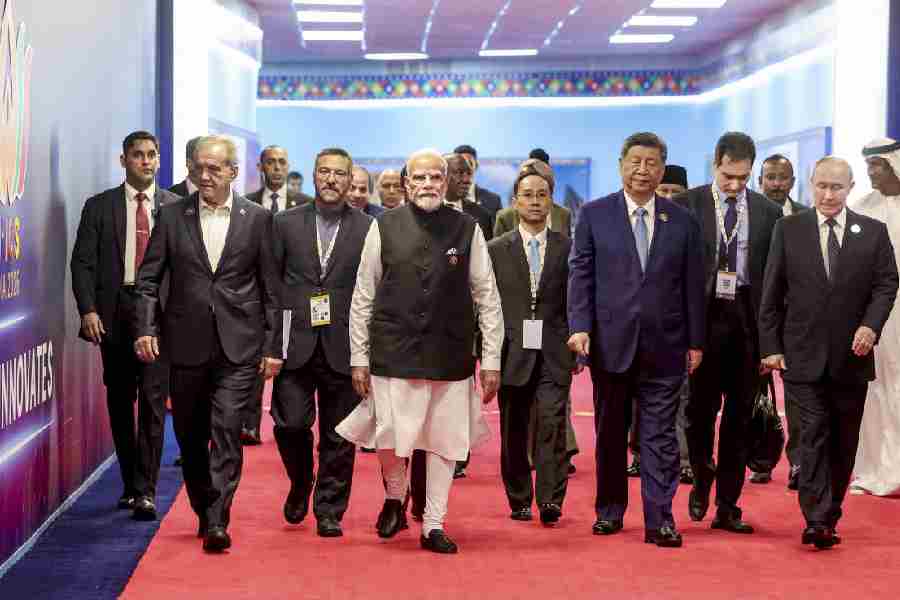
Chinese President Xi Jinping is expected to meet Indian Prime Minister Narendra Modi during the summit.
The article says better relations and stronger trade between India, China and Russia are necessary for BRICS to become more powerful.

Vladimir Putin said BRICS seeks to advance members’ interests rather than oppose other countries.
BRICS members account for about 40% of global output, compared with 29% for the Group of Seven, according to Putin.
The grouping must strengthen trade among its members despite differing political systems, priorities and Western relationships.
India and Russia agreed to target $100 billion in bilateral trade by 2030 while expanding cooperation in several sectors.
India, China and Russia must address trade imbalances, strategic mistrust and border disputes for BRICS to reach its potential.
- Who
- BRICS member countries, including India, Russia and China; their leaders Vladimir Putin, Narendra Modi and Xi Jinping.
- What
- A two-day BRICS summit focused on strengthening internal trade, cooperation and diplomatic relations.
- Where
- New Delhi, India.
- When
- During the two-day summit; Xi Jinping is expected to arrive on Saturday for talks with Narendra Modi.
- Why
- To increase trade and cooperation among BRICS members and address differences that limit the group’s effectiveness.
BRICS Supporters
BRICS Skeptics
Economic influence
BRICS Supporters
BRICS supporters point to the group’s stated 40% share of global output as evidence that it is becoming a major economic leader.
BRICS Skeptics
Skeptics argue that numerical strength alone cannot create an effective institution because members have different political systems, strategic priorities and external relationships.
Internal cooperation
BRICS Supporters
Supporters say stronger trade and economic connections among members could help BRICS challenge the dominance of the Western grouping.
BRICS Skeptics
The article notes that trade between several BRICS members remains weaker than their trade with countries outside the group, limiting its practical effectiveness.
India-China engagement
BRICS Supporters
Supporters view the planned Modi-Xi talks as a diplomatic breakthrough after the 2020 Galwan Valley clash.
BRICS Skeptics
The relationship remains constrained by border disputes, strategic mistrust and imbalanced trade.
Key facts
- BRICS global output share
- About 40%, according to Vladimir Putin.
- Group of Seven output share
- About 29%, according to Vladimir Putin.
- BRICS formation
- The grouping was formed in 2009 as Brazil, Russia, India and China; South Africa joined in 2010.
- Current expansion
- The article identifies Egypt, Ethiopia, Iran, the United Arab Emirates, Saudi Arabia and Indonesia as members.
- India-Russia trade target
- The two countries aim to raise bilateral trade to $100 billion by 2030.
- India-Russia cooperation
- The countries agreed to increase cooperation in defence, critical minerals, civil nuclear energy, fertilisers and people-to-people exchanges.
- India-China relations
- The relationship is described as affected by skewed trade, strategic mistrust and border disputes.
Sources
Related news

India’s BRICS Trade Grows as Deficit Widens Ahead of Summit

Modi and Putin Seek Stronger Ties as BRICS Challenges West

Modi to Meet Xi, Putin in Back-to-Back BRICS Diplomacy
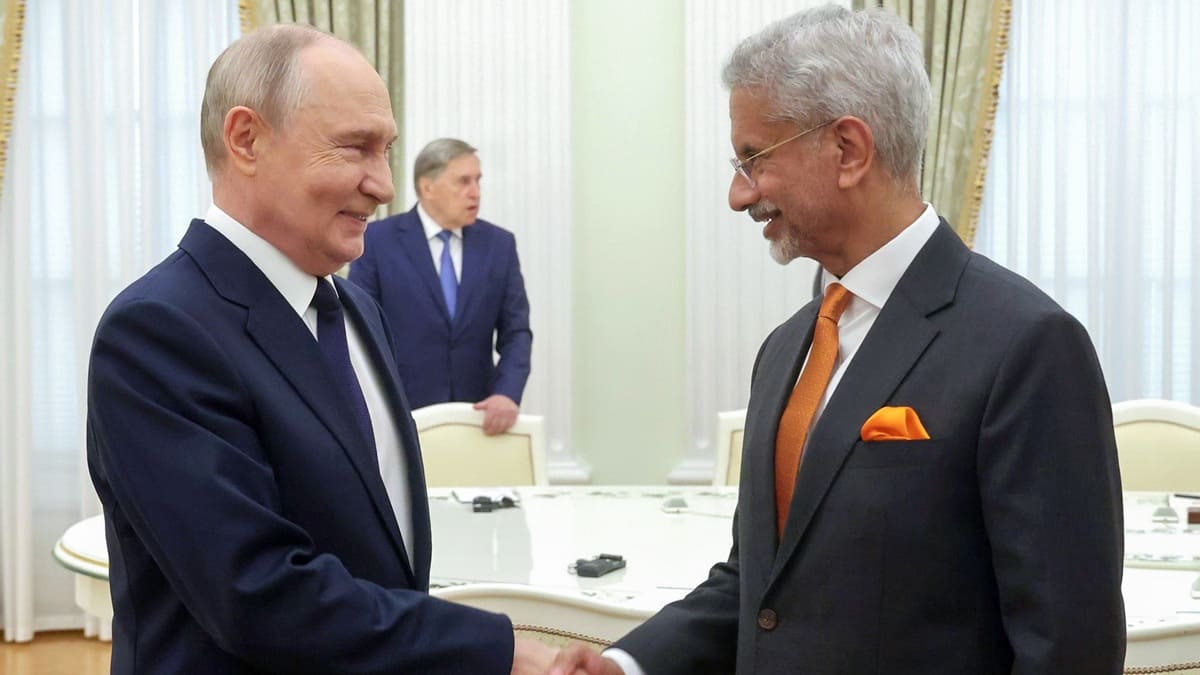
India and Russia Set $100 Billion Trade Goal by 2030
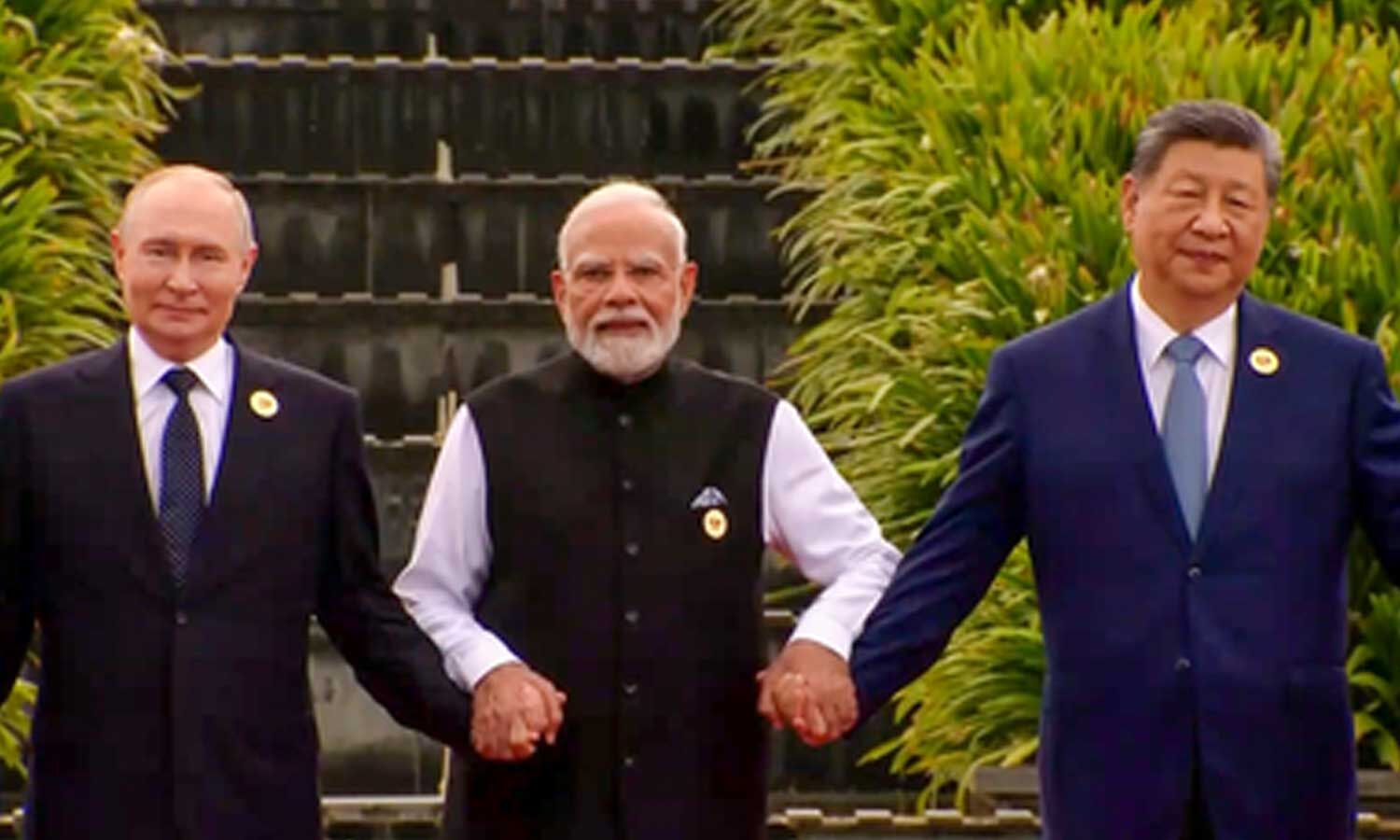
BRICS New Delhi Summit Revives a Russia-India-China Axis

Intra-BRICS Trade Hits $1.17 Trillion, Faces Growth Tests
BRICS Hosts Iran Amid Rising Oil Prices and Regional Conflict
BRICS Adopts New Delhi Declaration, Avoids Ukraine Mention

Modi and Xi Review Ties at Delhi BRICS Summit
BRICS Summit Advances Satellite Network and Space Sustainability Plans
Madhya Pradesh Plans 5.8 Million Lamps for Modi Birthday