1 hr ago
North Bengal Elephant Alert App Links Communities To Early Warnings

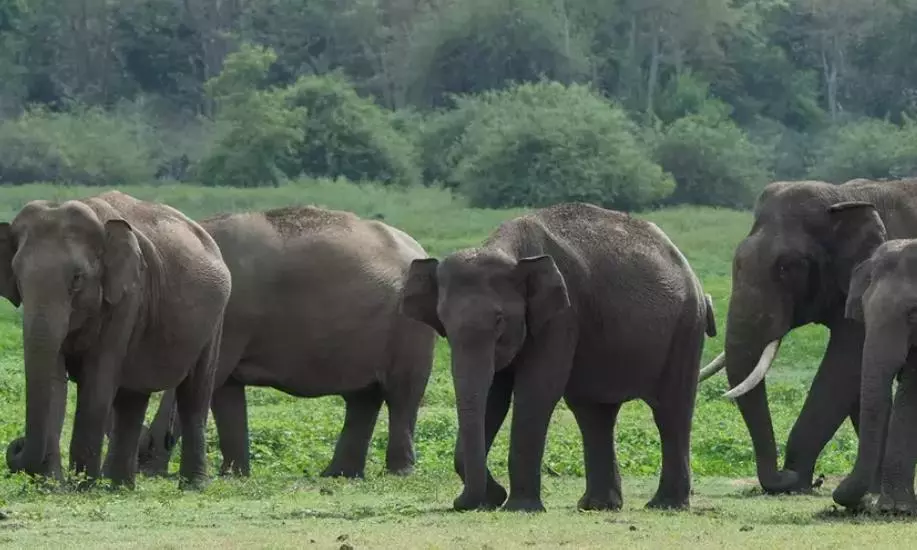
Elephants sometimes move close to farms, tea gardens and villages in North Bengal.
This can be dangerous for both people and elephants.
The HEC Alert app lets someone report an elephant sighting using a phone.
People nearby can then receive a warning and see recent sightings on a map.
GPS helps show where the elephant was seen.
Local volunteers, many of whom are farmers, can also organize a response.
When phone networks do not work, volunteers use walkie-talkies instead.
The sightings are stored in a database to help identify movement patterns.
NWA says crop losses became much smaller in some areas, but the article says this does not show that the app alone caused the improvement.

The HEC Alert app warns nearby users when an elephant is reported.
GPS, maps, heatmaps and a shared database help track elephant sightings.
NWA operates community response teams, with walkie-talkies used where networks fail.
NWA says crop losses fell from 50–60% to about 4–5% in some areas.
The article cautions that the figures are NWA’s assessment and do not prove the app alone caused the decline.
- Who
- The Nature and Wildlife Association (NWA), local volunteers, farmers, citizen scientists and communities in elephant habitats.
- What
- The HEC Alert system reports elephant sightings and sends warnings to nearby registered users.
- Where
- North Bengal, including the Kurseong landscape; the app was initially made available in India and Thailand.
- When
- The app was publicly released on 18 March 2020; its listing cited in the article records more than 10,000 downloads in September 2026.
- Why
- To give people advance notice of elephant movement and help communities respond to human-elephant conflict.
Evidence Of Community Impact
Cautions About Causation
Effect on crop losses
Evidence Of Community Impact
NWA says crop deprivation fell substantially in areas where its alert-and-response model was implemented.
Cautions About Causation
The article says these are NWA’s own figures and do not establish that the app alone caused the reduction.
Role of technology
Evidence Of Community Impact
The app can make warnings faster by connecting sightings, nearby users, maps and response teams.
Cautions About Causation
Research cited in the article says no single mitigation technique works everywhere and that local landscapes, human activity and elephant behaviour must also be considered.
Reliability of phone alerts
Evidence Of Community Impact
GPS alerts and recent-sighting maps provide useful information when mobile networks are available.
Cautions About Causation
Mobile coverage can fail, so the system still depends on volunteers and walkie-talkies for communication.
Key facts
- Alert range
- NWA describes the early-warning network as operating within a 25-kilometre radius.
- Public release
- HEC Alert was publicly released on 18 March 2020.
- Response teams
- Three teams were operating in three locations, with about 10 people in each team.
- Communication tools
- Teams use the app when mobile connectivity is available and below-five-watt walkie-talkies when it is not.
- Reported crop-loss change
- NWA says crop deprivation in some areas fell from 50–60% around 2020–21 to approximately 4–5% after the model was implemented.
- App requirements
- The current app listing says GPS-enabled positioning is required.
- App listing
- The listing cited in the article records more than 10,000 downloads and includes team management, team chats and elephant photographs.
Quotes
Anujit Basu
Secretary of the Nature and Wildlife Association (NWA)
“The HEC Alert application works as a buzzing early-warning system within a 25-kilometre radius. When an elephant is reported, the alert reaches people in the surrounding area, allowing them to know that an elephant or herd is moving nearby.”
 thebetterindia.com
“When somebody sees an elephant, the information can be reported, and the relevant team can mobilise.”
thebetterindia.com
Sources
Related news

Study Links India’s Elephant Conflict to Harvest Season

North Bengal’s Elephants Reveal a Fraught Human-Wildlife Relationship

Northeast Frontier Railway, Assam Coordinate to Protect Elephants
Elephant Herd Movement Prompts Alerts Across Tirupati’s Seshachalam Forest

Railway, Assam Forest Department Coordinate to Protect Elephants

Md Salim Demands Constitutional Autonomy for Darjeeling Hills

Bengal Plans Kurseong-Darjeeling Ropeway to Ease Tourist Traffic

BGPM Claims 10,000 Turnout After GTA Power Loss

West Bengal appoints GTA administrator as hills await fresh polls