1 day ago
Oil Surges Above $90 as Hormuz Risks Intensify

Oil became more expensive after the United States and Iran exchanged new attacks.
The fighting made people worry that ships carrying oil might not safely pass through the Strait of Hormuz.
Two supertankers were reportedly hit while trying to leave the waterway, while another report described a tanker struck by three unidentified projectiles near Oman.
Oil shipments are still moving, but some ships have turned off their tracking signals.
Countries around the Persian Gulf are continuing to export some oil.
Traders think prices could rise further if the fighting causes bigger disruptions.
Diesel prices have risen especially sharply because fuel supplies are tight.
A large refinery in Abu Dhabi is operating at full capacity, helping provide diesel and jet fuel.

West Texas Intermediate rose as much as 5.1% above $90 after fresh US strikes on Iran.
The escalation followed attacks involving commercial shipping and renewed exchanges between the United States and Iran.
Oil continues moving through the Strait of Hormuz, but tankers face attack risks and some have switched off transponders.
Persian Gulf producers including the UAE, Saudi Arabia, Kuwait and Iraq are still exporting some crude.
Abu Dhabi National Oil Company’s Ruwais refinery has returned to full capacity, supporting diesel and jet-fuel exports.
- Who
- The United States, Iran, regional Gulf oil producers, tanker operators and oil traders.
- What
- Oil prices rose sharply as renewed US-Iran hostilities increased fears of prolonged disruptions through the Strait of Hormuz.
- Where
- The Strait of Hormuz, nearby waters off Oman, Iran, the United Arab Emirates and Jordan.
- When
- The latest report describes events on Tuesday, following shipping incidents late Monday; the related report was published September 1, 2026.
- Why
- Military escalation and attacks or attempted attacks on commercial shipping threaten energy flows through a strategically important waterway.
Escalation and disruption risks
Adaptation and continued flows
Future oil supply
Escalation and disruption risks
US-Iran hostilities, attacks on shipping and threats of retaliation could prolong or deepen disruptions through Hormuz, pushing prices higher.
Adaptation and continued flows
Oil continues to move through Hormuz, Gulf exports are recovering and alternative routes or bypass arrangements may limit the immediate supply shock.
Conflict trajectory
Escalation and disruption risks
US and Iranian officials cited in the reports expect the conflict could last for months, while Iran’s Revolutionary Guard threatened severe punishment for the United States.
Adaptation and continued flows
The United States continues its campaign to pressure Iran, and officials including Treasury Secretary Scott Bessent argued that Hormuz could eventually be bypassed by pipelines.
Market outlook
Escalation and disruption risks
Analysts cited in the reports said renewed hostilities could push an already constrained oil market into a much tighter balance and keep prices rising.
Adaptation and continued flows
Dark flows, bypass routes and recovering Gulf exports have helped keep Brent below $100, limiting the rally so far.
Key facts
- WTI movement
- West Texas Intermediate rose as much as 5.1% and topped $90, its first time above that level since late July.
- Previous session
- WTI had gained 2.8% in the previous session.
- Brent price
- Brent settled near $90 in the earlier report.
- Shipping incidents
- Two supertankers were reportedly hit by projectiles while exiting Hormuz; another tanker report described three unidentified projectiles near Oman.
- Current oil flows
- Crude exports continue through Hormuz, sometimes on tankers with transponders switched off.
- Gulf exports
- The UAE, Saudi Arabia, Kuwait and Iraq are still getting some barrels out.
- Ruwais refinery
- Abu Dhabi National Oil Company has restored the refinery to full capacity, boosting diesel and jet-fuel exports.
Quotes
Bart Melek
Global head of commodity strategy at TD Securities
“Traders reduced net crude oil positioning over the week as uncertainty persisted around the next phase of the Iran conflict. We continue to expect crude prices to move higher, as there are no signs that normal transit through the Strait of Hormuz will resume in the near term.”
 thehindubusinessline.com
Salih Yilmaz and Will Hares
Bloomberg Intelligence analysts
“Adaptation to prolonged disruption through the Strait of Hormuz — with dark flows, bypass routes and recovering Gulf exports — has helped keep Brent below $100 a barrel. Yet renewed US-Iran hostilities underscore the risk that further disruption could quickly push an already constrained market into a much tighter balance.”
 livemint.com
Sources

Related news

Oil Prices Surge Above $90 as US-Iran Tensions Escalate
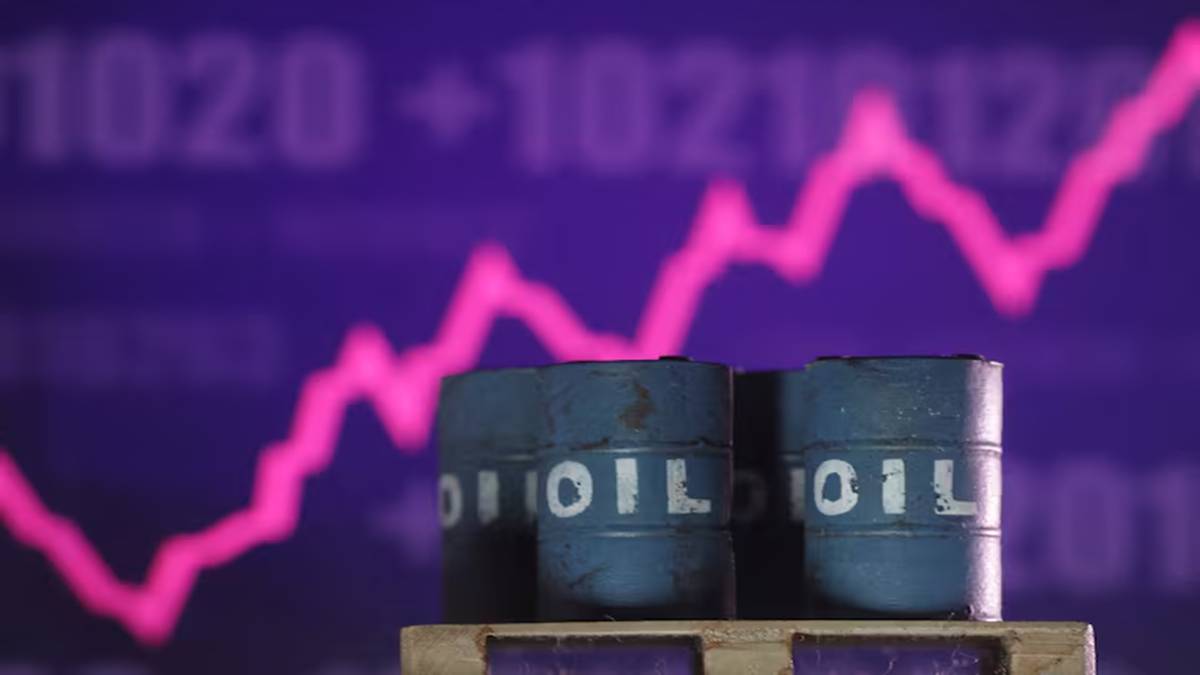
Oil Prices Rise as US-Iran Strikes Threaten Hormuz Supplies

Oil Rises as US Strikes Iranian Launchers Near Hormuz

Oil Prices Rise Fourth Day as Hormuz Fears Grow

Brent crude crosses $90 as US-Iran conflict prolongs

US-Iran Fighting Escalates, Raising Strait of Hormuz Risks

U.S.-Iran Exchange Escalates Across Middle East, Markets Slide
Trump Aides Seek Quiet Iran War Before Midterm Elections

US Warns Middle East Travelers Amid Escalating Iran-Linked Tensions

Indian Stocks Slide as Oil, Conflict and Yields Rise

Silver Rate Today: Prices Fall 0.83% Across Indian Cities